Introduction
With the push from New NISA (Japan’s revised tax-free investment program) and similar initiatives, more people than ever are stepping into the world of investing.
Most beginners are steered toward long-term index funds — All-Country World Index funds (ACWI) or S&P 500 products — and honestly, if someone asks me what to recommend for a first-time investor, those are exactly what I’d suggest. They benefit from diversification, carry relatively low risk, offer stable (if modest) returns, and — most importantly — require very little active thinking.
The book I’m introducing today, The Zurich Axioms, takes the exact opposite approach to that conventional wisdom.
This book is about how to win by taking risks — it’s a guide to engaging with the very thing most investors try to avoid. Where other investment books focus on preserving and gradually growing existing assets, this one is written for those starting with nothing who want to use risk to get rich.
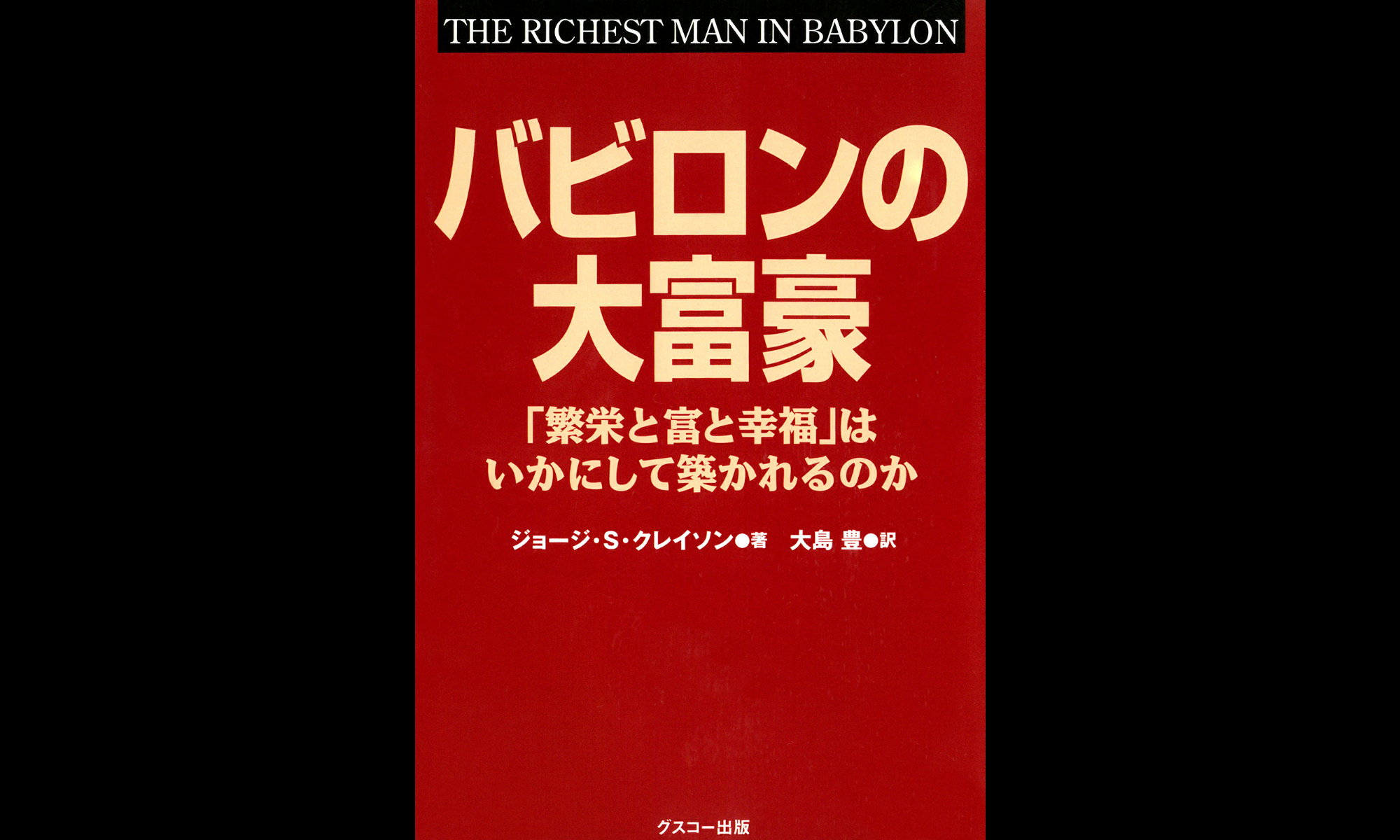
I’ve previously written about The Richest Man in Babylon, and what’s remarkable is that The Zurich Axioms argues the polar opposite — yet I find both books to be pointing at a genuine truth about investing from different angles.
If you’ve read many investment books and are starting to feel like you’ve hit a ceiling, this is worth your time.
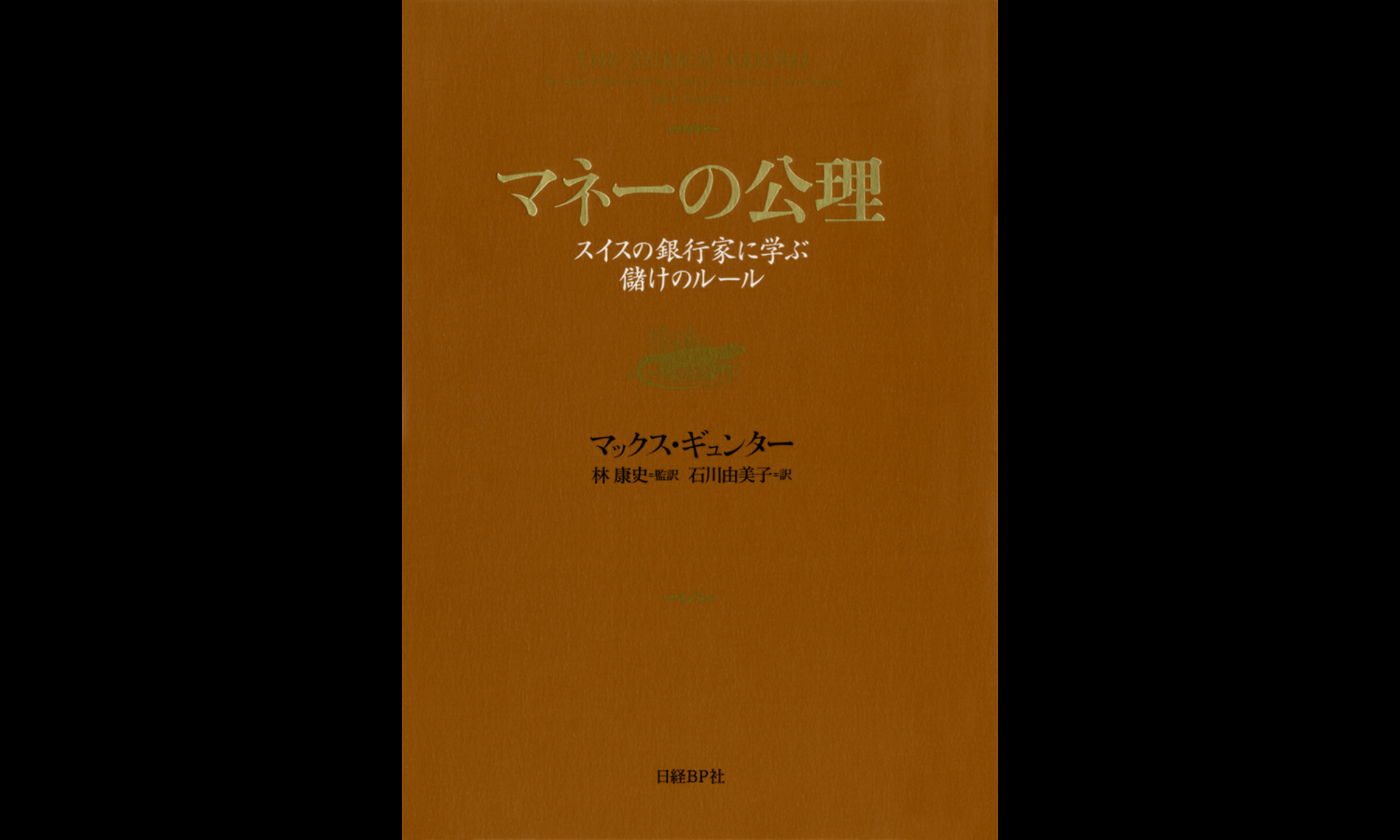
This article draws on the content of Mane no Kouki: Swiss no Ginkoka ni Manabu Mouke no Ruuru (The Zurich Axioms: Rules for Profit, as Taught by Swiss Bankers).
About The Zurich Axioms
The Zurich Axioms (マネーの公理 in Japanese) is the translation of the English title THE ZURICH AXIOMS. The Japanese title replaces “Zurich” with “Money” (マネー) — likely because “Zurich” isn’t a familiar word to most Japanese readers.
The “Zurich Axioms” is a concept born from a club of Swiss speculators, essentially a distillation of the Swiss worldview translated into investment principles.
As the book describes, Switzerland is a mountainous country with little farmland, virtually no mineral resources, and no coastline. The reason it was never invaded over 300 years of European warfare is simply that no one wanted it. Yet Switzerland became one of the world’s most prosperous nations — because the Swiss became the world’s most successful investors, speculators, and gamblers.
Many Swiss people, rather than shunning risk, faced it head-on and thought carefully about how to manage it. That mindset turned them into global banking powerhouses. (Older readers may recall that in Golgo 13, the protagonist always received his fees through a Swiss bank account — a testament to how deeply Swiss finance penetrated the global imagination.)
The book systematizes the thinking of these Swiss speculators into 12 major axioms and 19 sub-axioms, all focused on: why you need to take risks to win, and how to manage those risks once you’ve taken them.
Note: the book treats “investing” and “speculating” as having no meaningful distinction, and following the book’s lead, I’ll use the word “speculation” (投機) throughout.
Axiom 1: On Risk
The first axiom advises: “Put your money at risk.”
The only realistic path for most poor people to climb out of poverty is to accept risk — and the price of that acceptance is a state of worry.
That “worry,” the book argues, is not the disease that modern psychology makes it out to be. Once you get used to it, it becomes a spice of life.
Worry is not a sickness but a sign of health. If you are not worried, you are not taking enough risk.
Most people clutch at “safety” as if it were the most important thing in the world. Modern psychiatry and psychology tend to reinforce this — defining mental health as a state of calm above all else.
But here is the cold truth: unless you have wealthy relatives, the only way for most people in the lower-income bracket to climb out is to take risks. No salary or wage income will make you rich, and keeping your money in a savings account will barely save you from poverty.
Yes, taking risks means accepting the possibility of loss alongside the possibility of gain. But if you try to get rich and end up a little poorer, how different is that really from staying poor to begin with?
If you take risks, there will be sleepless nights and days filled with anxiety about the future. But that state of worry is simply daily life for the speculator — and in exchange, there is much to be gained.
The word “speculation” may conjure images of reckless gamblers chasing any opportunity that comes along. But the book says: “All investment is speculation. The only difference is that some people admit it and some people don’t.”
There are no truly safe products in the world. What people call “safe investments” are merely low-risk products — with correspondingly low returns. Calling something “investment” rather than “speculation” is just a way of telling yourself that you’re being careful and rational. At its core, any act of placing capital in pursuit of returns is speculation.
Sub-Axiom I: Always play for meaningful stakes.
Following the old rule of “only bet what you can afford to lose” and staking only painless amounts won’t get you out of poverty.
The only way to beat the system is to put real stakes on the table. That doesn’t mean betting amounts that could bankrupt you — it means not being afraid of a hurt.
You might want to start small, build experience, train your nerves, and then increase your stakes. But if you’re going to speculate, you need to bet an amount that actually makes you worry. Win, and you’ve changed your life. Lose, and as long as it wasn’t world-ending, you can try again.
Always playing for meaningful stakes is what a speculator must do.
Sub-Axiom II: Resist the temptation of diversification.
Diversification has three serious flaws:
- It contradicts Sub-Axiom I — always playing for meaningful stakes.
- Diversification creates a situation where gains and losses cancel each other out.
- Diversifying turns you into a juggler trying to keep too many balls in the air at once.
On point 1: if you spread your stakes across many positions and one of them wins, the gains from that small portion are negligible.
On point 2: “Diversification reduces risk, but it equally reduces your hope of getting rich.” If you win in one position and lose in another, the two cancel out — and you’re left wondering what the point was.
On point 3: the more speculative positions you hold, the more time and study they require. When multiple positions go wrong simultaneously, you may not be able to respond quickly enough — potentially triggering catastrophic losses.
With only “safety” to offer against these three flaws, diversification loses much of its appeal.
The book recommends holding no more than six speculative positions at any one time — and typically three or four. One position is fine too. The key is to avoid excessive over-diversification.
Axiom 2: On Greed
The second axiom says: when a speculation is going well, “always take your profit too soon.”
Don’t wait for the boom to peak. Don’t expect winning streaks to continue. Don’t overuse luck. Assume winning won’t last. When you reach a pre-determined goal, cash out and walk away — unless an entirely new situation arises that makes it certain the winning will continue.
Always take profits too soon.
Amateurs linger in the game too long and end up losing. The cause is greed, and greed must be managed.
“Always bet small and get out quickly. Don’t let greed rule you. When you’ve made a reasonable profit, convert it to cash and leave.”
Of course, sometimes you’ll exit and watch the position continue to surge — leaving you with a painful sense of regret. On Wall Street this is called the “agony of being left out,” and it’s one of the most intense forms of suffering a speculator must endure.
But no one can know when a speculation is at its peak. And if you can’t know the peak, you should assume it’s near — not far away.
Sub-Axiom III: Decide in advance what gain you want, then get out when you get it.
When a speculation succeeds and wealth increases, it’s easy to feel as though you’ve always had it. You start treating your current position as normal and stop thinking about exiting.
In the world of speculation, there is no clearly defined finish line — in most cases, you have to set the end yourself.
Knowing when to stop is extremely hard, and most speculators never manage it (some don’t even recognize the need).
So: decide your target before you start. Make it modest, not extravagant. For example, with stocks: “If the price reaches X, I sell.”
And to help yourself commit to finishing, give yourself a reward. Spend a portion of your winnings on a new car, a fine dinner, a new coat — anything concrete. The act of rewarding yourself creates a sense of closure.
Axiom 3: On Hope
The third axiom says: when a speculation is not going well, “when trouble comes, get out quickly and without anguish.”
When things go wrong, don’t let emotions take over. But there are three obstacles to doing this — and the book acknowledges that how you overcome them is a personal matter it cannot advise you on.
If a ship starts to sink, don’t pray. Jump.
More than half of all speculations will fail before reaching their pre-set goal. The successful speculator acts without hesitation when that happens and moves to close out.
The biggest cost most speculators ever incur comes from being unable to jump off a sinking ship. The moment to act is when it starts to sink — not after it’s half underwater. Don’t hope; don’t pray.
Ask yourself whether the problem is fixable. Unless you can find clear evidence that the situation is improving, act before it’s too late.
For publicly traded markets like stocks and futures, this can be quantified. Investor Gerald Loeb’s rule of thumb: sell when the price drops 10–15% below its high while you’ve held it, regardless of whether you’re in profit or at a loss. Frank Henry gave himself slightly more room at 10–20%, but most professional investors follow a similar rule.
By taking small losses, you protect yourself from large ones.
This axiom is simpler in concept than in execution. Three obstacles stand in the way:
First obstacle: Just like in Axiom 2, you fear that after you cut your losses, the stock will suddenly surge. This is painful when it happens, but the odds are low — and in most cases, the right move is to get out when the price clearly starts falling.
Second obstacle: You have to admit you’re giving up on the investment. Third-rate speculators keep waiting, hoping to recover enough to break even. If you can’t overcome this instinct, you may eventually go bankrupt.
Third obstacle: You have to admit you were wrong. For some people, this is a nearly unbearable pain — and the typical loser gets stuck in bad investments trying to avoid it.
Sub-Axiom IV: Accept small losses as a fact of life. Expect a few of them while waiting for a big gain.
You should be willing — if not happy — to accept small losses. They protect you from large ones.
Admittedly, “happy” may be too much to ask. But even if you can’t be happy about it, you can at least accept it gracefully.
If you can’t accept small losses as part of the cost of speculating, you have no right to expect large gains.
Axiom 4: On Forecasts
The fourth axiom says: “Never act on forecasts, because they never work reliably.”
Don’t believe any prophecy — your own or anyone else’s.
What matters is: what is actually happening right now, and being able to react instantly when it does. Let those two principles guide everything.
Investing is inherently a form of forecasting — you may have reasons to expect a good outcome — but never treat those reasons as absolute.
As Axiom 3 taught, never blind yourself to the possibility that you’ve made the wrong bet.
No one can predict the future. Don’t believe even slightly any person who says they can.
“Becoming a prophet is easy. Make 25 predictions. Then only talk about the ones that came true.”
Wise men in the investment world make frequent predictions, but these are revised repeatedly after the fact — only the hits get highlighted in the end. Many people are drawn to famous forecasters; if a seer says “it’s going up,” followers buy eagerly and sometimes make it go up — but not always.
All prophets are sometimes right and sometimes wrong. The wisest thing to do is to forget the futile exercise of trying to glimpse the future.
Axiom 5: On Patterns
The fifth axiom warns: “Beware of finding order where none exists.” The book suggests this may be the most important axiom of all.
This isn’t saying you should give up looking for favorable bets and promising investments. On the contrary — you should study your speculative targets thoroughly. But don’t find illusory order within them. Even if you identify something that seems to raise your odds, you cannot ignore the overwhelming presence of luck.
The inner monologue of someone who has learned this axiom should go:
“All right, I’ve studied this carefully and I understand what I’m doing. This bet should work in my favor. But I cannot predict or control the random events that will determine the outcome. I know there’s a good chance I’m wrong. I’ll keep myself light on my feet so I can respond instantly if things go wrong.”
Chaos is not dangerous until it begins to look orderly.
The moment you think you’ve found orderly design in human affairs — including financial ones — you are in danger.
In the investment world, everyone searches for a rational, systematic formula. Unfortunately, no such formula exists.
Many brilliant speculators and investors throughout history have claimed to have found the market’s laws, and some rode those laws to large fortunes for a time — but almost all eventually went bankrupt.
Even professional fund managers, armed with vast data, cutting-edge computers, and deep experience, consistently fail to outperform market averages.
The world is full of people who made big money and then published books revealing their formula. They may be describing their own truth — but the reality is that they got rich largely through luck.
Most such people minimize, deny, or omit the role of luck. But the truth is: no formula that ignores the role of luck can ever be trusted.
Never trust anyone who claims to see order in chaos.
Sub-Axiom V: Beware the Historian’s Trap.
The Historian’s Trap is the unfounded belief that “history repeats itself.” If event A was followed by event B, and A occurs again years later, everyone assumes B will follow.
Don’t fall for this. Sometimes history does repeat — but rarely enough that you can never rely on it. Understanding past patterns as coincidence, not formula, is essential.
Sub-Axiom VI: Beware the Chartist’s Illusion.
Charts are useful for seeing how numbers have changed more clearly — but don’t assume you can predict future prices by drawing them.
The Chartist’s Illusion is the belief that drawing trend lines through what is fundamentally random data reveals something meaningful about the future. An upward trend line that looks thick, straight, and relentlessly ascending is no reason to bet on it.
Sub-Axiom VII: Beware the Delusion of Correlation and Causation.
The human mind craves order. When faced with chaos, finding an illusory pattern is a satisfying escape — and so people do it.
Wall Street is full of claimed cause-and-effect relationships — for example, the old belief that markets underperform in the first year of a Republican presidency. There is no direct link between the party in power and stock market performance, yet such jinxes exist all over the world, each accompanied by multiple plausible-sounding hypotheses.
The correct response to such jinxes? Do nothing. They may or may not operate in the future. You cannot predict it. Accept them as part of the chaos.
Sub-Axiom VIII: Beware the Gambler’s Fallacy.
The Gambler’s Fallacy is when a streak of lucky wins makes you feel “today is my lucky day” — causing you to lower your guard and expose your money to risk, often with disastrous results.
Most people have experienced something similar. Many gamblers preach: “Press when the luck is running.” But all this tells us is that winning streaks happen. It says nothing about when they begin or end.
As Axiom 2 taught, believing that luck will last forever is dangerous. And treating a lucky streak as something orderly is even more so.
Axiom 6: On Mobility
The sixth axiom advises: “Stay mobile.”
Avoid becoming “rooted” — whether through loyalty, a desire to hold until profitable, or any other attachment. You must always be ready to seize new opportunities quickly.
This doesn’t mean hopping from one speculation to the next. Every speculative move should be made only after carefully evaluating the odds. But when a position is clearly losing value and a better opportunity has emerged, you must cut the root and move.
Don’t get rooted. It slows you down.
Being rooted — surrounded by old friends, familiar places, a comfortable routine — feels good. But the more you cling to comfort, the smaller your success as a speculator will be.
The issue isn’t your physical surroundings — it’s whether you let a “rooted” mindset govern your thinking and habits.
Sub-Axiom IX: Don’t let loyalty or nostalgia trap you in a falling position.
There will come times when you must choose between attachment and money.
If you’re reading this book, you’re interested in money — but becoming strongly attached to what you’ve invested in is a mistake.
When the rational call is to close out, but you invoke loyalty or sentimental attachment instead, you are likely to incur devastating losses.
Sub-Axiom X: If something more attractive appears, switch immediately.
A common form of becoming rooted is falling into a state where you can’t tell whether you’re speculating or pursuing a hobby.
This happens when a collection — stamps, paintings, antiques — that you started buying for speculative purposes gradually becomes a passion, and you find yourself unable to sell.
You must decide whether you are a speculator. Don’t become attached to things — attachment is for people. Attachment to objects dulls the mobility needed to act quickly when the moment comes.
Another common form: a position has declined, and you decide to hold it until it returns to profit. But if you’ve found another position you’re confident will rise, switching to it is the right call. It’s the same money, regardless of where it sits.
Many people feel they are “owed” something by a position that lost them money — and they keep chasing it. Don’t let attachment to an investment drive your decisions. Ask only which speculation is more likely to bring you profit sooner.
Axiom 7: On Intuition
The seventh axiom says: “Neither mock all intuitions nor trust them blindly.”
Intuition cannot be relied upon unconditionally — but if handled with care and skepticism, it can be a valid speculative tool.
The axiom says: test your intuition. If you can identify a reservoir of information stored in your mind that could explain where the intuition came from, you may trust it. If no such reservoir exists, ignore the intuition.
Intuition can be trusted if it can be explained.
As a speculator, you’ll frequently experience intuition. There are three approaches:
- Dismissal — ignore it entirely
- Blind trust — follow it even when rational analysis contradicts it
- Discrimination — distinguish between intuitions worth trusting and those worth ignoring
The Zurich Axioms recommend discrimination.
Intuition is not mystical. It’s usually based on information stored somewhere in your mind — information you may not know you have. When the intuition arises, ask yourself: Is there a vast library of data inside my mind that could have generated this feeling?
Of course, this self-interrogation doesn’t guarantee accuracy — even well-grounded intuitions can be wrong. But if the intuition arose after deep research into the subject, it deserves a degree of trust. Just don’t treat it as an infallible formula.
Sub-Axiom XI: Never confuse intuition with hope.
Be especially skeptical of any intuition that what you want to happen will happen.
Such intuitions aren’t necessarily wrong — but examine them with extra care, and be twice as cautious. Because there’s a high probability they are merely hope: a desire so strong it has taken the form of intuition.
Axiom 8: On Religion and the Occult
The eighth axiom says: “When money and the supernatural are combined, speculation suddenly stops working.”
Expecting help from superstition is not only unhelpful — it lulls you into a state of “not worrying,” which is very dangerous for a speculator.
When you place a bet, accept that you are on your own. Rely on nothing outside yourself — only your own cool judgment.
God’s plan for the universe apparently does not include making you rich.
Even if a supreme being exists, there is no evidence it has any interest in whether you die rich or poor.
Many people pray for money — but don’t speculate as though God will protect you. Even if God guards your soul, assuming that extends to your wallet is naïve.
Occult thinking may be harmless to your health, but it is harmful to your money.
Sub-Axiom XII: If astrology worked, all astrologers would be rich.
Astrology is one of the most popular forms of occult belief in the United States — surveys suggest roughly 32 million American adults believe in it.
But if astrology truly worked, every astrologer would consult the stars about financial matters and get rich from the results. The reality is that neither astrologers nor occult devotees in general are wealthy.
Over a long speculative career, you may eventually encounter a mystical-seeming windfall. But that doesn’t prove that mystical approaches are a reliable way to make money.
Sub-Axiom XIII: You don’t have to drive out superstitions; you can keep them in their place and enjoy them.
Most people hold one or two superstitions — whether religious or astrological. You don’t have to abandon them all.
The key is to understand whether a given superstition has any concrete effect on your finances — and only indulge it when that effect is negligible.
For example, in situations of pure chance where rational analysis can’t help, consulting your favorite superstition is fine. Use superstition only correctly and only at the right times, and avoid relying on it for important decisions — then you don’t need to drive it out entirely.
Axiom 9: On Optimism and Pessimism
The ninth axiom warns: “Optimism is the speculator’s enemy.”
Before putting money into anything, ask yourself how you will save yourself if things go wrong. If you know the answer clearly, you have something better than optimism.
You have confidence.
Optimism means expecting the best. Confidence means knowing how to handle the worst. Never act from optimism alone.
Optimists are cheerful companions when times are dark. But when it comes to personal wealth-building, optimism deserves extreme caution.
In the world of speculation, things are usually worse than they appear — more often “worse than you can see” than “not as bad as you feared.”
“Never act from optimism alone,” the axiom says. Seek confidence instead. Confidence doesn’t come from expecting the best — it comes from knowing how to handle the worst.
As previous axioms have taught, taking risks in pursuit of gains is not inherently wrong. But you must plan ahead for how to save yourself when the outcome defies your expectations.
As Axiom 3 taught, taking a loss-cut can prevent catastrophic losses. So set your exit in advance: “If it falls this far, I sell.” Knowing how to handle the worst is confidence.
Stocks and bonds are relatively easy to liquidate. Real estate is not. The harder it is to exit quickly, the more important it is to have thought through your worst-case response.
Axiom 10: On Consensus
The tenth axiom says: “The majority is not always wrong — but it is wrong more often than it is right.”
Speculation that follows the crowd has an inherent tendency to buy high and sell low.
Never blindly agree with — or blindly oppose — the majority.
Ignore the opinion of the majority. It is probably wrong.
The philosopher Descartes was also a successful speculator, and he repeatedly said: “The secret to winning at gambling is to ignore others’ opinions until you have convinced yourself.”
In speculation, doubting the truths proclaimed by self-styled experts and avoiding majority opinion is critical. After all, the majority who act on those opinions aren’t rich.
Sub-Axiom XIV: Don’t follow speculative fashions. Often the best time to buy something is when nobody wants it.
When is the best time to buy a stock? When it’s cheap, obviously. When is the best time to sell? When it’s expensive.
The reason most people can’t do this is that acting against the pressure of popular sentiment is extraordinarily difficult.
To check whether you’re acting on your own judgment or following the crowd, ask yourself: “Am I making this decision because it’s smart, or because everyone is saying it’s smart?”
But note: this axiom does not say you should always do the opposite of the crowd. It says there are times when you must resist crowd pressure stubbornly.
The “contrarian investor” strategy of always betting against the majority isn’t wrong in principle — but if you turn it into a formula, you’ll fall into the pattern illusion of Axiom 5 and incur large losses. The crowd is not always wrong. Forgetting that and always betting against them is just as mindless as following them.
Axiom 11: On Persistence
The eleventh axiom advises: “Don’t chase investment targets with obsessive persistence.”
Abandon the notion that an investment owes you something. Don’t try to rescue a losing position by averaging down.
Value the freedom to choose investments based purely on the profit they can bring you.
If it doesn’t work out the first time, forget it.
The old saying “if at first you don’t succeed, try, try again” can be good advice in some contexts — but in speculation, it can lead to ruin.
Some investors decide to invest only in “socially responsible” companies. That’s fine, as long as you never lose sight of the fact that you’re in the market to make money. But if that sentiment grows too strong and you become attached to the investment, you’ll start to feel that it “owes” you something.
When a loss occurs, the feeling that the investment owes you can drive you to keep chasing it obsessively. But treating an investment as if there is a debt relationship is irrational. There’s nothing wrong with giving up and moving on after a first failure.
Sub-Axiom XV: Don’t try to rescue bad investments by averaging down.
Dollar-cost averaging — buying more of a declining position to lower your average cost — seems logically sound at first glance.
But it’s self-deception. No matter how cleverly you maneuver around the problem, the fact remains that you bought high.
Before averaging down, ask yourself: “Why am I choosing this investment? There are plenty of other undervalued stocks. Is this really the best opportunity available to me? Or do I just want to feel good by lowering my average?”
Averaging down may make you feel better psychologically — but it’s a mental trick, not a path to wealth.
Axiom 12: On Planning
The twelfth axiom warns against “the futility and danger of planning for a future you cannot see.”
Don’t lock yourself into long-term contracts or long-term investments. React to what actually happens. Invest money when opportunity appears; retreat when danger looms.
The only long-term plan you truly need is the will to get rich.
Long-term plans create a dangerous belief that the future can be controlled. Never give them much weight.
In Aesop’s fable, the ant works diligently while the grasshopper plays — but in reality, the ant often gets smoked out or bulldozed. This is because the ant made long-term plans and became rooted, as Axiom 6 warned against.
Long-term plans create the illusion that you can control the future. This is an extremely dangerous belief.
Projecting today’s trends into the future is false reasoning. No one can know what the next 20 years will bring — booms, crashes, upheavals, wars, collapses.
Don’t try to build long-term plans. What matters is not planning for unknowable future events, but staying light on your feet so you can respond when events actually unfold.
Sub-Axiom XVI: Avoid long-term investments.
The appeal of long-term investing is that it frees you from the frequent need to make difficult decisions and saves on brokerage commissions.
But it also makes you a “great gambler” betting on a future 20 or 30 years out that you cannot even see.
Every investment should be re-evaluated at least every three months to ask: is continuing to hold this position still justified?
Personal Reflections on the Book
The Zurich Axioms — 12 major axioms and 19 sub-axioms — is, as I’ve summarized, a framework for thinking about how to win by taking risk, and how to manage that risk.
Many investors who read this book are reportedly shocked by it. And compared to other famous investment books, this one seems to be relatively rarely recommended. I think I understand why: it says the opposite of almost everything else — take risks, don’t do long-term investing — which makes it hard to casually share.
But as I said at the outset, I believe this book points at a genuine truth about investing.
Many new investors today are told to just buy ACWI or S&P 500 and hold for the long term. That advice contradicts multiple axioms in this book.
True, the global economy has grown consistently, and the U.S. will likely remain the world’s leading economic power for some time. But that is based on the past — it is no guarantee of the future.
The COVID-19 pandemic in 2020 sent shockwaves around the world, and history is littered with crises — wars, depressions, collapses. Such catastrophes will happen again. The next one may have a fatal impact on the U.S. or the world economy — and no one can say with certainty whether things will recover as before.
So, as the book itself states, there is no such thing as a truly “safe” investment. No matter how analytically sound a strategy seems, any act of seeking profit is speculation — and that reality should always be held in mind.
Warren Buffett built his fortune through steady long-term investing, but that is not an absolute formula — it rests on the fortunate fact that America happened to grow continuously over a long period. If Buffett had been born in Japan and started investing in the midst of the post-bubble collapse, it would have taken nearly 30 years just to recover his losses using the same approach.
The world has clear winners and losers, and we tend to believe their positions were determined by character and talent. But luck plays an enormous role — a fact underscored by a 2022 Ig Nobel Prize-winning paper titled “Talent and Luck,” which concluded: “The most successful people tend to be those who are slightly more talented than average and very lucky.”
This book confronts those illusions head-on. I’ve read many investment books, and this is the only one I’ve encountered that makes the case for luck’s importance with such unflinching logic.
After reading this, some may choose to set out as speculators on a new path. Others may continue with high-probability long-term investing as before. Both are valid.
What this book taught me, above all, is the necessity of approaching all things from multiple perspectives.
Below I’ll share the lines that left the deepest impression on me, with brief comments.
”Everyone wants to win. Not everyone wants to bet.”
This appears in the book’s introduction. It captures the spirit of the whole book in one sentence.
The line “everyone wants to win, but not everyone wants to bet” resonated with me deeply. In the real world, plenty of people want money — but almost none are willing to expose themselves to genuine risk and make a serious bet.
They choose the safety of a steady job while lamenting that they wish they had more. In Japan especially, the bare minimum of daily safety, food, and shelter is achievable without taking risks — which makes the urgency of betting even lower.
But you can’t win without betting. This line reminds you that the only way for those without wealth to get wealthy is to take risks.
”Life is all a gamble.”
Also from the introduction. The book talks a great deal about luck, and this phrase extends that conversation beyond investment — it speaks to how luck shapes every dimension of life.
Whether you’re wealthy or poor, a celebrated athlete or an unremarkable office worker, I believe that alongside talent, luck played a major role in determining where you ended up.
”No one has ever gotten rich on a salary.”
Also from the introduction.
This is another stark truth. Perhaps the very highest earners can build meaningful wealth from salary alone — but for 99% of people, a wage alone will not make you rich.
Which means: those who are not rich today must either accept it, or take risks to climb out.
”The only way to escape the lower-income bracket is to take risks.”
From the chapter on Axiom 1.
This is the core answer the book gives to the question “why take risks at all?” It delivers the cold truth: without taking risks, those without wealth will never acquire it.
Hard work, education, good jobs — you can invoke all of those. But each of them also requires luck to succeed.
This line may feel harsh — but it also carries an implicit message of hope: if you take risks and bet on yourself, the chance to escape poverty exists.
”All investment is speculation. The only difference is that some admit it and some don’t.”
From the chapter on Axiom 1.
No matter how much you research, no matter how stable the product, there is always risk the moment you invest capital in pursuit of gain. That makes it speculation.
People who insist on calling it “investing” are simply telling themselves they’re being thoughtful and prudent — but the essence doesn’t change. This line is a direct challenge to investors everywhere.
This is the quote to remember precisely when you feel most confident in your position. No matter how sure you are, no matter how well things are going — that is still speculation, with risks attached.
”No formula that ignores the role of luck can ever be trusted.”
From the chapter on Axiom 5.
This captures the book’s consistent argument for the centrality of luck.
Even the most perfect-seeming theory has luck woven into it somewhere — and forgetting that is how you end up with devastating losses.
Successful people tend to attribute their success to effort and talent, minimizing the role of luck. But in reality, luck often plays the dominant role. Others who followed the same path did not achieve the same outcome.
Learn from successful people by all means — but never forget that luck was part of their story too.
”Intuition can be trusted if it can be explained.”
From the chapter on Axiom 7.
I’ve generally been reluctant to trust my own intuition — but reflecting back, I realize many of my best investment decisions came from exactly that.
Now I understand why. On those occasions, I had genuinely researched the subject more thoroughly than anyone around me.
This axiom says to interrogate intuitions rather than dismiss or blindly follow them. I’ll be building that habit going forward.
”Knowing how to handle the worst — that is confidence.”
From the chapter on Axiom 9.
My favorite line in the entire book. If you could say “Knowing how to handle the worst — that is confidence” to someone with a straight face, I think they’d say you were cool.
Throughout the book, the case for taking risks is made again and again — but equally consistent is the guidance on how to protect yourself when those risks materialize.
Looking at how many people panic when things go wrong, you can really appreciate how important this line is.
And conversely: knowing that you can handle even the worst-case scenario gives you a genuine sense of confidence, which allows you to engage with investments in a healthy, grounded way.
”Long-term investors are great gamblers.”
From the chapter on Axiom 12.
I’d be very curious to hear Buffett’s reaction to this one.
The view that long-term investing is the safest and most reliable approach has only grown stronger in recent years — and this line throws a stone into that pond.
A formula based on past trends is only valid if “the same conditions as the past continue to hold.” In reality, no one can guarantee that.
I’m not categorically opposed to long-term investing. Given past data, I still think there’s a reasonable probability that historical trends will continue.
But the role of luck must not be forgotten. Every investor should remember: long-term investing is also speculation — it is also betting on luck.
Related Articles


Summary
Thank you for reading this far.
The Zurich Axioms is a fascinating book — yet it seems to be read relatively rarely among Japanese investors. I hope this article introduced some genuinely fresh ideas.
Japanese people in general tend to be very risk-averse, which is all the more reason this book has much to offer.
The Zurich Axioms argues the complete opposite of The Richest Man in Babylon, yet I believe both books are pointing at genuine truths about money.
The Richest Man in Babylon says: build wealth steadily over a long period. That’s one answer. But for many active investors, “becoming somewhat richer 30 or 40 years from now” is not a compelling goal.
The Zurich Axioms says: if you take risks and succeed, you can go from poor to wealthy without waiting decades — though luck must be on your side.
Of course, luck is required. But for many, betting on luck to get rich sooner feels more compelling than grinding toward a probabilistically better retirement.
Neither is the definitive answer. It comes down to which path each individual investor — or speculator — prefers, and which resonates more deeply with who they are.
Also popular with readers