
Introduction
The investment world is vast, with countless products available. Among them, the “All-Country World Index fund” — commonly called ACWI or “Orukan” in Japan — has attracted significant attention from investors worldwide.
So what exactly is the ACWI?
What Is the ACWI?
The full name is the “All-Country World Index,” and in Japan it is often abbreviated as “Orukan.” It is an investment trust that, as the name suggests, invests in stocks from all over the world. Specifically, it spreads investments broadly across companies listed on stock markets worldwide, regardless of region or industry.
This approach allows investors to diversify away from the risks of any single country or sector and instead bet on the growth of the global economy as a whole.
The Appeal of the ACWI
The greatest appeal of the ACWI is its diversification. By investing in a wide variety of companies around the world rather than concentrating on one country or sector, it reduces the impact of geopolitical risks or downturns in specific industries.
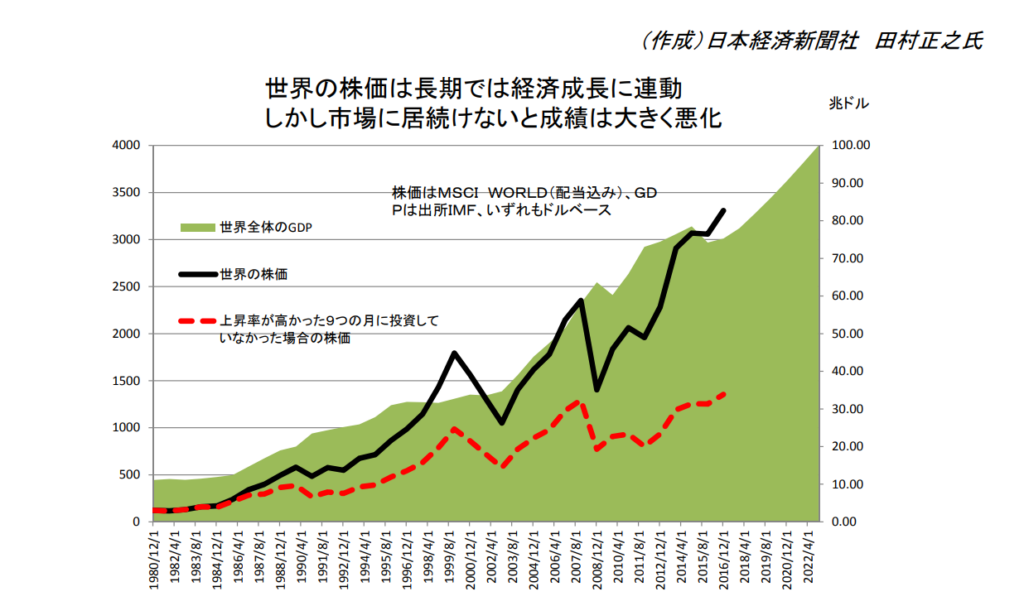
Since the ACWI’s growth is directly tied to global economic growth, it can be expected to deliver stable returns over the long term.
The ACWI also invests in both developed-market stocks and emerging-market stocks. This allows investors to benefit from the growth potential of emerging economies while also gaining exposure to the stable economic foundations of developed markets.
By accommodating diverse economic environments, it balances risk and return effectively.
The ACWI is particularly well suited to long-term investing. Rather than being swayed by short-term market fluctuations, the key is to keep a long-term perspective on global economic growth and let time work in your favor.
Risks of the ACWI
Of course, ACWI investing carries risks as well.
If a worldwide economic crisis or political turmoil causes all global stock markets to crash simultaneously, the ACWI will be significantly affected.
Currency risk is another consideration. If the Japanese yen were to strengthen dramatically against all other currencies, the performance measured in yen could fall short of expectations.
That said, compared to many other products, the ACWI’s nature of spreading investments evenly across all global stocks means it is generally less susceptible to anything short of a truly global problem.
ACWI Performance (Annual Returns)
How much can you realistically expect from the ACWI? Looking at the past 30 years, the approximate annual return has been around 6–9%.
Beginners may think this is not very impressive, but products that consistently deliver this level of return with very low risk are extremely rare.
To expect higher returns, you would need to invest in higher-risk individual stocks or similar assets — and the majority of investors in those assets end up with negative performance.
For this reason, as mentioned above, holding the ACWI as a long-term investment has become one of the most widely recommended strategies among investors today.
How to Buy the ACWI
Finally, a brief note on how to purchase the ACWI. It is an investment trust product, and you can buy it by visiting a bank branch or by registering with an online brokerage.
The name “ACWI” does not refer to a single specific product — multiple companies offer their own ACWI funds.
Currently, the most well-known by far is “eMAXIS Slim All Country (All-Country World Equity)” managed by Mitsubishi UFJ. When people say “Orukan,” they usually mean this product.
Another option is the “Rakuten All-Country Equity Index Fund” managed by Rakuten, which actually has lower management fees (trust fees), so some investors prefer it for that reason.
Both share the same fundamental characteristics as an ACWI product, so choose whichever appeals to you.
Summary
This article provided a brief overview of the ACWI. Going into full detail would take much longer, so here I covered the minimum essential knowledge you need to know about the ACWI.
If you are a beginner, knowing this much is plenty. From here, try buying a small amount within your New NISA (Japan’s revised tax-free investment program) allowance and holding it for a long time to see how it performs.
Needless to say, even though the ACWI is a relatively low-risk product, there is still a risk of losing principal, so please plan your investments with unexpected situations in mind. I have also written a previous article covering general investment fundamentals — feel free to check it out if you’re interested.

Also popular with readers