Doujin vs. Indie: Thoughts from the Game Development Scene
This article is a personal reflection on something I’ve been noticing as an indie game developer — the apparent conflation of “doujin” and “indie” within the game development community.
This is based on research combined with my own subjective impressions, so if that kind of article isn’t your thing, feel free to stop here.
As a quick note: the game I’m developing is linked below. If you’re curious, take a look. It hadn’t launched yet at the time of writing.
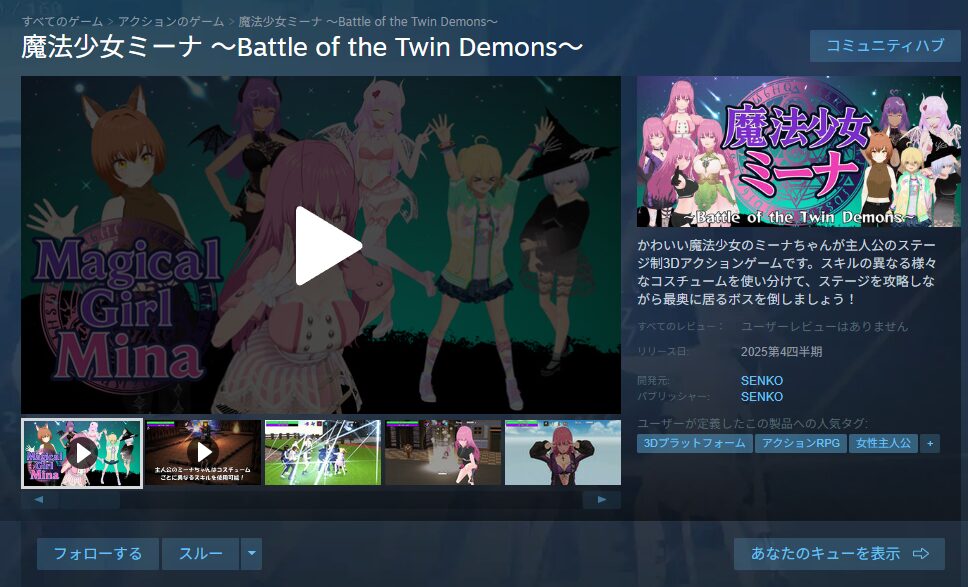
https://twitter.com/FoxEngineer777/status/1974287906367050068
Are Doujin and Indie Really Different?
The reason I wanted to write this article is that I’ve been getting the impression that people in the game development community are using “doujin” and “indie” interchangeably — or treating them as the same thing.
It’s hard to articulate exactly what gave me this impression. I’ve just been observing exchanges on X and gradually developed a vague sense of it.
In my view, these two words share some common ground but are fundamentally different things. So seeing them treated as equivalent in the game dev community struck me as quite jarring.
I searched for “doujin indie difference” on Google and read through several articles. Most of them said something along the lines of “doujin and indie are basically the same thing.”
Are they, really? Do “doujin” and “indie” refer to the same thing?
Some people might find this distinction pedantic, but I think that not understanding the difference between these two concepts can — and does — lead to genuinely unfortunate situations. Specifically: taking something created with a doujin mindset and putting it out in an indie marketplace can go badly wrong.
Before explaining why, let me first look at the backgrounds behind each word.
What Is Doujin?
The word “doujin” (同人) dates back to the Meiji era. Its origins are in describing “individuals (or small groups) who share the same hobbies or aspirations.”
In modern usage, the word “doushi” (同士, “comrades”) is more commonly used for those sharing the same goals, so “doujin” is probably best understood as “people who share the same hobby.”
When most people hear “doujin” today, they likely picture doujinshi sold at events like Comiket (Comic Market). I won’t get into the full history of Comiket here, but in my view, the current image associated with “doujin” was shaped over many years with Comiket and similar doujinshi sales events at its center.
Doujin Is Fundamentally Individual (or Small Circle) Work
After Comiket became established, “doujin” took on a strong association with “works created by an individual or small circle.”
Doujin Is Not (or Cannot Be) Profit-Oriented
But there’s another important implication that emerged alongside Comiket: the idea that doujin work is not commercially motivated.
I believe this stems from the fact that doujinshi has historically been dominated by “secondary works” (二次創作) — creative works derived from existing properties.
Secondary works are typically created without the rights holder’s permission. Fan art shared for free is generally treated as acceptable, but selling derivative works is, strictly speaking, copyright infringement.
In the early days of Comiket, explicit rules around secondary works barely existed. In recent years, however, most companies publish “secondary creation guidelines” that define what is and isn’t permitted. Almost universally, these guidelines prohibit commercial activity involving a company’s original characters or properties.
One notable exception is the “Touhou Project,” which officially allows secondary works — including commercial sales — at the individual creator level. It’s one of very few original works where this is permitted.
Broadly interpreted, much of the doujinshi sold at Comiket, DLsite, and similar venues is technically illegal. Rights holders are generally aware of this, but many tolerate it at a small scale…
Doujin Carries a Shared Understanding of “Amateur Work Made as a Hobby”
What Is Indie?
Indie Is Fundamentally Individual (or Small Team) Work
Indie Is Also About Profit
Indie Is Expected to Deliver Value Proportional to Its Price
What’s the Actual Difference Between Doujin and Indie?
What They Have in Common
The Critical Difference
Are Doujin Sales Venues Really “Doujin” Spaces?
Is Comiket Still a Doujin Space Today?
Are DLsite and DMM (Fanza) Doujin Spaces?
Steam Is Unambiguously Indie
Are Free Games Doujin?
Conclusion
Summary
I’ll be honest: I generally don’t enjoy writing ideological pieces like this. But I do think that if you carry a doujin mindset into an indie marketplace, there’s a good chance you’ll come away hurt.
Also popular with readers