Mythology & Religion Power Ranking TOP100
This article introduces Rank 16: Quetzalcoatl from the “Mythology & Religion Power Ranking TOP100”, which ranks the gods, monsters, and heroes of world mythology, religion, and legend in order of strength.
If you want to see the full TOP100 list and the criteria behind the rankings, check out the overview article below.
Rank 16: Quetzalcoatl (Aztec Mythology)
🪶 What happens if Quetzalcoatl fights the other gods?
I built a simulator that pits the 100 entries in this ranking against each other. It opens with Quetzalcoatl already picked, and an opponent of the same tier chosen for you.
⚔ Send Quetzalcoatl into battleOverview
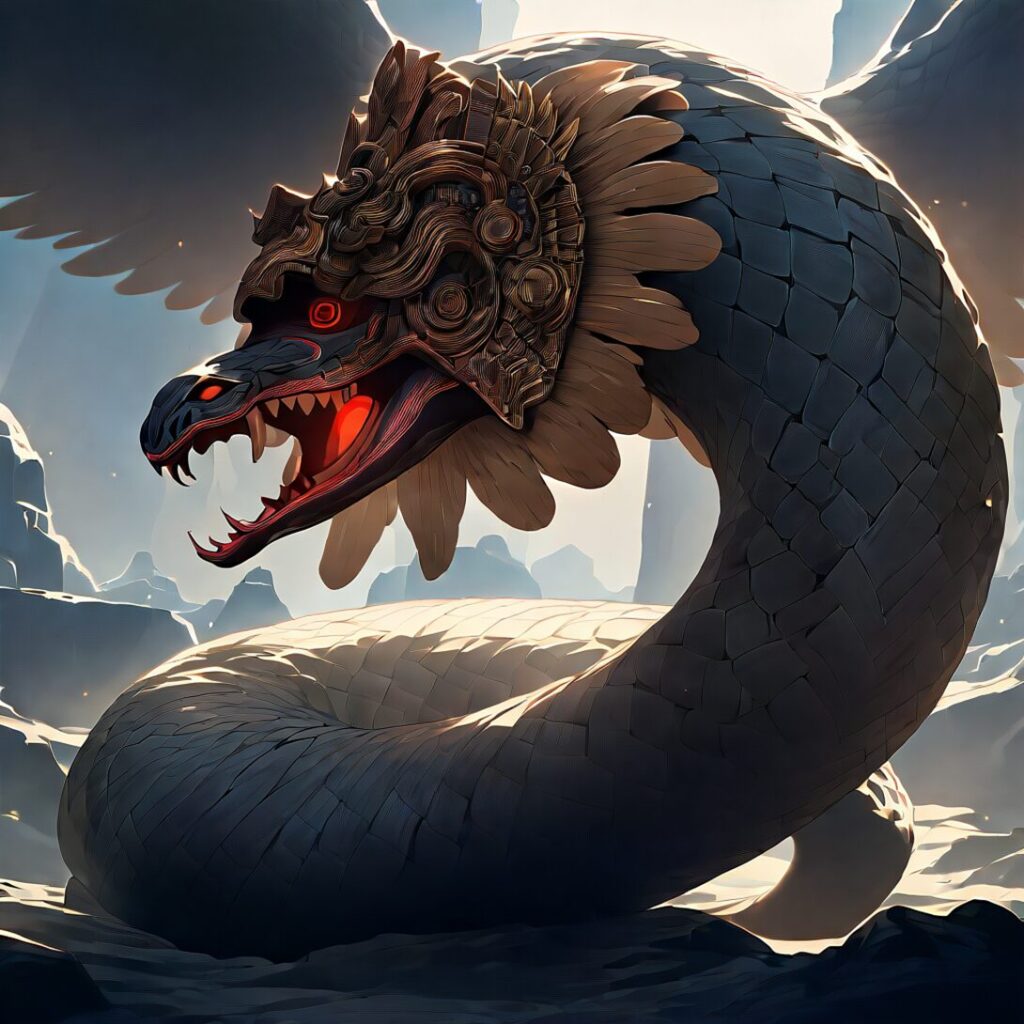
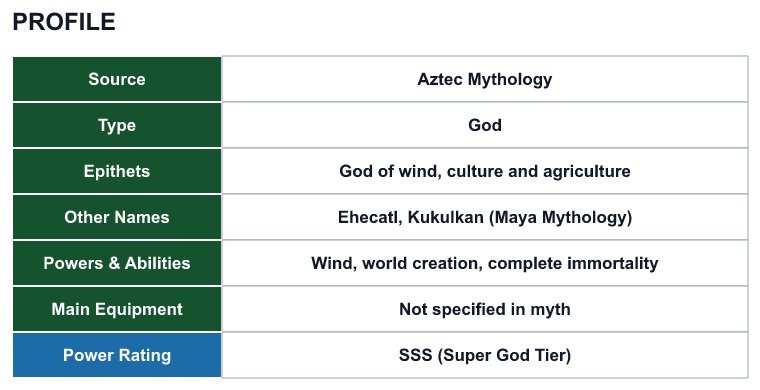
Quetzalcoatl is one of the supreme deities in Aztec mythology, governing diverse domains including wind, knowledge, creation, and agriculture. His name means “Feathered Serpent” in ancient Nahuatl, and he is depicted as a great winged serpent.
In mythology, he is one of the first four gods born from the primordial deity Ometecuhtli (or Tonacatecuhtli), and he shares a rival relationship with Tezcatlipoca — another of the four.
In Aztec mythology, the sun’s world has gone through five eras up to the present day. In the First Sun era, Quetzalcoatl and the other three primordial gods created the world using the body of the monster Cipactli.
During the First Sun era, Tezcatlipoca was the ruling deity of the world, but Quetzalcoatl knocked Tezcatlipoca from the sky in an attempt to supplant him.
In the Second Sun era, Quetzalcoatl ruled as the chief deity over the world, but after Tezcatlipoca transformed all humans into monkeys, Quetzalcoatl unleashed a furious storm and destroyed the world.
There is also the episode in which Tezcatlipoca tricked Quetzalcoatl into drinking alcohol and becoming intoxicated. Ashamed of his behavior, Quetzalcoatl set himself on fire and became the Morning Star — in other words, he died.
However, it is also said that he will one day return, which is why Quetzalcoatl is considered a representative deity of Aztec mythology’s cycle of creation and destruction.
Ranking Reason
Quetzalcoatl is one of the most powerful gods in Aztec mythology — a tradition already known for its grand cosmic scale.
He defeated the enormous monster Cipactli — a beast of world-creating proportions — and possesses the power to casually destroy worlds he no longer finds satisfactory. This places him in a completely different league from ordinary destroyer deities.
Furthermore, as suggested by the episode of his death and return, “death in any meaningful true sense” almost certainly does not apply to him.
Considering both his raw power and his fundamentally transcendent divine nature — in which the concept of death itself essentially does not exist — I judged this ranking position to be appropriate.
About the Book
I wrote a book that compiles this entire ranking! The reasoning behind each placement is grounded in the actual lore and episodes from each mythology, so I think it makes for a fairly convincing read.
The book also contains many columns and extras not published on this blog, so if you are interested, please check it out below.

Also popular with readers
📚 Series: Mythology Power Ranking (Individual Characters) (85/100)