Mythology & Religion Power Ranking TOP100
This article introduces Rank 51: Odin from the “Mythology & Religion Power Ranking TOP100”, which ranks the gods, monsters, and heroes of world mythology, religion, and legend in order of strength.
If you want to see the full TOP100 list and the criteria behind the rankings, check out the overview article below.

Rank 51: Odin (Norse Mythology)
🐦⬛ What happens if Odin fights the other gods?
I built a simulator that pits the 100 entries in this ranking against each other. It opens with Odin already picked, and an opponent of the same tier chosen for you.
⚔ Send Odin into battleOverview
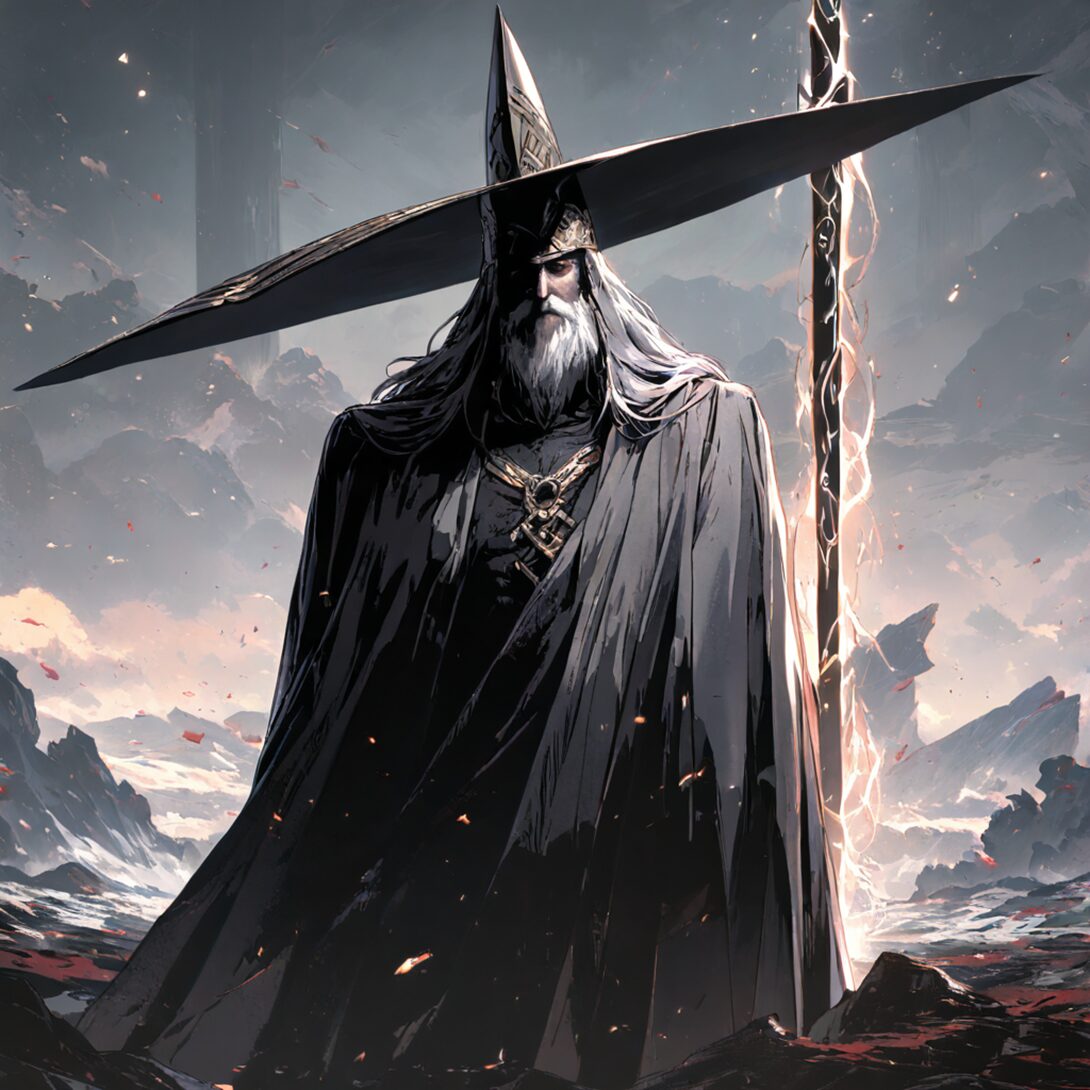
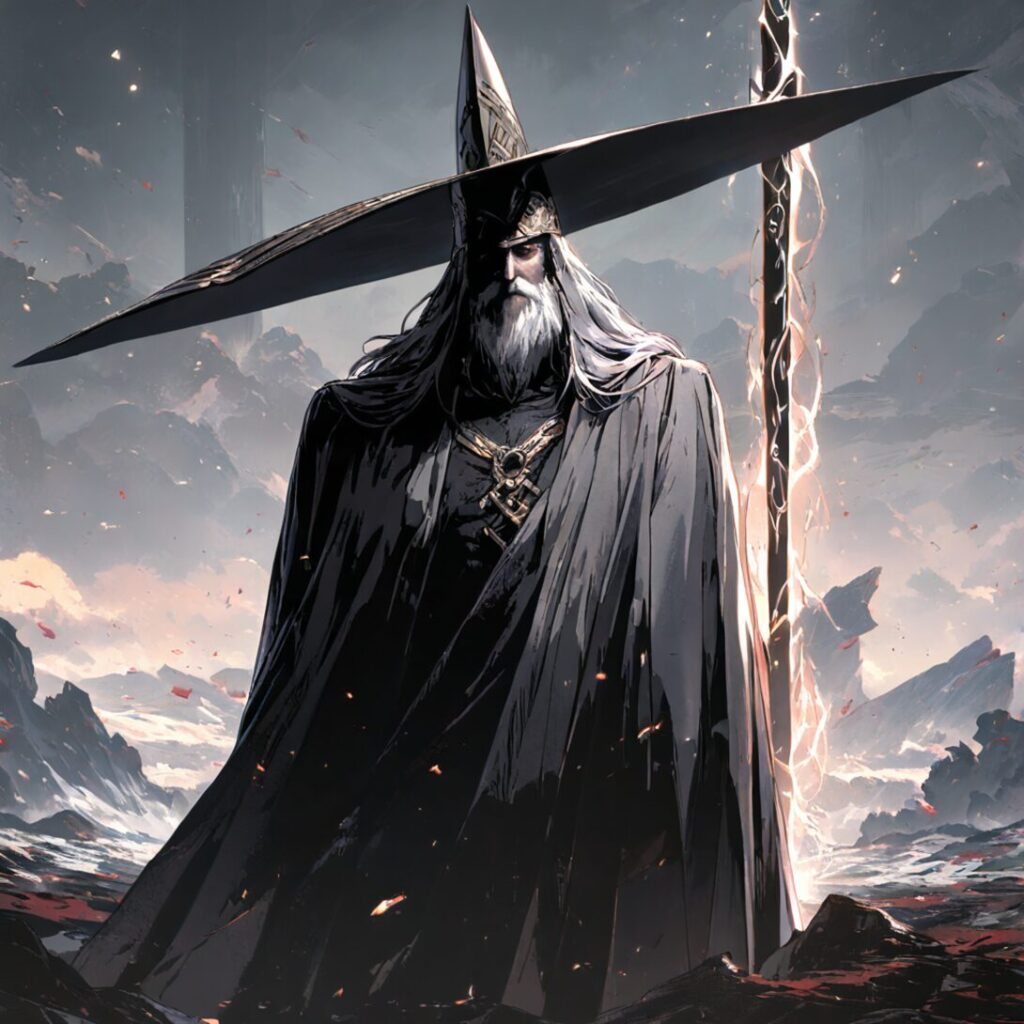
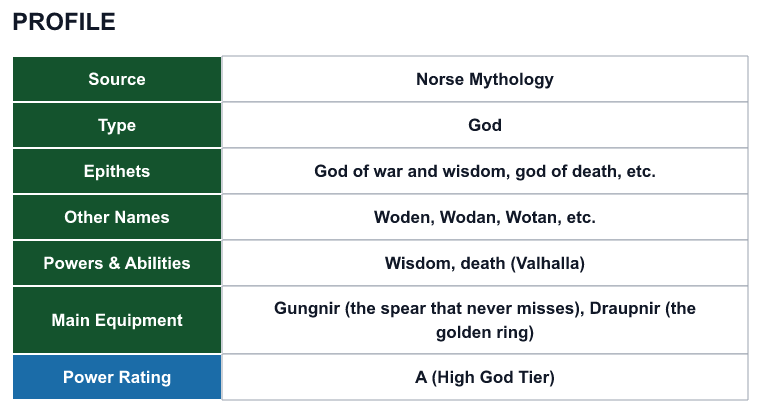
Odin is the supreme god (chief god) of Norse mythology, governing war, wisdom, death, and many other domains.
As the king of the Aesir, he rules Asgard, and is said to welcome those who die in battle to Valhalla (the Hall of the Slain) as Einherjar (the army of the honored dead).
Odin sacrificed one of his eyes to drink from Mimir’s Well (the Well of Wisdom) and gain vast knowledge, and was hung on the World Tree for nine days to understand the secrets of the runic alphabet — his pursuit of knowledge was relentless. The result was that while he did not become omniscient, he undeniably became one of the wisest beings in Norse mythology.
Together with his brother gods (Vili and Vé), Odin slew the primordial giant Ymir and used his body as material to create the world; it is also said that Odin gave life to the very first humans, the ancestors of humanity — making him something close to a creator god in Norse mythology.
On the other hand, despite being called a war god, there are almost no depictions of him fighting directly. In battle, it is suggested that he throws his spear Gungnir to open hostilities, and otherwise at Ragnarök he is simply eaten by Fenrir.
Even so, the fact that he managed to kill the primordial giant Ymir — who was large enough to become the material for world creation — clearly sets him apart from ordinary gods.
Reason for This Ranking
Odin is the supreme deity of Norse mythology and appears in many fictional works, but his martial exploits are, surprisingly, not all that impressive.
On the battlefield, he is said to ride his eight-legged divine horse Sleipnir and charge with his divine spear Gungnir — said to always pierce its target — so his direct combat ability must certainly be high. But in the myths, he most often appears commanding armies rather than fighting directly himself.
For this reason, he is somewhat difficult to evaluate. Based on the world-creation myth, he should have considerable power — but given that he was eaten by Fenrir (however destined it may have been), the impression remains that his raw combat power is not quite as high as his creative power would suggest.
Taking all of this into account, I placed him at this position in the ranking.
About the Book
I wrote a book that compiles this entire ranking! The reasoning behind each placement is grounded in the actual lore and episodes from each mythology, so I think it makes for a fairly convincing read.
The book also contains many columns and extras not published on this blog, so if you are interested, please check it out below.

Also popular with readers
📚 Series: Mythology Power Ranking (Individual Characters) (50/100)