Mythology & Religion Power Ranking TOP100
This article introduces Rank 63: Loki from the “Mythology & Religion Power Ranking TOP100”, which ranks the gods, monsters, and heroes of world mythology, religion, and legend in order of strength.
If you want to see the full TOP100 list and the criteria behind the rankings, check out the overview article below.
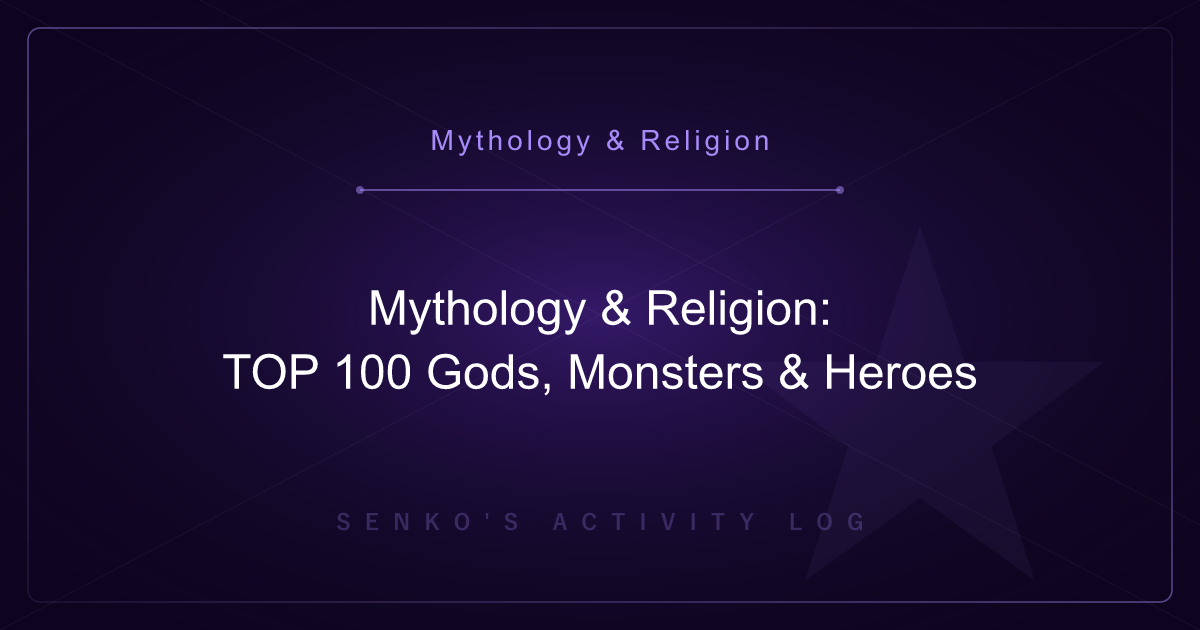
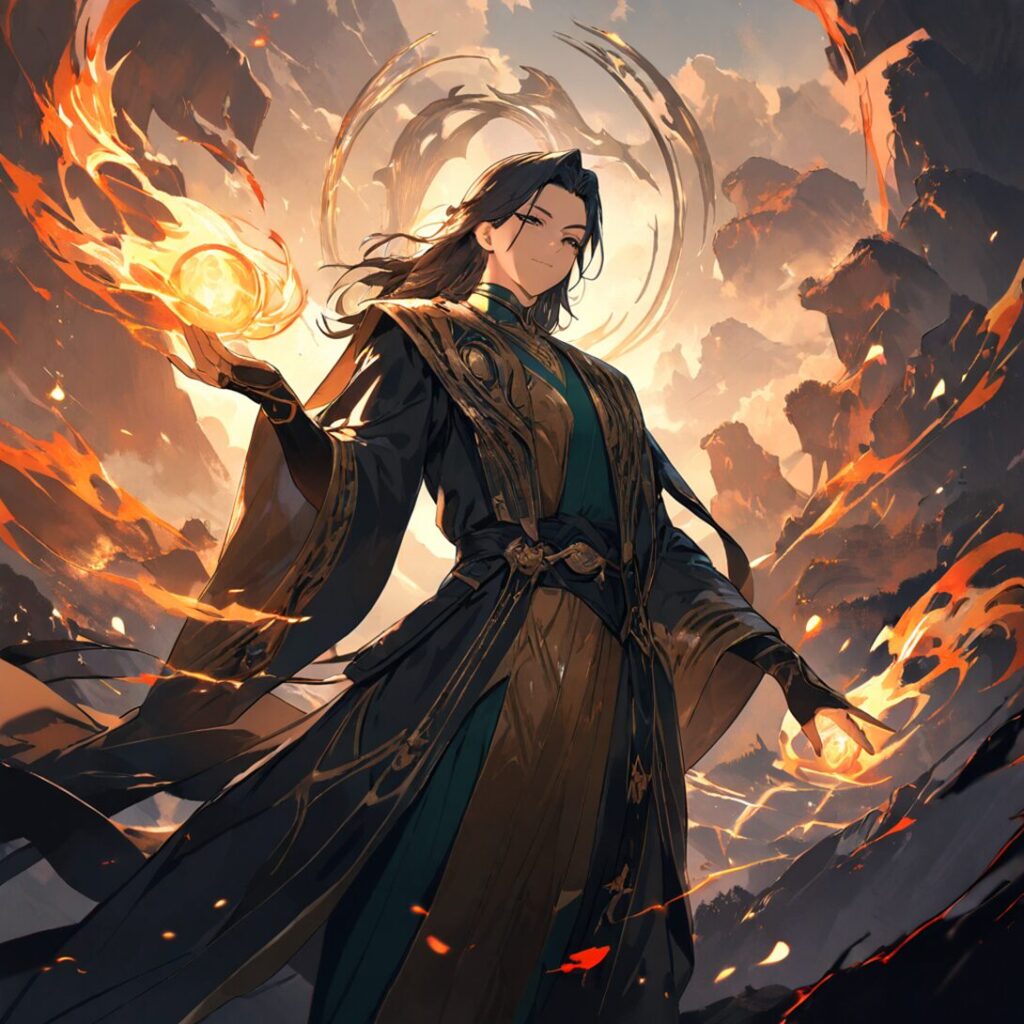
Rank 63: Loki (Norse Mythology)
🃏 What happens if Loki fights the other gods?
I built a simulator that pits the 100 entries in this ranking against each other. It opens with Loki already picked, and an opponent of the same tier chosen for you.
⚔ Send Loki into battleOverview
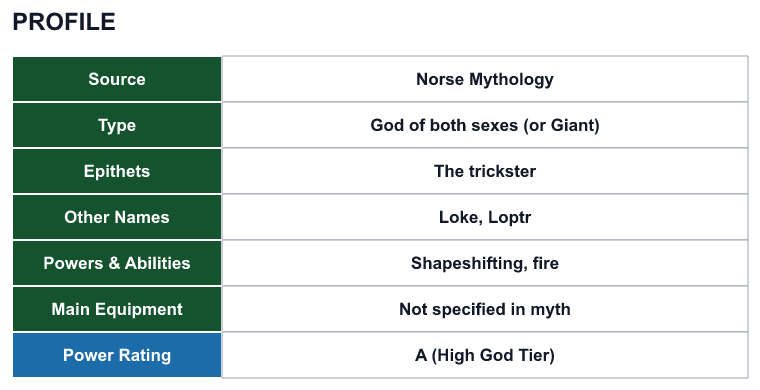
Loki is the greatest trickster in Norse mythology. Although he is nominally counted among the Aesir gods, he is said to have strong giant (Jötunn) blood, and in the final battle of Ragnarok he sided with the giants against the Aesir.
In Norse mythology, many gods — including Odin himself — have giant blood, but most are mixed-race descendants of gods and giants.
However, there is a strong tradition that both of Loki’s parents were pure-blooded giants. This gives Loki a very unusual background: he is a giant by birth who became a sworn blood-brother of Odin and an honorary member of the Aesir.
Loki possesses remarkable shape-shifting abilities, freely transforming into fish, birds, horses, women, and many other forms.
There is even an unprecedented myth in which he transformed into a mare and gave birth to (delivered) the divine horse Sleipnir — making him a being that defies even the categories of male and female deity.
He is depicted as a “god of ingenuity” whose cunning intellect, eloquence, and sorcery help the gods out of difficult situations, while at the same time he is the figure who ultimately “pulled the trigger” on Ragnarok, leading the gods to their destruction.
There are very few episodes that illustrate Loki’s own strength. In terms of combat, the only notable tale is that he fought Heimdall at Ragnarok and they killed each other.
Heimdall is a war god who has long protected Asgard, so he is certainly not weak — but he doesn’t give the impression of being an overwhelmingly powerful deity either.
That said, since Loki is said to be the parent of terrifyingly powerful monsters like Fenrir and Jormungandr, it is quite likely that he himself possesses considerable power.
Why This Ranking
Loki is not a war god who excels in direct combat. He is a trickster-type deity whose weapons are wisdom, shapeshifting, schemes, and betrayal. There are almost no episodes in which he defeats enemies in direct battle — instead, he manipulates gods with words and schemes, sometimes saving them and sometimes leading them to ruin.
At Ragnarok, all we know is that he and Heimdall killed each other. But considering that Heimdall wielded the horn Gjallarhorn to signal the coming of Ragnarok and guarded the strategically vital Bifrost bridge, it can be inferred that Loki possesses power surpassing that of higher-ranking war gods.
Furthermore, if Loki himself did not have considerable power, powerful monsters like Fenrir and Jormungandr could never have been born from him. Factoring that in, it’s reasonable to conclude that he has the power of a high-ranking deity.
For these reasons, I placed him at this position in the ranking.
About the Book
I wrote a book that compiles this entire ranking! The reasoning behind each placement is grounded in the actual lore and episodes from each mythology, so I think it makes for a fairly convincing read.
The book also contains many columns and extras not published on this blog, so if you are interested, please check it out below.

Also popular with readers
📚 Series: Mythology Power Ranking (Individual Characters) (38/100)