Mythology & Religion Power Ranking TOP100
This article introduces Rank 80: Tyr from the “Mythology & Religion Power Ranking TOP100”, which ranks the gods, monsters, and heroes of world mythology, religion, and legend in order of strength.
If you want to see the full TOP100 list and the criteria behind the rankings, check out the overview article below.

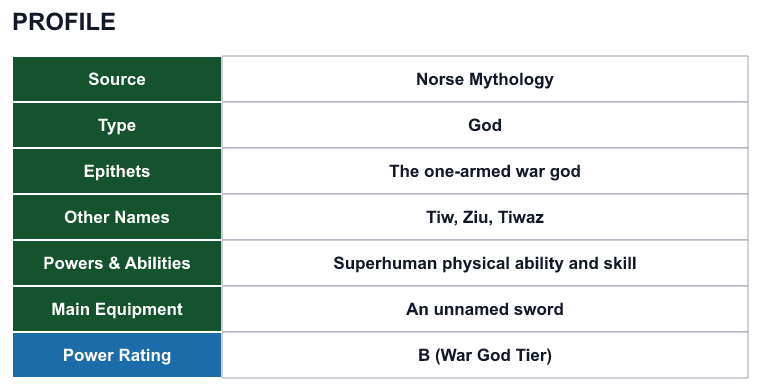
Rank 80: Tyr (Norse Mythology)
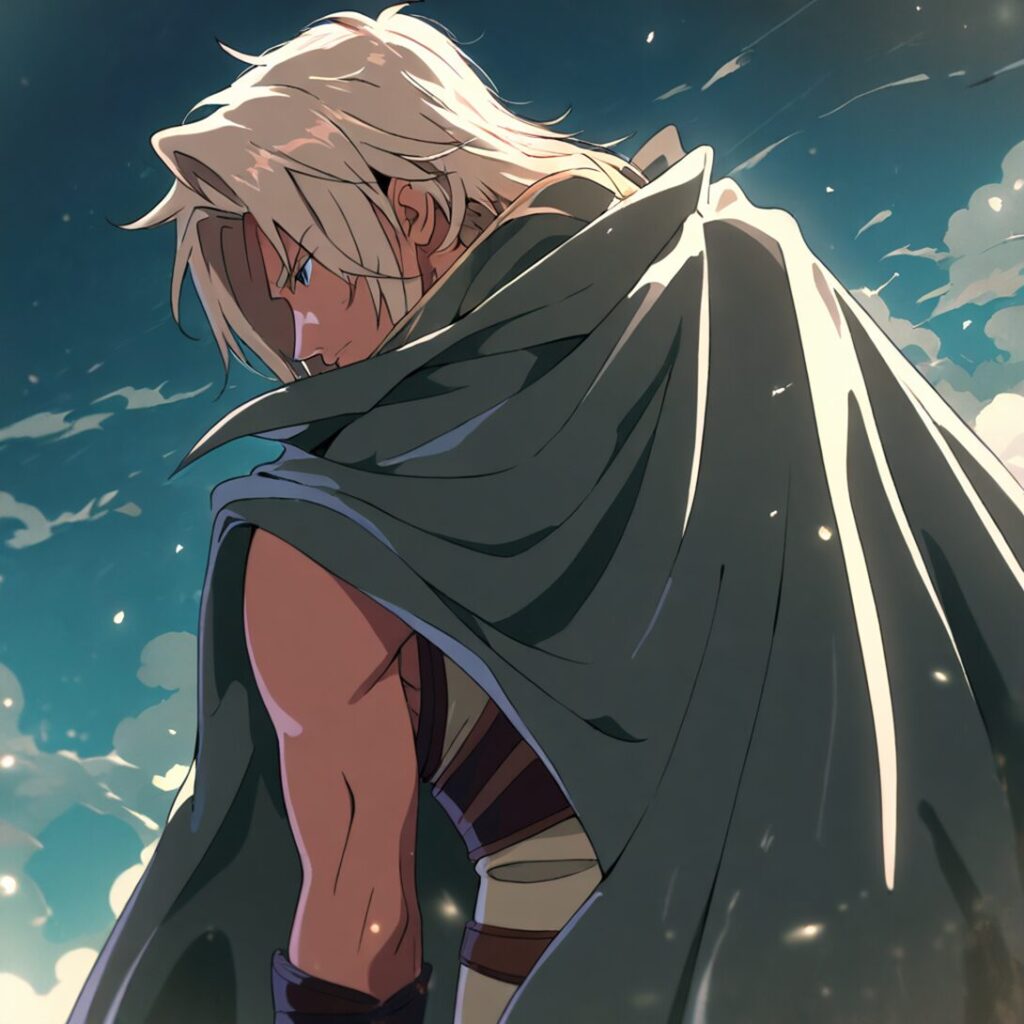
🐺 What happens if Tyr fights the other gods?
I built a simulator that pits the 100 entries in this ranking against each other. It opens with Tyr already picked, and an opponent of the same tier chosen for you.
⚔ Send Tyr into battleOverview
Tyr is the war god of Norse mythology, governing warfare and courage. While he has been overshadowed in more recent traditions by the rise of the chief god Odin and the thunder god Thor, he was once regarded as the supreme deity of Norse mythology and is the etymological origin of “Tuesday.”
In Ragnarok, the final battle of Norse mythology, Tyr fought as one of the Aesir gods but was said to have fought to a mutual kill with the hound of Hel, Garm.
The defining episode associated with Tyr involves Fenrir, one of the greatest monsters in Norse mythology. When the gods were trying to bind Fenrir with the magical ribbon Gleipnir to prevent him from fulfilling the prophecy of becoming a catastrophe at Ragnarok, the suspicious Fenrir declared, “If you have no intention of deceiving me, put your arm in my mouth as a pledge.”
All the other gods were too afraid to do it, but Tyr willingly placed his right arm in Fenrir’s jaws.
When Fenrir was bound with Gleipnir and realized he had been tricked, he bit off Tyr’s right arm.
Why This Ranking
Tyr was regarded as the supreme deity in the older traditions of Norse mythology, reflecting how high his divine rank was. However, the roles of supreme god and greatest war god were eventually taken over by Odin and Thor, and in modern tradition he has settled into the position of a god of courage who is primarily remembered for the Fenrir incident.
At Ragnarok he fought Garm to a mutual kill, and virtually no other battle records appear in the myths.
The strength of Garm itself is only vaguely described as being a guardian of the underworld stronger than ordinary gods, making Tyr genuinely difficult to evaluate. However, given that he is a representative war god of Norse mythology, and considering the strength of other Norse gods, I concluded that this position in the ranking is about right.
About the Book
I wrote a book that compiles this entire ranking! The reasoning behind each placement is grounded in the actual lore and episodes from each mythology, so I think it makes for a fairly convincing read.
The book also contains many columns and extras not published on this blog, so if you are interested, please check it out below.

Also popular with readers
📚 Series: Mythology Power Ranking (Individual Characters) (21/100)