How to Promote a Game on Steam
This article explains how independent game developers (and small indie teams) can promote the games they want to sell on Steam (or other platforms).
The reason I decided to write this: the following post on X got far more engagement than I expected.
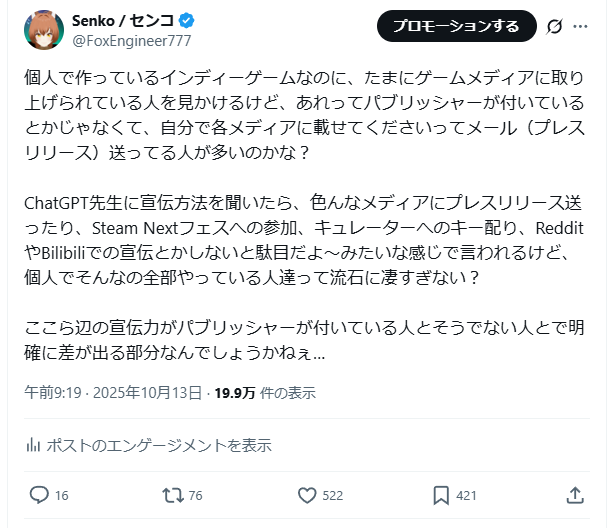
It turns out a lot of people are struggling with how to promote their own games. This article is my attempt to document the promotional methods I used when releasing my game on Steam—in the hope that it helps others in the same situation.
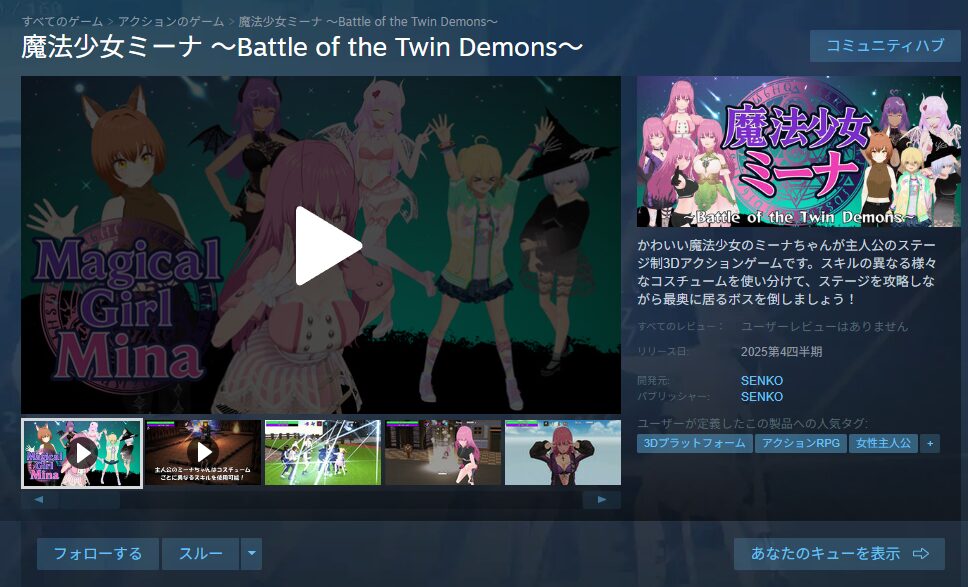
For reference, here is the game I submitted to Steam. Feel free to check it out if you’re curious.
https://twitter.com/FoxEngineer777/status/1974287906367050068
Does an Indie Game Even Need Promotion?
People who are making and selling their own games—whether solo or in a small indie team—usually have more than enough knowledge and technical skill to make a game. That’s almost a given: people who can’t make games rarely think about selling them.
But many of those same developers see their finished game sell almost nothing, and eventually leave the industry.
Most of them probably conclude: “My game just wasn’t good enough.”
I don’t think that’s right.
Here’s why: whether a game is fun or not is something you can only judge after actually playing it. Games with poor reviews are the ones that have been played and found lacking. Games that sell zero copies never got played at all—they’re in an entirely different category.
Sure, if a game’s screenshots or trailer clearly look unappealing, many people will hesitate to buy. But if the visuals are compelling and the concept is interesting, more people will want to buy.
My belief is that games that sell nothing almost always have one core problem: not enough promotion.
Solo and indie developers often post on X and call it done—but unless you’re a major influencer, the promotional reach of an X post is minimal. That said, there are ways to reach large audiences even without influencer-level followings.
When people hear “promotion,” they immediately think “I can’t afford that.” But there are multiple effective promotional approaches that cost almost nothing.
This article focuses on what those near-free options actually are.
Near-Free Promotion Methods for Indie Developers
These are the main options for independent and indie developers to promote their games at minimal cost—also mentioned in the X post linked above:
- Send press releases to media outlets
- Participate in events (Steam Next Fest, etc.)
- Request reviews and coverage (distribute keys to curators, reach out to streamers)
- Promote on overseas platforms (Reddit, Bilibili)
The reason I say “near-free” rather than “free” is that some events have a small fee—though nothing significant.
The following sections cover each method in detail.
One more option worth mentioning: publishers exist specifically to handle this kind of promotional work on behalf of developers. If the activities listed above feel overwhelming, finding a publisher might be worth exploring—though it’s not easy.
What Is a Publisher?
Since we’re on the topic, let me briefly explain what a publisher is in the indie game context.
An indie game publisher is, simply put, a company that helps sell your game. The distinction between “developer” (who makes the game) and “publisher” (who sells it) has existed in the game industry for decades—but the indie game space has its own unique flavor, so it’s worth treating separately.
Publisher support varies widely by company, but typically includes promotional activities like the ones listed above, localization support (multi-language translation), porting to other platforms (like Nintendo Switch), and in some cases even development funding.
In recent years, publishers have become increasingly prominent in the indie game space, and many well-known indie titles now have publisher backing.
Of course, publishers support indie games to make money. Contracts typically involve giving the publisher 30–40% of sales revenue.
That might sound like a lot—but if a publisher’s involvement results in significantly more sales, the developer’s total profit can still increase substantially. The math often works in both parties’ favor.
In particular, a publisher that provides development funding can be transformative: it removes financial pressure and lets developers focus on making the game.
That said, there are publishers who demand their cut without actually delivering meaningful support—and in some overseas markets, this has led to lawsuits. Solo and indie developers should thoroughly research a publisher’s track record before agreeing to anything, even if they reach out first. Signing a contract that ends up being a bad deal is worse than going it alone.
As an aside: from a business perspective, publishers who focus on marketing rather than funding carry almost no risk—they apply low-cost expertise and potentially benefit enormously if the game hits. Whether or how that dynamic changes as the indie game industry matures remains to be seen.
Sending Press Releases to Media Outlets
Participating in Events (Steam Next Fest, etc.)
Requesting Reviews and Coverage
Promoting on Overseas Platforms (Reddit, Bilibili)
Summary
This article covered promotional methods for selling a game on Steam.