Should Independent Game Developers Sell on Steam?
This article explores whether independent game developers and indie developers should sell their games on Steam, based on my own thinking and research. For the step-by-step process of selling on Steam, see the page below.
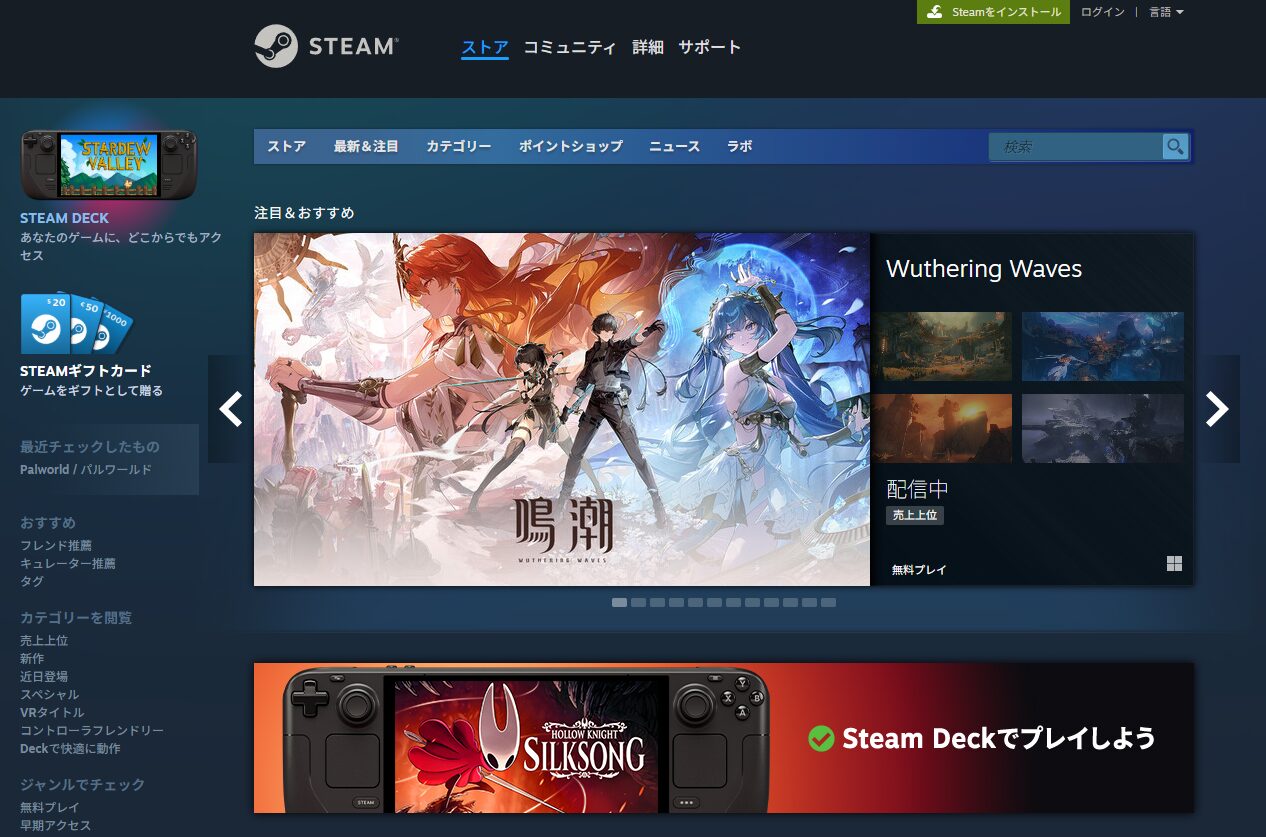
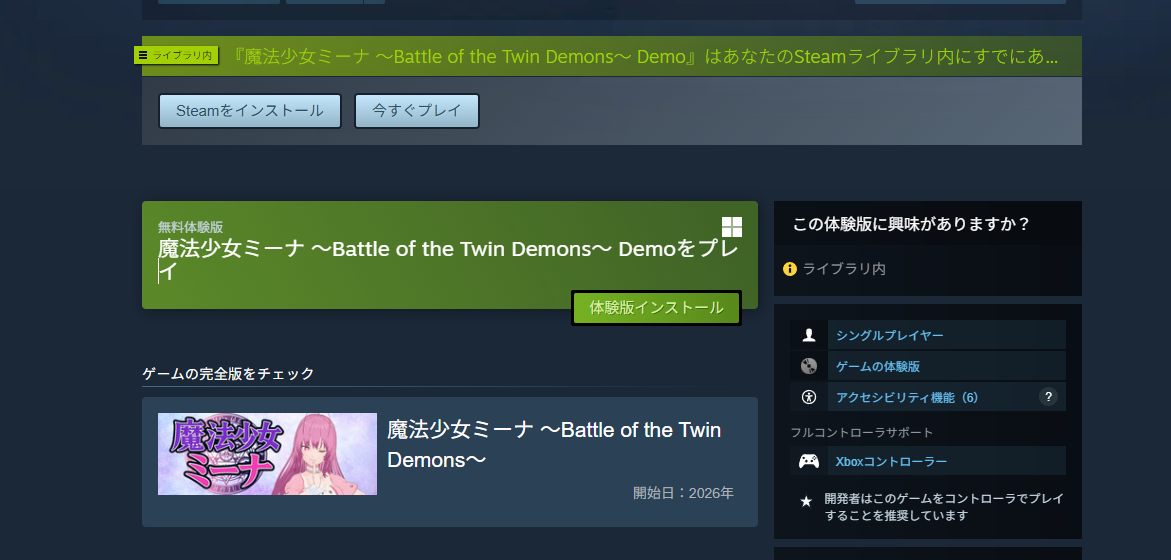
For reference, here is the game I submitted to Steam. Feel free to check it out if you’re curious.
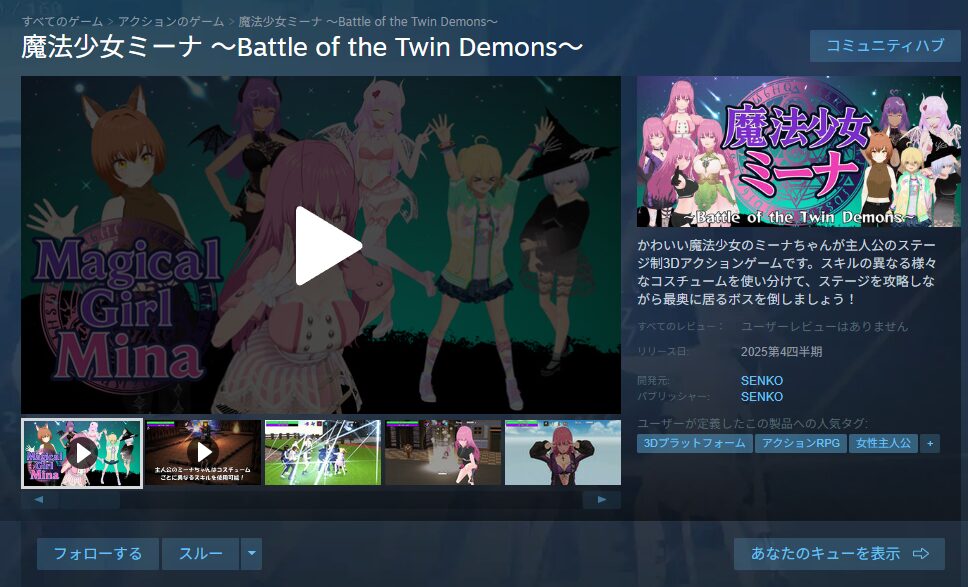
https://twitter.com/FoxEngineer777/status/1974287906367050068
Think Carefully Before Committing to Steam
In earlier articles, I walked through the complete process of selling a game on Steam in detail.
As those articles make clear, selling on Steam involves a complex and time-consuming registration process, a $100 deposit, and the submission of significant personal information. Starting without a clear understanding of what’s involved leads many people to give up partway through.
For that reason, I think it’s important for independent and indie developers to carefully consider whether selling their game on Steam is actually the right move.
What follows is my own thinking on whether Steam is really necessary—and I want to be upfront that this reflects my perspective, not some objective truth. If you want to put your game on Steam regardless of commercial considerations, that’s a completely valid decision too.
I’m not particularly drawn to purely commercial thinking in game development—as a creator or as a player—so please read this more as “things to keep in mind when selling a hard-made game on Steam” rather than a hard-line business analysis.
The Biggest Benefit of Selling on Steam
The biggest benefit of selling on Steam is undeniably this: the chance that far more users—especially overseas users—will buy your work. For most people considering a Steam release, this is also the primary motivation.
Since Steam is the industry’s de facto standard, putting your game on Steam is a natural choice if you want players worldwide to experience it.
That said, while a Steam release does dramatically expand the potential for overseas sales, it’s still just a potential—whether overseas users actually buy your game depends heavily on the game itself.
If you believe your work is good enough that it will definitely reach overseas players, that confidence isn’t a bad thing in itself. But the number of people with the rare ability to recognize quality in a completely unknown game from an unknown developer is extremely small.
Games that sell to overseas users tend to have characteristics that appeal to overseas audiences. Conversely, games without those characteristics may struggle to even get their store page visited.
Of course, exceptions exist—games with many unfavorable characteristics that still found a wide international audience—so none of this is absolute.
Characteristics of Games That Appeal to Overseas Users
Based on my own research and consultation with tools like ChatGPT, here are the key characteristics:
- The game is in a genre with strong overseas demand
- The game supports multiple languages (English at minimum)
- The store page trailer and visuals are high quality
- The game offers something unique that can’t be found elsewhere
There are other factors, but listing everything would be endless—so I’ve focused on these four.
Games that meet these conditions are less likely to sell zero copies on Steam, though even meeting all four doesn’t guarantee success.
1. A Genre with Strong Overseas Demand
Simply put: if there’s no demand for the genre, the chance of an unknown game selling is very low.
Genres with strong overseas demand (and thus better exposure for indie titles) include: action, RPG, FPS, TPS, survival crafting, MOBA, battle royale, sports, strategy (SLG), horror, and social/multiplayer.
Games in these genres have a higher chance of getting their store page seen by indie players—but these are also highly competitive spaces dominated by major studios and well-known indie names. Differentiation (through price, a strong unique element, etc.) is essential.
Without differentiation, you’ll disappear into the crowd. Even in a high-demand genre, sales will remain low if there’s nothing to stand out.
Alternatively, targeting niche demand rather than mainstream genres is also a viable strategy—and for solo developers who can’t realistically compete with major studios, going niche may actually improve the odds.
Cooperative multiplayer games tend to perform well with overseas audiences, but network management makes this challenging for solo developers.
2. Broad Localization Support
It’s obvious that overseas users are unlikely to buy a Japanese-only game unless it’s already a known title—so this almost goes without saying.
For solo and indie developers, localization is often the biggest barrier to Steam success. But without at least English support, your game has almost no chance of reaching overseas users.
As of August 2025, Steam’s language distribution looked like this:
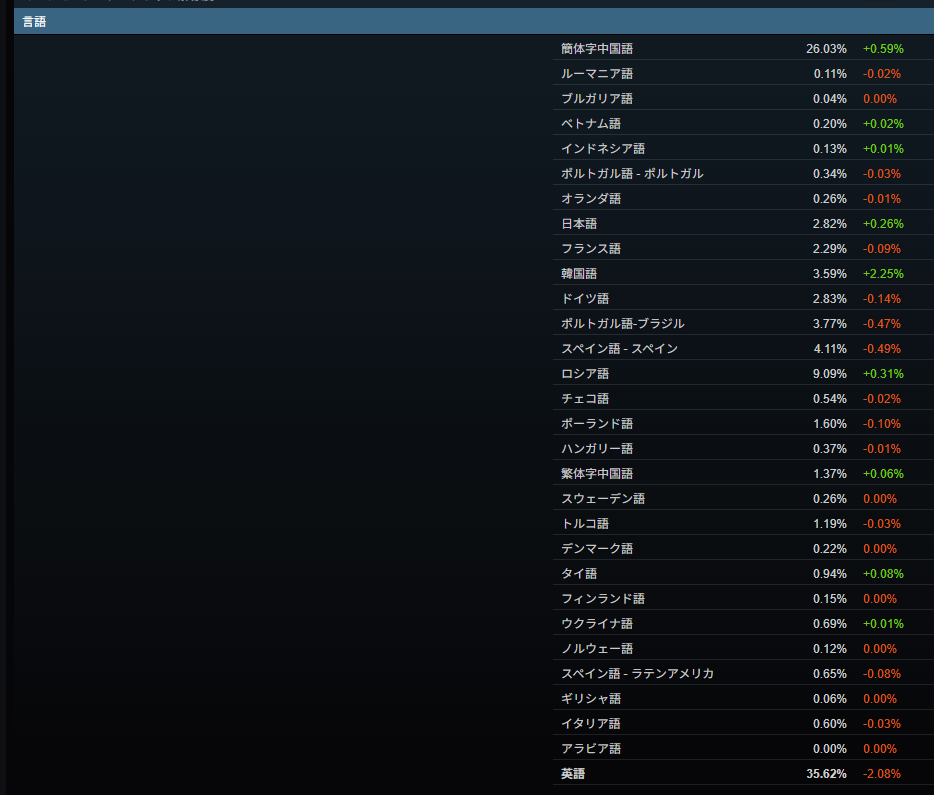
English accounts for roughly 35% of users, and Simplified Chinese for around 26%—together, these two languages make up over 60% of Steam’s user base.
Ideally, you’d support both. However, Simplified Chinese is notoriously difficult to localize well—machine-translated Chinese often leads to a flood of negative reviews. If you pursue it, hiring a professional translator is strongly recommended.
For most developers, the realistic baseline is: at minimum, support English. Without it, publishing on Steam largely defeats the purpose.
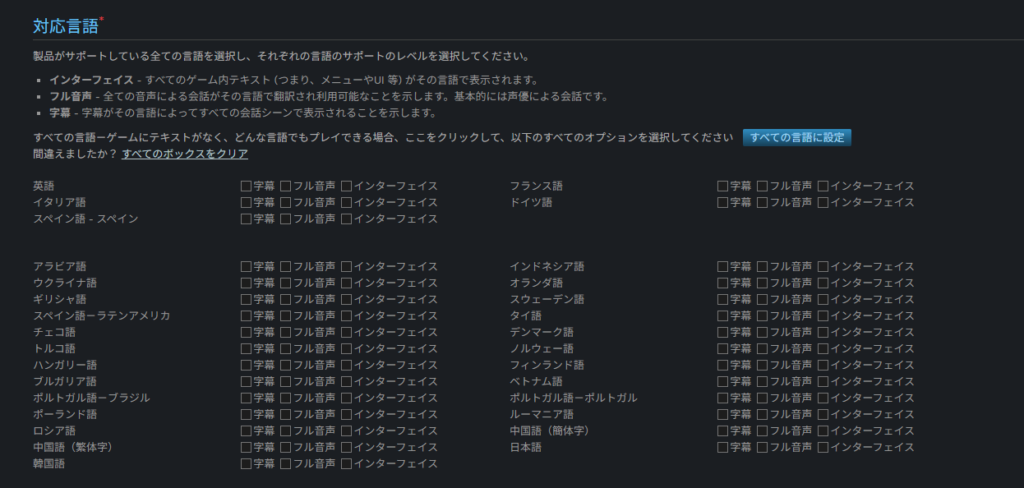
That said, if your game is designed with minimal language dependence, localization may require little or no work. Steam’s store page even allows you to check support for all languages if the game is genuinely playable without any language. In practice, truly language-agnostic games are rare—but worth noting.
3. High-Quality Trailer and Visuals on the Store Page
If conditions 1 and 2 are met, a user might land on your store page. Condition 3 is what determines whether they buy.
If the video or images on the store page are underwhelming, overseas users will leave immediately. Making an engaging, compelling page is where the developer’s skills are put to the test.
The first trailer carries enormous weight. Research suggests many users decide whether to buy within the first 5–10 seconds of watching it.
That means the opening seconds should show actual gameplay footage. Starting with a long logo, title card, text, or static image is described by some as one of the worst things you can do in a trailer.
Beyond that, production quality—music, editing, and presentation—also matters. A trailer that makes viewers want to play is the goal. (I’m honestly not good at that myself…)
4. Something Unique to That Game
This isn’t specific to Steam or indie development—it applies to games broadly—but games that become popular as original titles almost always have a strong element that only they can offer.
The indie game market has become extremely competitive. Games that are merely high-quality without a distinctive identity are increasingly struggling.
“Uniqueness” is hard to define briefly, but it comes down to: something players can only experience by playing this particular game—a feeling, a story, a mechanical twist, a sense of humor, something.
Games like Minecraft, Undertale, and Palworld are examples: all became massive global hits despite being new titles from unknown developers, powered by something no other game offered.
Uniqueness can come from story, world-building, game mechanics, art design, music, presentation, or some combination. Some games achieve a truly one-of-a-kind identity by combining multiple dimensions.
That said, even major studios and well-known indie developers struggle to create genuinely unique games, so achieving this as a solo developer is genuinely difficult. (Though solo developers are sometimes positioned to do things that studios can’t.)
For example, a magical girl action game—like the one I’m making—has many competitors on Steam. Without a clear differentiator, it’s realistically unlikely to become a breakout hit.
If you’re planning to develop a game for Steam, I recommend thinking about what makes your game unique before you start building it.
One challenge: uniqueness is often something players can only perceive after playing—and unknown indie games rarely get played by default. So no matter how unique your game is, that uniqueness may not translate to actual sales.
A recent trend worth noting: many indie games seem to be pushing increasingly extreme content, or extremely punishing difficulty, as a form of differentiation. Draw your own conclusions from that.
Beyond the four factors above, growing your visibility through overseas social media and running small targeted ads can also generate attention through separate channels.
Ultimately, sales are determined by the combined force of all these strategies. Even a game that checks all four boxes might still struggle—no one can know in advance how it will perform.
Characteristics of Games That Struggle with Overseas Users
Now for the flip side—characteristics that make a game harder to sell to overseas users:
- A genre with low overseas demand
- No localization (Japanese only)
- Too short or low in content volume
These are roughly the inverse of the favorable characteristics listed above.
1. A Genre with Low Overseas Demand
Genres with limited overseas appeal include: command-based turn-based RPGs, visual novels, romance simulations, puzzle games, VR, SRPGs, card games, and rhythm/music games.
Notably, many of the genres Japanese solo developers most commonly produce—RPG Maker-style command RPGs, visual novels, romance simulations—fall into this low-demand category for overseas audiences.
There are exceptions, of course. Some titles in these genres have become enormously popular internationally, and these genres do have dedicated niche audiences. But the reality is that the majority of games in these genres sell very little.
Overseas PC gamers tend to prefer games with active, dynamic gameplay—which is part of why mobile-oriented genres like puzzles tend to underperform.
VR has limited overall demand due to hardware requirements, but niche VR indie titles occasionally achieve explosive success—there’s more upside than the low base demand might suggest.
SRPGs (Fire Emblem-style games) have meaningful niche demand, but the overall market is small and breakout hits are rare.
Card games and rhythm games are reasonably popular in Japan, but international demand is limited—only major franchise titles tend to sell well internationally.
That said, even low-popularity genres can break through with exceptional art, highly original mechanics, or word-of-mouth momentum. Genre alone isn’t a reason to give up on Steam.
On the flip side: if you’re making a game in one of these genres, it might be better suited for mobile—romance sims, visual novels, and puzzles all have a larger audience on smartphones. (Though this is harder for RPG Maker projects.)
2. No Localization (Japanese Only)
As covered above: a Japanese-only game limits your potential audience to overseas players who understand Japanese and are interested in your specific game. This is an extremely narrow overlap.
Of course, you can still sell to Japanese players and Japanese expats—but the primary benefit of Steam, reaching overseas users, is essentially eliminated.
If you’re going to sell on Steam, supporting at least English is not just recommended—it’s essentially required. Skipping English makes the value proposition of a Steam release much weaker.
Even English-only support gives you access to non-English players who are willing to play in English. English is the floor; everything beyond it is a bonus.
3. Too Short or Low in Content Volume
This might be surprising, but games with too little content tend to perform poorly with overseas audiences.
Overseas Steam users who pay money expect a full, substantial gaming experience. Games with too little content—mini-game collections, illustration galleries, or games with very thin core content—tend to attract negative reviews simply for being short.
This reflects in pricing expectations. The baseline price for an indie game targeted at overseas markets is roughly $10 (around ¥1,500). Pricing significantly below this signals to overseas users that the game is lightweight and low-effort, which reduces purchase motivation.
Conversely, for highly polished indie titles or well-known developers, $40 (around ¥6,000) is perceived as fair value. (Many fans have argued that Hollow Knight: Silksong should launch at $40, not $20.)
So the practical reality is: games priced around $10 need content that justifies that price. Games that fall short—generally meaning under 10 hours of playtime—are at high risk of negative reception.
A budget pricing strategy isn’t inherently wrong, but achieving the same total revenue as a $10 game at a lower price point becomes significantly harder.
Deciding Whether to Sell on Steam
Honestly, if you only want to reach Japanese users and don’t care about overseas sales, selling on major Japanese platforms (DLsite, DMM, etc.) is probably sufficient.
That said, I’m not against using Steam for other legitimate reasons: wanting the experience of a Steam release, wanting to challenge yourself with the platform, or wanting to reach Japanese players who don’t use domestic storefronts.
It’s also true that DLsite and DMM are strong for adult games and bishoujo games but less well-suited for titles without those elements. Steam can fill a gap there.
And simply having a Steam presence doesn’t hurt—at the very least, it’s a foundation for reaching overseas audiences with future projects.
That said: the path to Steam is extremely labor-intensive. And entering with the expectation that “Steam = big sales” sets developers up for disappointment. The reality of indie Steam sales is harder than it looks.
This is particularly true for developers whose primary strength is storytelling. Even a compelling Japanese-language story loses much of its impact in translation—narrative-heavy games face an especially steep climb.
For that reason, my honest advice is: if you’re making a genre with low overseas appeal and have no plans to localize, consider starting with Japanese storefronts rather than jumping straight to Steam.
A More Realistic Look: Sales and Profit Calculations
Let me go a step further and think practically about what kind of sales numbers, revenue, and profit a solo developer can realistically expect on Steam. (This is a tangent from the “should you sell on Steam” question—feel free to skip ahead.)
Keep in mind these are rough estimates that vary significantly by game.
A commonly cited rule of thumb among indie developers: sales = number of reviews × 30–50.
If you search Steam for obscure indie titles, you’ll find that the majority have fewer than 30 reviews—often fewer than 10.
This means most solo developer games sell fewer than 1,000 copies total. Fewer than 100 is not unusual.
Overseas research suggests the average indie game sells 1,000–5,000 copies, but that’s data skewed toward English-language markets. For Japanese solo developers, the figures are likely at the lower end.
Let’s calculate what revenue and profit looks like selling 1,000 copies of a $10 game:
Calculation: Revenue and Profit from 1,000 Steam Sales
- Revenue: $10 × 1,000 = $10,000 (approx. ¥1,500,000)
- After Steam’s 30% cut: $10,000 − $3,000 = $7,000 (approx. ¥1,050,000)
- After income tax and resident tax (approx. 20%): $7,000 − $1,400 = $5,600 (approx. ¥840,000)
In practice, subtract your development costs (which can be partially tax-deductible), plus foreign exchange and transfer fees when converting dollars to yen.
The conclusion: selling 1,000 copies is already a significant challenge for most solo developers—and even hitting that milestone yields a very limited profit.
Given that most developers sell a few dozen to a few hundred copies, and accounting for the $100 deposit, many solo developers end up in the red after a Steam release.
Additionally, most Steam sales happen during sales events, where the actual price is typically $8 or less.
Taking all of this into account: if you’re hoping to make a living as an independent developer, you’d realistically need to sell at least 5,000 copies per year, and ideally closer to 10,000. Otherwise, sustainable income from game development remains extremely difficult.
This context makes clear why having overseas appeal—and thus access to a much larger potential audience—matters so much. Relying exclusively on Japanese buyers to hit those numbers is very difficult.
Summary
This article explored what independent and indie developers should consider before selling their games on Steam.
Some readers may feel this article is saying “your game won’t sell.” That’s not quite my intent—this reflects my research and perspective, and you’re free to disagree. If you want to put your game on Steam regardless of all of this, that’s perfectly valid.
As I said at the start: I’m not a fan of purely commercial thinking in game development. If you want to release on Steam simply because you want to, that’s a fine reason.
What I want to convey is simply: selling on Steam is hard work, and games that don’t meet the needs of overseas users are unlikely to see sales that justify that effort.
My concern is that some developers, having read the reality laid out here, might give up on making games entirely. That’s what prompted me to write this article.
Understanding sales and revenue expectations before you start puts you in a position to plan strategically—rather than being blindsided after the fact.
One final thought: even a genuinely great game can fail to sell if it lacks visibility. In many cases, marketing matters more than polish. The ability of a game to go viral on social media—being clipped, streamed, and shared—is increasingly one of the biggest factors in commercial success. That may be the single most important variable of all.
These questions about sales and marketing are endless, and there’s no single correct answer. For now, the only question I want to leave you with is: should you put your game on Steam?
I have more opinions on all of this, but anything further would just be editorializing. This is where I’ll end the article.
Feel free to browse other articles on the site.

Also popular with readers
📚 Series: How to Sell Your Game on Steam (6/7)