Introduction
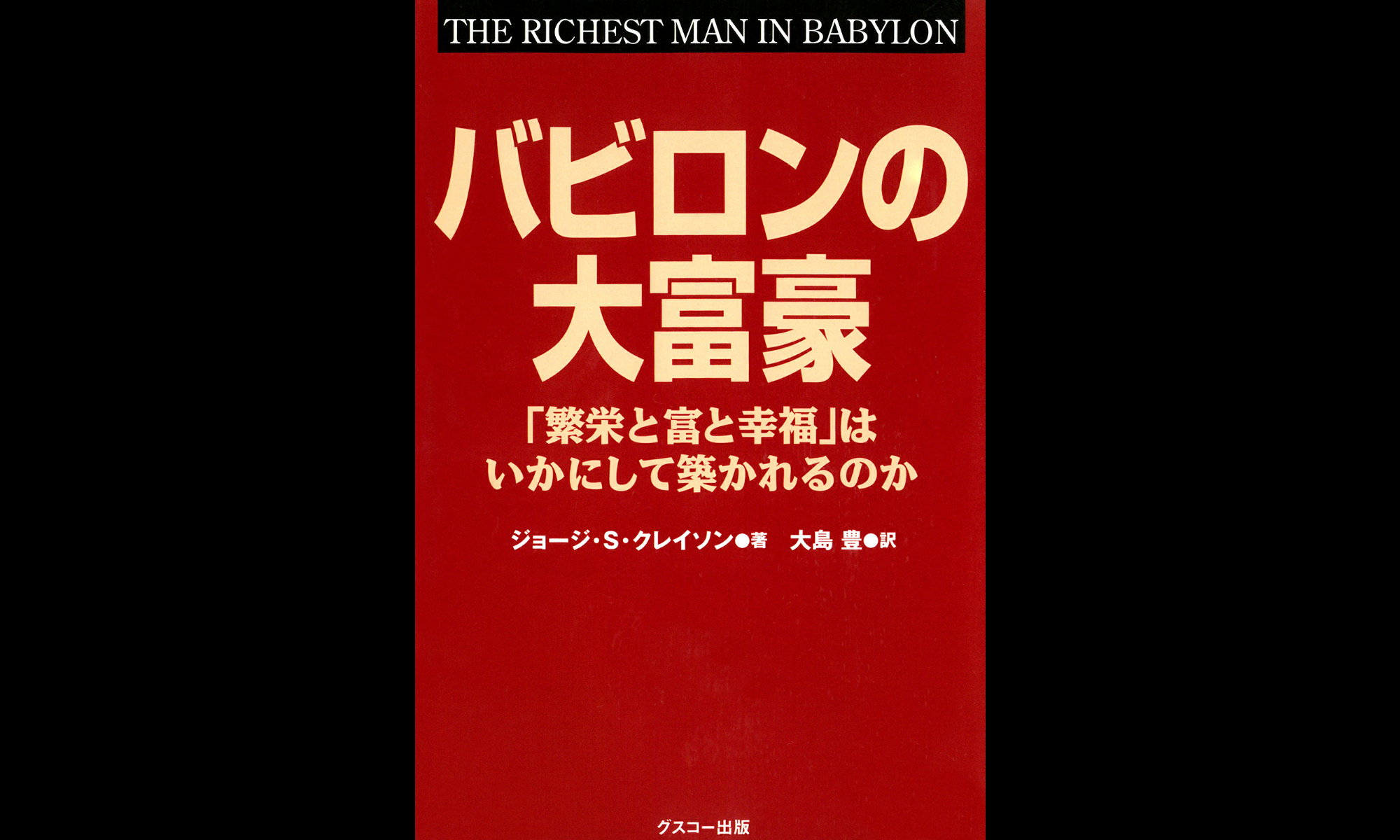
Have you heard of The Richest Man in Babylon?
First published in 1926 by American author George Samuel Clason, it’s been called a “must-read for anyone who wants to become wealthy” — and nearly a century later, that reputation hasn’t faded.
Originally, the stories appeared as pamphlets distributed by U.S. banks and insurance companies. The response was enthusiastic enough that Clason compiled them into the book we know today.
The book is fundamentally about the principles of wealth: how to accumulate money starting from nothing, how to grow it, and how to protect it. But it’s far more than a simple investment guide — it also explores the meaning of work, and the right way to think about money once you have it.
For these reasons, The Richest Man in Babylon can be read as a business book about money, a self-help or philosophical text about how to live, or a practical guide to daily habits and saving. It occupies all of those categories at once.
Money has been indispensable to human life from antiquity to the present — no one escapes its influence. Read this book and you’ll gain access to some of the timeless truths about money that have endured for generations.
This article draws on the content of The Richest Man in Babylon — How Prosperity, Wealth, and Happiness Are Built (Japanese edition).
About The Richest Man in Babylon
The story is set in ancient Babylonia, roughly 4,000 years ago. The characters living in that world discuss money from a variety of perspectives and social positions — much like people today.
The book is structured as a series of loosely connected short stories, each centered on a different protagonist living in a slightly different era. A recurring motif runs through them: children and grandchildren of earlier characters pass the same wisdom down to people in different circumstances, helping them turn their lives around.
The structure of the book is as follows:
Prologue: I Work So Hard — Why Isn’t Money Piling Up? — Story 1: There Was an Immortal “Principle” for Building Wealth — Story 2: The Seven Tools of Gold That Create Wealth — Story 3: What Kind of Person Does Lady Luck Smile Upon? — Story 4: A Bag of Gold Coins, or a Clay Tablet Engraved with Words of Wisdom? — Story 5: How to Decide What to Do with Money You’ve Earned Yourself — Story 6: A “Mighty Wall” Protects People from Fear and Anxiety — Story 7: A Man Who Was Reduced to Slavery but Never Forgot His Human Dignity — Story 8: Does “The Wisdom of Babylon” Still Work Today? — Story 9: Happiness — It Means Knowing the Joy of Work
Let me walk through each story.
Prologue: I Work So Hard — Why Isn’t Money Piling Up?
Bansir, a chariot-maker in Babylon, has worked hard his entire life. In his dreams he is wealthy and can buy anything he wants — but in reality, his wallet is always empty.
Babylonia’s capital is the world’s richest city, and riches surround Bansir on all sides — yet none of them belong to him.
Bansir cannot understand why, despite all his effort, he remains poor. His friend Kobbi suggests that the best approach might be to go directly to those who have actually acquired gold and ask them how it’s done.
Taking this to heart, Bansir decides to seek out Arkad — the wealthiest man in Babylon — and ask him how to obtain gold.
Story 1: There Was an Immortal “Principle” for Building Wealth
Old friends from Arkad’s youth come to visit him. They wonder aloud how Arkad, who didn’t work any harder than them or seem any more talented, had become so wealthy — surely it must have been luck.
Arkad says no. The difference was not luck, but whether one had learned the laws of growing wealth and stuck to them — or not.
He explains that there are two kinds of study: knowledge gained by learning, and skills gained through practice. Arkad pursued both: he researched how to grow money, and once he knew, he put his knowledge into practice.
He tells the story of how his life changed. Years earlier, he had gone to the wealthy moneylender Algamish and asked the secret to becoming rich. Algamish said the road to wealth is: “Keep a part of all you earn for yourself.”
No matter how much you earn, if you spend it all on goods and food and living expenses, that money becomes someone else’s. You are essentially working for others. But if you set aside even one-tenth of everything you earn for yourself, that money becomes your “golden children” — and if you put those golden children to work, they will multiply into a prosperous fortune.
Algamish repeated it over and over: “Pay yourself first.”
Arkad followed the instruction and faithfully paid himself one-tenth of everything he earned. He then invested those accumulated golden children — but he gave them to a brickmaker acquaintance who was starting a jewelry business.
Algamish was unimpressed. He said that if you want to learn about stars, you go to an astrologer; if you want to invest in jewels, you go to a jewel merchant. A brickmaker starting a jewelry business was bound to fail.
And indeed it did. Arkad’s golden children vanished.
After several more failures — and lessons learned from each — Arkad’s money finally began to grow. Algamish was satisfied when Arkad had mastered “how to earn gold,” “how to guard gold,” and “how to spend gold,” and offered him a co-ownership stake in his estates.
Arkad accepted, applied everything he had learned, and grew his wealth further. When Algamish died, he had arranged for Arkad to receive his inheritance — and Arkad became immensely wealthy.
Hearing this, the friends still suggested Arkad had been lucky to receive the inheritance. Others said his continued persistence after the first failure showed exceptional willpower — proof that he was different from ordinary people.
Arkad pushed back: the goddess of fortune doesn’t bother with the unprepared, and willpower alone can’t lift what a person physically cannot carry. What truly mattered, he said, was the principle that anyone, anywhere, can grow wealthy by paying themselves one-tenth of what they earn first — and carving that into their heart.
“Keep a part of all you earn for yourself.”
Story 2: The Seven Tools of Gold That Create Wealth
King Sargon of Babylonia was troubled. Too many workers were unemployed, and the nation’s wealth was concentrating in the hands of a few.
He summoned Arkad — the wealthiest man in Babylon — and asked whether it was possible to teach ordinary citizens how to earn money.
Arkad said yes, and volunteered to teach them the Seven Tools of Gold that had filled his own wallet.
One hundred teachers were chosen to learn from Arkad in the Hall of Learning.
The First Tool: Start by Fattening Your Wallet
Arkad asked the teachers: “If you place ten eggs in a basket every morning and take out nine every evening, what happens?”
They answered: “It overflows eventually.” Obviously — you put in more than you take out, so each day the number grows.
Using this example, Arkad stated that the First Tool is: “Put in ten coins and take out no more than nine.”
All great truths are simple. Anyone who practices this can grow their wallet.
The Second Tool: Distinguish Between Your Desires and Your Necessary Expenses
Teachers asked Arkad: “I can’t afford all my necessary expenses with what I earn, let alone save one-tenth — how is that possible?”
Arkad’s answer: what people call “necessary expenses” will always grow to equal their income, unless they pay careful attention. No one can ever satisfy all their desires, even if they become wealthy.
So the Second Tool is: “Budget for your spending in a way that separates necessary expenses from desires.”
Before spending money, remind yourself that it must be genuinely worth spending. Many things people call “necessary” turn out to be desires — and therefore cuttable.
The Third Tool: Don’t Let Your Savings Lie Idle — Put Them to Work
Even with the first two tools, you can fatten your wallet bit by bit — but money just sitting there generates nothing.
The Third Tool is about finding ways to make your savings work and grow.
Arkad put it this way: “Your wealth is not the gold in your wallet — it is the stream of gold that keeps flowing into it.”
He gave an example: a farmer who, when his son was born, deposited money with a moneylender under an interest-bearing contract until the son turned 20. They kept renewing the contract, and when the son turned 50 and claimed the funds, the original deposit had grown to roughly sixteen times its value.
The Third Tool: “Put your savings to work down to the last coin. Like cattle on a farm, they will multiply — and wealth will flow into your wallet without ceasing.”
The Fourth Tool: Guard Your Precious Assets Against the Disaster of Loss
Anyone who possesses gold will be tempted by seemingly plausible schemes promising large returns. You must protect your assets through sound investment — don’t be lured by such temptations.
The primary principle of sound investment, Arkad said, is to secure the principal. It is not wise to seek large gains in situations where you may lose the principal itself.
Before lending money, always verify the borrower’s ability to repay and their reputation for doing so. Fail to do this and you are simply giving away the wealth you earned through hard work.
Arkad also warned against excessive self-confidence. Consult wise persons whenever possible. A wise person will give you advice freely, and if that advice spares you from losing your investment capital, the advice was worth as much as the capital itself.
The Fourth Tool: “Restrict your investments to those where the principal is protected, where it can be retrieved when desired, and where proper returns can be reliably obtained — and consult wise advisors to protect your wealth from dangerous investments.”
The Fifth Tool: Consider Owning Your Own Home a Worthwhile Investment
Arkad noted that while the first four tools could grow a fortune, many Babylonians still lived in uncomfortable conditions — no space for wives to grow flowers, no space for children to play.
Owning a proper home, he said, gives a person confidence and makes them work harder at everything.
Moneylenders would lend for houses gladly, and unlike rent, payments to a moneylender eventually end — leaving the owner with a house as a valuable asset.
The Fifth Tool: “Own your home.”
The Sixth Tool: Start Now to Secure Your Future
No one escapes the progression from youth to old age. When you are no longer young, you will need sufficient income to sustain yourself — and you must also be prepared to leave your family a comfortable life even after you are gone.
Even small amounts, invested regularly from youth, can build enough for the future. The Sixth Tool: “Prepare in advance the funds you will need in old age and the savings needed to protect your family.”
The Seventh Tool: Develop Your Abilities and Skills, Study Deeply, and Act with Self-Respect Toward a Clear Goal
Arkad told the story of a young man who had come asking for a loan. The young man needed money to live on. Arkad pointed out that what the young man really needed was to earn more — but the young man seemed to think “earning more” simply meant begging his employer for a raise.
Arkad didn’t laugh at the young man’s simplicity. He appreciated the strong desire to earn more. But if the young man had channeled that desire toward improving his own skills, his wages would have risen on their own — without begging.
The Seventh Tool: “Develop your own abilities and skills; deepen your understanding through study; act with self-respect toward a clearly defined goal.”
Story 3: What Kind of Person Does Lady Luck Smile Upon?
In the Hall of Learning, teachers and citizens held public discussions on topics of common interest. One day, someone wanted to discuss with Arkad how to attract luck.
The discussion first turned to gambling. Arkad said gambling is always designed in favor of the house — most who participate lose, and he had never heard of someone who won at gambling and went on to build lasting success.
The merchants then began sharing experiences of recognizing a lucky opportunity clearly — and failing to act on it.
What all those missed opportunities had in common, the group concluded, was indecision.
Luck tends to follow opportunity. When an opportunity arrives, acting on it immediately is what matters most.
“Lady Luck smiles only on those who take action.”
Story 4: A Bag of Gold Coins, or a Clay Tablet Engraved with Words of Wisdom?
The merchant Kalabab asked a group of caravan workers: “If you had to choose between a bag full of gold coins and a clay tablet inscribed with words of wisdom — which would you take?”
The workers all said: gold. Kalabab replied that for someone without wisdom, choosing gold is the same as throwing it into a ditch.
He then told them about the Five Golden Laws — wisdom he had learned from Nomasia, the son of Arkad, the greatest wealthy man in Babylon.
Long ago, Arkad wanted his son Nomasia to inherit his wealth — but only after proving he could manage it wisely. Arkad gave Nomasia both a bag of gold coins and a clay tablet engraved with the Five Golden Laws, and sent him on a journey. He was to return in ten years and show the results.
Ten years later, Nomasia returned and confessed that he had been swindled almost immediately after setting out and lost all the gold. He then read the Five Golden Laws inscribed on the tablet, followed them, and managed to grow the original sum to more than three times what he’d started with.
Satisfied, Arkad named Nomasia his heir.
The Five Golden Laws were:
First Law: Gold comes willingly and multiplies gladly for the person who saves no less than one-tenth of their income to build wealth for themselves and their family.
Second Law: Gold works diligently and multiplies for the person who finds it profitable employment, and who tends it like a shepherd growing a vast flock.
Third Law: Gold clings to the owner who invests it under the cautious advice of those skilled in its handling.
Fourth Law: Gold slips away from the person who invests it in businesses or purposes they do not understand, or that are not approved by those skilled in guarding gold.
Fifth Law: Gold flees from those who would force it to produce impossible earnings, who follow the alluring advice of schemers, or who trust their own inexperienced and unrealistic desires.
Story 5: How to Decide What to Do with Money You’ve Earned Yourself
Rodan, a spear-maker in Babylon, won fifty gold coins from the king as a reward for a new spear design. Word spread, and almost immediately his sister, acquaintances, and strangers came asking to borrow money.
Never having held fifty gold coins before, Rodan had no idea what to do. He went to the moneylender Mathon for advice.
Mathon said that money carries power — and those who hold it carry responsibility. If you want to help someone you care about, do it in a way that doesn’t burden them.
Mathon shared his own experience lending money: he always verified the purpose of the loan and the borrower’s ability to repay. Without solid assurance of repayment, he wouldn’t lend at all.
Hearing this, Rodan decided not to lend the fifty coins to his sister — and began thinking about how to grow them instead.
Mathon warned Rodan that many temptations would come his way. Whenever any coin left his wallet, he should ask himself: can I recover it safely and with certainty?
“Careful choices save us from great regret.”
Story 6: A “Mighty Wall” Protects People from Fear and Anxiety
While Babylon’s army was away on a distant campaign, Assyrian forces launched a surprise attack.
The veteran warrior Banzal fought at the front lines and heard the cries of frightened citizens behind the walls. He reassured them: Babylon’s walls would never be breached. After three weeks and five days of relentless attack, the Assyrian forces finally gave up and retreated.
Babylon was a wealthy city and had repelled countless invaders over centuries — because it was completely protected by its mighty walls.
In the same way, “insurance,” “savings,” and “reliable investments” serve as a person’s mighty walls — protecting them from unexpected disasters and giving them peace of mind.
“Without security, we cannot live.”
Story 7: A Man Who Was Reduced to Slavery but Never Forgot His Human Dignity
The camel trader Dabassia went to collect a debt from a young man named Tarkad. Tarkad claimed to have no money as luck hadn’t been on his side. Dabassia replied that luck doesn’t come to people who only think about borrowing.
To show Tarkad something important, Dabassia told the story of his own time as a slave in Syria.
Once, Dabassia had been a saddle craftsman in Babylon, working with his father. His wages were low and he couldn’t buy everything he wanted for himself and his wife. So he began using “buy now, pay later” schemes — spending more than he earned. Soon he was buried in debt collectors; his wife left him.
Driven out of Babylon, Dabassia drifted from city to city. To escape poverty, he joined a band of robbers. The first job succeeded — the second time he was caught and sold into slavery.
As a slave, Dabassia was assigned to tend camels and serve a master’s wife named Sira. He told her he had once been a free man of Babylon. Sira answered: it wasn’t slavery that made you slavish — you became slavish before you became a slave.
Those words struck Dabassia hard. For more than a year he wrestled with the question: had his soul truly become that of a slave?
Eventually Sira asked if he ever intended to repay his debts in Babylon. He answered yes, but he didn’t know how from inside Syrian slavery.
Three days later, Sira gave him two camels and told him: go prove whether your soul is that of a free man or a slave.
Dabassia thanked her deeply and set off, not even knowing the direction of Babylon. He pushed on. At one point he collapsed and came close to death. In that moment, he felt the grey fog covering the world lift — and everything suddenly became vivid. He understood with certainty that he had to return to Babylon and repay his debts.
Because those who lent him money might have been enemies in some abstract sense — but they had trusted him and given him something. They were allies.
Dabassia rose again, pushed forward through near-death conditions, and eventually found water and fruit — and a narrow path leading toward Babylon.
Here Dabassia ended his story. He turned to Tarkad and said: “A person with the soul of a free man can solve every problem life presents. Someone whose very soul has become that of a slave can only weep, no matter what they are capable of.”
Tarkad’s expression washed clear. He thanked Dabassia deeply and felt the soul of a free man rising inside him.
“Where there is resolve, a way opens.”
Story 8: Does “The Wisdom of Babylon” Still Work Today?
The story moves to 1934. Archaeologist Alfred H. Shrewsbury receives a request to decipher five clay tablets discovered among Babylon’s ruins, and writes a letter to his expedition’s professor about what he found.
The tablets contained no romance or adventure story. They were the debt repayment records of a man named Dabassia.
The first tablet described Dabassia’s resolve upon returning from Syria — and his plan. On the wise advice of moneylender Mathon, the plan was: pay one-tenth to himself, live on seven-tenths, and use two-tenths to repay debts.
The second tablet detailed his systematic repayment of two-tenths of income, distributed honestly and equitably among all his creditors — every name and amount carefully recorded.
The third tablet told of visiting each creditor personally to explain the plan. One who had been his closest friend berated him; another threatened him. Yet most accepted the plan. Dabassia resolved to see it through.
The fourth tablet recorded monthly earnings, repayments made, and creditors’ reactions. Dabassia faithfully kept to the plan in good months and lean months alike. Gradually, complaints faded.
The fifth tablet recorded that after more than thirty lunar cycles, all debts were finally paid. Creditors praised Dabassia’s conduct. He wrote that the look in his wife’s eyes had given him a confidence he had never known.
Alfred, who was himself buried in debt, recognized his own situation in Dabassia’s. He listed all his debts, visited each creditor with a repayment plan, and began living on seven-tenths — two-tenths to debts, one-tenth to himself.
As he lived this way, he found himself devising all kinds of creative ways to get by on seven-tenths — and came to look forward to the investments he could make with the one-tenth he saved. Repayment progressed steadily; even the prospect of old-age savings came within reach.
Alfred concluded in his letter: the principles inscribed on those ancient clay tablets remain true in the modern world.
Story 9: Happiness — It Means Knowing the Joy of Work
The great merchant of Babylon, Sharru-Nada, was leading his caravan from Damascus to Babylon. Among the travelers was Hadan Gula, the son of his old benefactor Arad Gula.
Hadan asked why Sharru worked so hard. Shouldn’t he enjoy life more?
Sharru asked what Hadan would do if he were in his position. Hadan said: with wealth like that, he would live like royalty — wear the finest robes and the rarest jewels.
Sharru asked: do you have no desire to work? Hadan answered: “Work is for slaves.”
So Sharru told him how he and Arad had come to be wealthy — how it started.
About forty years earlier, Sharru had been enslaved because of his brother’s gambling debts and sold to a baker. The baker taught him everything — how to knead and bake bread — and Sharru began doing the baker’s work while dreaming of the day he would be free.
When the baking finished at noon, Sharru proposed to the baker a plan: he would sell honey cakes through the city streets, giving the baker one-fourth of the proceeds. The baker agreed.
The honey cakes sold steadily. One day a regular customer, Arad, told Sharru that while he liked the cakes, what he liked most was seeing the eagerness with which Sharru worked every day.
Arad revealed that he too was a slave — but that he already had enough money saved to buy his freedom, and simply didn’t know what to decide. Sharru told him directly: that was cowardice. Work hard and you can accomplish what you set your mind to. Hearing this, Arad resolved to become a free man.
Some time later, the baker collapsed into gambling and ruin. Sharru was sold to brutal labor on a great canal project. He worked diligently at first — but his body weakened, and he fell into despair. Why, despite all his effort, could he not find happiness or success?
Then suddenly everything changed. He was sent back to Babylon, where he learned that Arad had purchased him.
Arad said his purchase price was trivial compared to Sharru’s worth. He asked Sharru to become his partner in Damascus.
Tears of gratitude flooded Sharru’s eyes. He told Hadan: “I am the luckiest man in Babylon.”
Hadan understood: both Arad and Sharru had worked harder and more wisely than anyone around them. That was why they had made so many friends, earned so many people’s respect, accumulated so much success, and been honored even in Damascus.
Sharru told Hadan that life holds many pleasures — but for him, work was the greatest of them all. Hadan listened with deep respect and quietly removed his fine robes and jewels.
Personal Reflections
I’ve provided the summaries above, but they inevitably leave out much of the texture and flow of the original. I’d encourage you to read the actual book if you can.
Below are my personal impressions of the book.
On the Overall Content
My overall sense is that this is a masterpiece — each independent story has a clear message, and readers from all walks of life can learn a great deal from it.
Nearly a century old and still selling worldwide, this book has more than earned its place as an enduring classic.
What’s in this book is something anyone can do if they put their mind to it. There are no magic tricks for multiplying wealth. It teaches, through story after story, the entirely sensible principles of how to save, how not to lose, and how to grow.
Those who internalize this book’s teachings are unlikely to lose money through careless investment, and they’ll understand that building real wealth takes time.
Stories 1 and 2 dig most deeply into the Seven Tools, and the subsequent stories elaborate each tool further.
Story 3 emphasized “luck follows opportunity” — and that being indecisive means missing the chance to become wealthy. In one sense this seems to contradict the caution urged in the Seven Tools — but I think it’s better understood as a reinforcement of the Seventh Tool.
Story 4 presented the Five Golden Laws as a more concrete extension of the Seven Tools — personally I found them easier to understand and apply.
Story 5 reinforced the Fourth Tool — thinking carefully about where to invest and separating emotion from rational calculation.
Story 6 resonated strongly with me personally. I invested in cryptocurrency at one point, and the daily price swings were so violent that I spent every day anxiously monitoring charts — it was exhausting. Anyone who’s been through that experience knows immediately why “peace of mind” in investing is so important.
Story 7 — the question “Is your soul that of a slave or a free man?” — is perhaps the most striking in the whole book. Most people today seem to simply react to what life gives them, watching the famous people on TV and thinking “that’s not for people like me.” That’s a slave’s soul, and this story speaks directly to it.
Story 8 showed that even in the modern era, someone buried in debt could use Dabassia’s approach — live on seven-tenths, two-tenths to debts, one-tenth to yourself — and find a way through. Many people in Japan today face similar situations with student loan debt.
Story 9 on “why the wealthy keep working” made me think about how consistently true it is — Japan’s and the world’s richest people continue working harder than anyone even after becoming wealthy. I think they simply love working — and because they love it they’re diligent, and that diligence is why they succeeded. The common belief — “get rich so I don’t have to work” — has the causality backwards. People who work joyfully and relentlessly are the ones who succeed. That’s why, having succeeded, they never stop.
On the Seven Tools
- Start by fattening your wallet
- Distinguish between desires and necessary expenses
- Don’t let your savings lie idle — put them to work
- Guard your precious assets against loss
- Consider owning your home a worthwhile investment
- Start now to secure your future
- Develop your abilities, study deeply, and act with self-respect toward a clear goal
These are timeless principles for building wealth. But I’ll be honest: I found Tools 5 and 6 less convincing.
Tool 5 (own your home) — the “rent vs. buy” debate is alive and well in modern Japan. Perhaps in ancient Babylonia there were no property taxes and stone houses lasted indefinitely, making ownership an obvious choice — but the argument feels slightly forced in the original.
Tool 6 (secure your future now) — if you’re faithfully applying Tools 1 through 4 and accumulating assets, that IS your future security. I wasn’t clear on the need for a separate tool.
Since neither of these appears in the Five Golden Laws, I suspect they were present because the original pamphlets were distributed by banks and insurance companies — and perhaps reflected those companies’ commercial interests.
The remaining five tools, however, are entirely compelling:
- Tool 1: how to save
- Tool 2: how to cut unnecessary spending
- Tool 3: how to invest and grow savings
- Tool 4: how to prevent loss
- Tool 7: the importance of always developing yourself and working toward a clear purpose
These sound obvious when stated plainly — but perhaps that’s exactly the point. The most important truths are always simple.
On the Five Golden Laws
The Five Golden Laws are a more concrete and actionable version of the Seven Tools.
Law 1 corresponds to Tool 1; Law 2 to Tool 3; Laws 3 through 5 drill deeper into Tool 4.
This tells you something: protecting your assets is perhaps the most critical element of building wealth.
In real life, I know several people personally who have been defrauded by investment scams — and every single case fell into Laws 3, 4, or 5.
Whether you’ve worked steadily and saved carefully, or built a successful business and earned a lot — one encounter with a scammer can take everything. The emphasis on protecting what you have is, I believe, one of the most essential truths this book contains.
Whenever you consider a new investment in the future, asking whether it satisfies the Five Golden Laws can protect you from nearly every form of wealth destruction.
Summary
Through nine stories, The Richest Man in Babylon teaches how to engage with money, work, and the life of the soul. If this article has sparked any interest, I’d genuinely encourage you to read the original book.
That said, while the Seven Tools and Five Golden Laws are tremendously valuable, they’re not a complete guide to building wealth in the modern world. Inflation today moves far faster than in ancient times; technology and culture change at dizzying speed. You’ll still need to supplement these teachings with modern knowledge of saving and investing.
Even so, the fact that this book has been called a “must-read for wealth” for over a century — beloved by readers across the globe — tells you something. This is not just a business book. It contains wisdom that transcends business, and a richness that has kept it alive for generations.
If you’d like to deepen your general investment knowledge, I’ve also written an overview of investment fundamentals:
Investment Basics: Stocks, Crypto, NISA and Funds Explained

If you want to go further into reading financial statements, I’ve also covered Warren Buffett’s approach.
Also popular with readers