Thank you for visiting. This article is the third installment (the finale) in a series explaining the original texts of Chinese mythology.
This time, we look in detail at the stories of heroes and gods that color Chinese mythology.
The hero tales treated in this installment derive mostly from two original texts: the geography Shanhaijing and the Western Han philosophical work the Huainanzi. Houyi, who shot the suns, and Chang’e, who ascended to the moon, are in the Huainanzi; Kuafu, who chased the sun, Jingwei, who fills in the sea, and Xingtian, who lost his head, are in the Shanhaijing — left as fragmentary records. In this article, I read them while showing which original text each story is recorded in.
For an overview map of Chinese mythology’s original texts as a whole, please see this summary article.
Houyi — the Master Archer Who Shot Down Ten Suns
The story of Houyi shooting down the suns is recorded in the Western Han Huainanzi, chapter “Benjing.” The setting of ten suns in the sky also appears in the Shanhaijing, and a form questioning its reason in the Warring States poetry collection the Chuci, “Tianwen” — several original texts convey this myth.
According to the Huainanzi, there were once ten suns in the heavens. They were the children of the heavenly emperor and were originally to cross the sky one at a time, one per day.
But one day, the ten suns rose into the sky all at once. The earth was scorched, rivers dried up, crops withered, and monsters even appeared; the people faced a crisis of destruction.
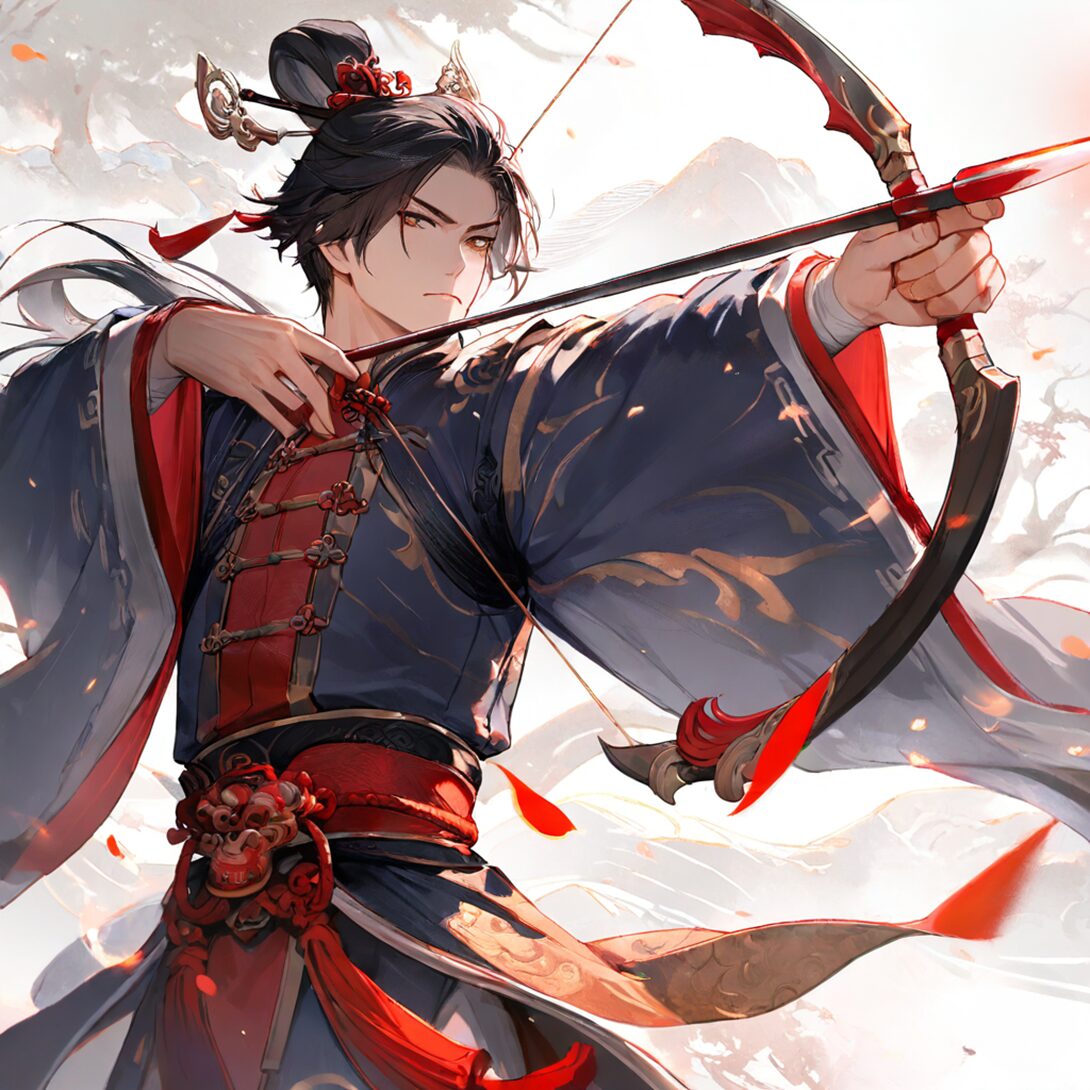
So the heavenly emperor sends down the master archer “Houyi.” Houyi shot arrows one after another at the suns tormenting the people. With each arrow, a sun fell in the form of a fire-bird (a three-legged crow).
Houyi shot down nine suns, leaving only the last one, and saved the world. This is taken as the reason there is only one sun in the sky today.
Further, Houyi went around defeating, one after another, the terrible monsters that had appeared across the land due to the suns’ anomaly. The fanged man-eating monster “Zaochi,” the nine-headed “Jiuying,” the storm-raising monster bird “Dafeng,” the giant boar “Fengxi,” and the people-devouring great serpent “Xiushe.” Thus Houyi was praised as a hero who pacified the earth.
But this achievement brought an unexpected result. The nine suns he shot down were the sons of the heavenly emperor. Enraged at the killing of his children, the heavenly emperor banished Houyi and his wife from heaven and reduced them to mere humans. This is why Houyi, once an immortal being, comes to seek the “elixir of eternal life.”
Chang’e — the Goddess Who Ascended to the Moon
The hero Houyi had a beautiful wife, “Chang’e.” The story of Chang’e ascending to the moon (Chang’e flees to the moon) is, like Houyi’s story, recorded in the Huainanzi, chapter “Lanming.”
Houyi, regretting that humans eventually die, receives from the immortality goddess “Xiwangmu (Queen Mother of the West)” an elixir that “makes one ageless and deathless if drunk.” But that elixir was such that if a couple each drank half, both would become ageless and long-lived, while if one person drank it all, they would ascend to heaven and become a god.
Houyi kept that elixir carefully at home, intending to drink it with his wife at the proper time. But — traditions have several versions. Chang’e, out of curiosity, or to protect it from someone trying to steal it during his absence, drank all the elixir herself.
Then Chang’e’s body floated up into the air and ascended all the way to the moon. Reaching the moon palace (the Cold Palace), Chang’e became the goddess of the moon, but it was a lonely world with only a jade rabbit there. Houyi, left on earth, is said to have gazed up at the moon and longed for his wife. This story became one source of the moon-viewing event, the “Mid-Autumn Festival.”
Kuafu — the Giant Who Chased the Sun
“Kuafu” is the story of a giant who challenged the sun, recorded in the Shanhaijing, “Haiwaibei” and “Dahuangbei” chapters.
Kuafu resolved, “I will catch up to the sun,” and chased after the sun crossing the sky single-mindedly. But he was struck by fierce thirst from the sun’s heat. Even after drinking dry the Yellow River and the Wei River, his thirst was still not quenched, and on his way to a great marsh further north, his strength finally gave out and he collapsed.
The staff Kuafu cast away at this time is said to have become a forest of peach trees. Kuafu’s story is a deeply flavorful myth interpreted both as a symbol of reckless challenge and as a symbol of the indomitable spirit that challenges its limits.
Jingwei — the Little Bird That Fills in the Sea
“Jingwei” is the story of the daughter of the Flame Emperor (also said to be Shennong), recorded too in the Shanhaijing, “Beishanjing” chapter.
She drowned and lost her life while playing in the eastern sea. Her soul was reborn as a single little bird. Deeply resenting the sea that took her life, Jingwei kept carrying small stones and twigs one by one from the western mountains in her beak, dropping them into the eastern sea, trying to fill it in.
Filling the vast sea with pebbles is utterly impossible. Yet the figure of Jingwei challenging it without giving up became the proverb “Jingwei fills in the sea,” handed down as a symbol of the indomitable spirit that keeps up tireless effort even at what seems impossible.
Xingtian — the Giant Who Keeps Fighting Even Without a Head
As a being symbolizing the indomitable spirit, the story of another god, “Xingtian,” is famous. This too is a myth recorded in the Shanhaijing, “Haiwaixi” chapter.
Xingtian was a god who challenged the supreme god, the Yellow Emperor (or the heavenly emperor), to battle. But after a fierce struggle he was defeated, and the Yellow Emperor cut off his head.
But Xingtian still did not fall. He made his two nipples his “eyes” and his navel his “mouth,” grasped a shield in one hand and an axe in the other, and, having lost his head, still kept brandishing his weapons toward heaven.
This figure of “Xingtian brandishing shield and axe (wielding his weapons even without a head)” was sung again and again by later poets as a symbol of the indomitable, rebellious spirit that never yields even in defeat.
The Cowherd and the Weaver Girl — the Story of Tanabata
Chinese mythology has not only grand hero tales but memorable love stories too. The legend of the “Cowherd and the Weaver Girl,” the origin of Japan’s “Tanabata.” The tradition of the two stars goes back to the Book of Songs, and grew into its present form when it was sung as a love story in the Later Han Nineteen Old Poems.
The heavenly emperor’s daughter, “the Weaver Girl,” was a master weaver. She fell in love with a hardworking cowherd on earth, “the Cowherd (the star Altair),” and they married and lived happily. But absorbed in married life, the Weaver Girl neglected her weaving and the Cowherd his fieldwork, so the angry heavenly emperor (or Xiwangmu) separated the two on opposite banks of the Milky Way.
Pitying the two who grieved, the heavenly emperor permitted them to meet only once a year, on the night of the 7th day of the 7th month. On that night, countless magpies join their wings to span a bridge across the Milky Way, reuniting the two. This story of the Weaver star (Vega) and the Cowherd star (Altair) shining across the Milky Way spread across all of East Asia and was inherited into Japan’s Tanabata festival.
The Beasts and Four Symbols the Shanhaijing Conveys
The important Chinese myth original text the Shanhaijing records countless divine and spirit beasts said to dwell in various regions. Among them, four kinds of spirit beast taken as auspicious signs are called the “Four Auspicious Beasts (siling),” deeply rooted in later Chinese culture.
| Beast | Symbol |
|---|---|
| Dragon | Governs water and heaven, symbol of the emperor. Summons clouds and brings rain |
| Phoenix | King of birds. An auspicious bird said to appear only in a peaceful reign |
| Qilin | A merciful spirit beast that appears as a herald before a sage appears |
| Spirit Turtle | Symbol of longevity and wisdom. The principles of the cosmos are said to dwell in its shell |
Also, the “Four Symbols (sishen)” guarding the four directions of heaven — the Azure Dragon of the east, the White Tiger of the west, the Vermilion Bird of the south, and the Black Tortoise of the north — also originally arose from such a mythic worldview, joined with directions and constellations, and spread across all of East Asia.
Xiwangmu and the Later Mythological Novels
“Xiwangmu,” who gave Houyi the elixir of immortality, is a goddess dwelling on Mount Kunlun, a being who governs immortality and manages the “immortal peaches (pantao)” that ripen only once every 3,000 years. In the Shanhaijing, she is recorded as a terrible god with a tiger’s teeth and a leopard’s tail, but in the later Tale of King Mu and Taoist traditions, she gradually changed into a noble goddess and came to be revered as the highest goddess. Tracing the original texts, one sees clearly that even the same god’s image changes greatly with the times.
The Later Mythological Novels — Journey to the West and Investiture of the Gods
These fragmentary ancient myths were reborn in the Ming era (14th–17th centuries) as grand full-length novels. The ancient gods and immortals were revived as living characters in vivid stories.
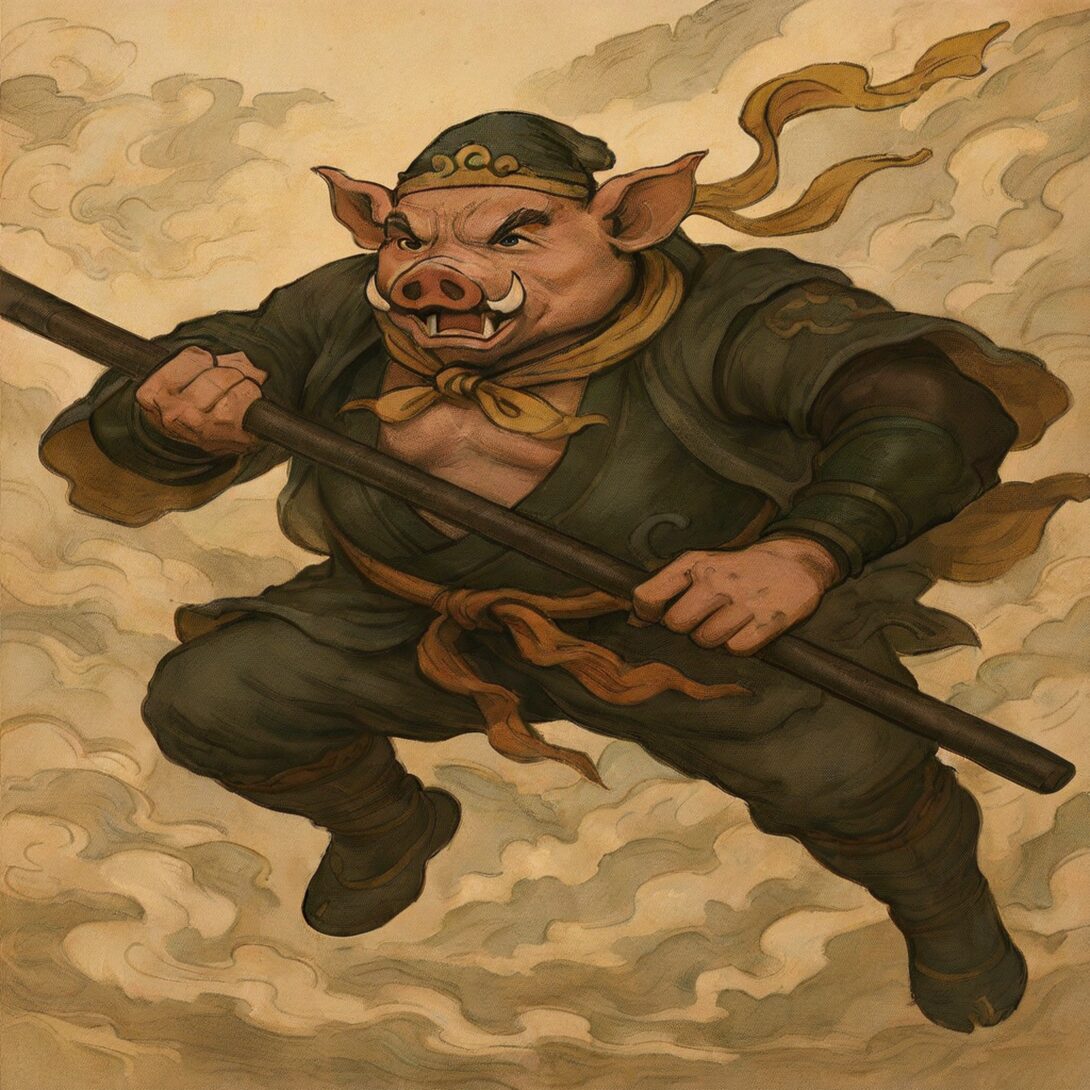
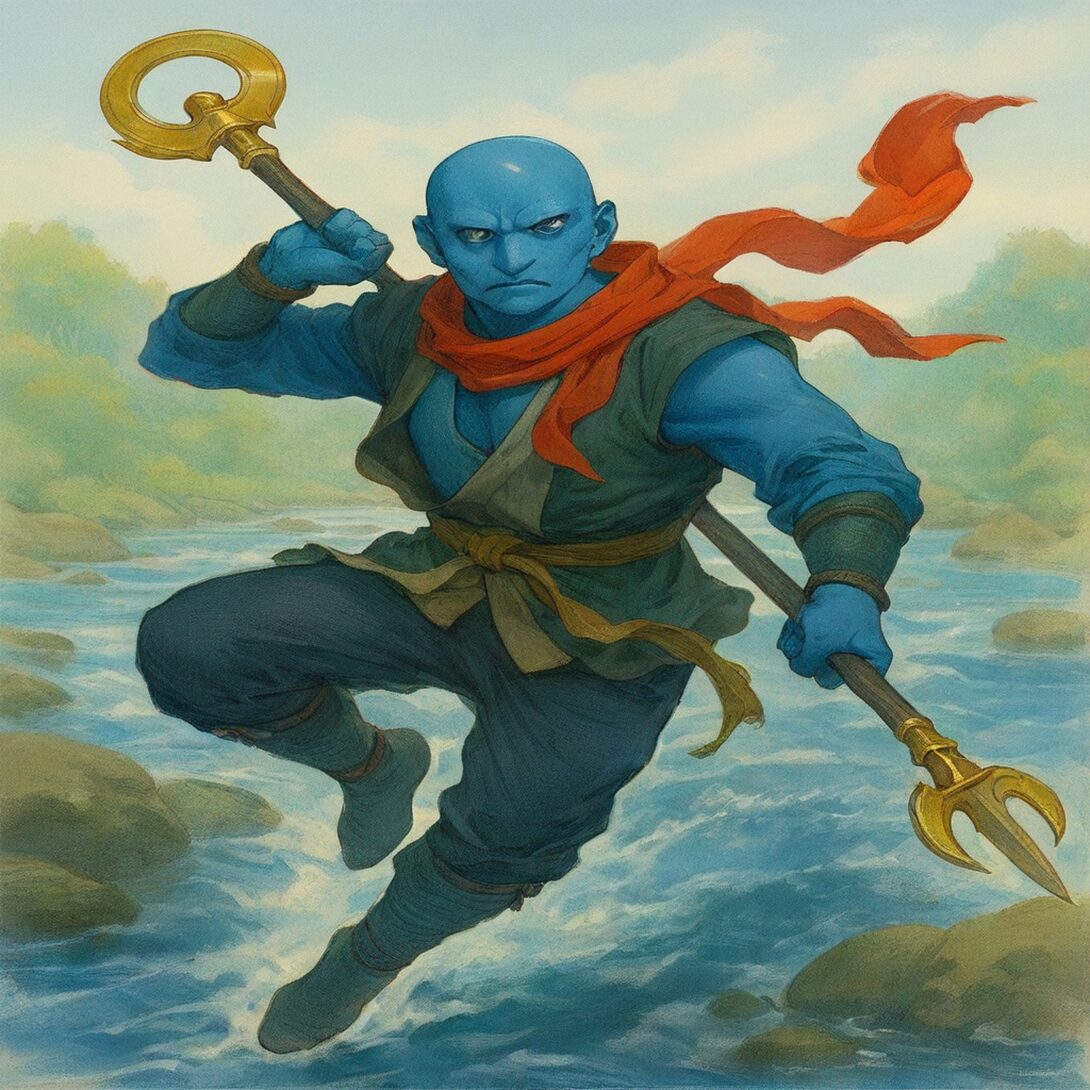
Journey to the West is a story that attaches imaginary companions to the journey of the real Tang monk Xuanzang (Tripitaka) to fetch scriptures from Tianzhu (India). The lead, Sun Wukong (the Great Sage Equal to Heaven), is a stone monkey born from an immortal rock on the Mountain of Flowers and Fruit, who masters the 72 transformations and the somersault cloud under the immortal Subhuti. He rampages through heaven and, because he despoiled Xiwangmu’s peach garden (the garden of immortality peaches) mentioned earlier, is sealed under the Five Phases Mountain by the Buddha; but 500 years later, rescued by Tripitaka, he crosses 81 trials with Zhu Bajie and Sha Wujing and brings back the scriptures. It is a representative Chinese story in which ancient myth (Xiwangmu, Kunlun) and Buddhism and Taoism are fused into one.
Investiture of the Gods is a story set in the dynastic transition battle from Shang to Zhou, in which countless immortals, Taoists, and monsters compete in magic arts. The strategist Jiang Ziya (Taigong Wang), who aids Zhou; Daji, the incarnation of a nine-tailed fox who beguiles the Shang king Zhou; and the boy-god Nezha, who rampages riding wind-fire wheels, are active, and those who fall in battle are enshrined as gods at the “Investiture Terrace.” Through this novel, the system of ancient gods was also reorganized, linked with the world of Taoist gods. Through such novels, the characters of Chinese mythology are still widely beloved in East Asia.
How Strong Are the Characters Here? — The Power Ranking
The gods and heroes appearing in this article are also introduced in strength order in the “Mythology, Religion & Legend Power Ranking.” Enjoy their exploits in the original texts alongside their “strength.”
To Learn More
Conclusion
In this article, I explained the stories of the heroes that color Chinese mythology in detail. How was it?
Houyi, who shot ten suns; Chang’e, who ascended to the moon; Kuafu, who chased the sun; and Jingwei, who tries to fill in the sea — I hope you have grasped that the stories of the heroes of Chinese mythology depict a grand scale and an indomitable spirit.
With this, the three-article series on Chinese mythology’s original texts is complete. From the creation, through the sage-kings who built civilization, to the heroes, I hope you have enjoyed the world of Chinese mythology.
For the big picture of Chinese mythology’s original texts and the list of other myths and religions, please see the pages below.
I hope you’ll read the next article too.
Also popular with readers
📚 Series: The Original Texts of Chinese Mythology (4/4)