Thank you for visiting. This article is the fourth installment in a series explaining the original texts of Canaanite (Ugaritic) mythology.
In the articles so far (1–3), many gods appeared. This time, I survey them as the Canaanite pantheon (the list of gods), and explain their relationships and the mechanism of the “council of the gods” where the gods gather. It is also the installment that becomes the foundation for understanding the connection with the Bible, dealt with next time (Article 5).
For an overview map of the original texts of Canaanite mythology as a whole, please see this summary article.
How the Canaanite Gods Are Known
The figures of the Canaanite gods are known not only from the three epics seen so far, but also from records of cult unearthed from Ugarit, such as “god-name lists” and “lists of sacrifices.” To which god, in what order, what was offered — such practical clay tablets convey to the present the rank and lineup of the gods.
The Canaanite pantheon is, in a word, “one great family.” At its summit sits the aged father El, and below him line up many gods. First, let me put that whole picture into a diagram.
The Supreme God El — Father of the Gods
Standing at the summit of the pantheon is the supreme god El. The name “El” is also the very word that means “god.” El is an aged god with a white beard, called “father of the gods,” “father of humanity,” and “father of years.”
El is held to dwell far away, by the source of two rivers, the spring of two deeps. Likened to a bull (“Bull El”) and made a symbol of might, on the other hand his character is praised as “merciful and compassionate.” Rather than moving things directly, he is a being like a wise elder who gives blessing, grants an heir, and presides over the council of the gods. It was also this El who granted children to Kirta and Danel.
The Mother Goddess Asherah
El’s consort is the mother goddess Asherah (Athirat). She is called “Lady Athirat of the Sea” and is held to be the mother who bore the gods.
The Canaanite gods are often collectively called “the seventy children of Asherah.” That is, Asherah is, so to speak, the mother of all the gods listed in the pantheon. She is also depicted as a nourisher who gives suck to the children of gods and kings, and in the Epic of Kirta appeared as a goddess giving milk to the heir to be born. Note that this goddess Asherah later comes to be repeatedly mentioned in the Old Testament as the idol “the Asherah pole (sacred tree)” that Israel should reject.
The Storm King Baal
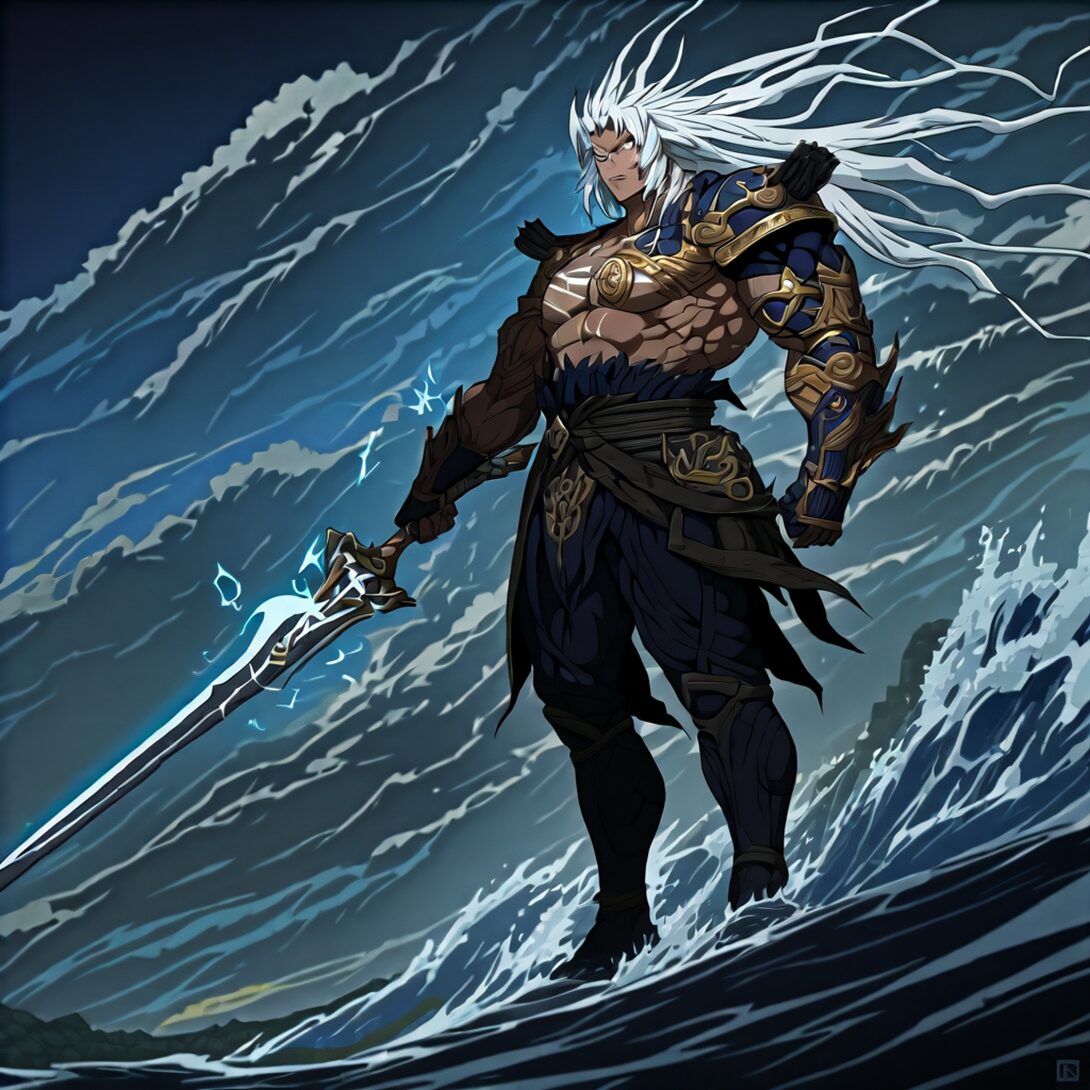
The active king who actually moves the world is Baal (Hadad). As seen in Article 1, he governs storm, rain, and fertility, and is praised as “the rider of the clouds” and “the lord of the earth.”
What is interesting is that Baal is held to be the son of the grain god Dagan, and is not the direct-line son of the supreme god El. He is, so to speak, “a god who came from outside and won kingship,” and so there is a somewhat subtle tension between him and the old god El. While El is the supreme authority who rules over all, the one who governs the world as the working king is Baal — this relationship is often described as like “the king (El) and the chief minister (Baal).”
The Fierce Goddess Anat
Baal’s sister, and holding the most intense character, is the goddess of battle and love, Anat. Called the “maiden Anat,” she is, while a virgin goddess, also a terrible goddess of combat.
The original text depicts the gruesome figure of Anat soaked in blood up to her knees, fighting with the heads of warriors wrapped around her waist like a belt. On the other hand, her love and loyalty to her brother Baal are deeper than anyone’s, and when Baal died, she risked her life to search for his corpse and took revenge on the death god Mot (Article 1). She is the most vivid goddess of Canaanite mythology, where intense violence and deep affection coexist.
The Death God Mot and the Sea God Yam
The pantheon also includes the powers of chaos and death that Baal must hold down in order to be king.
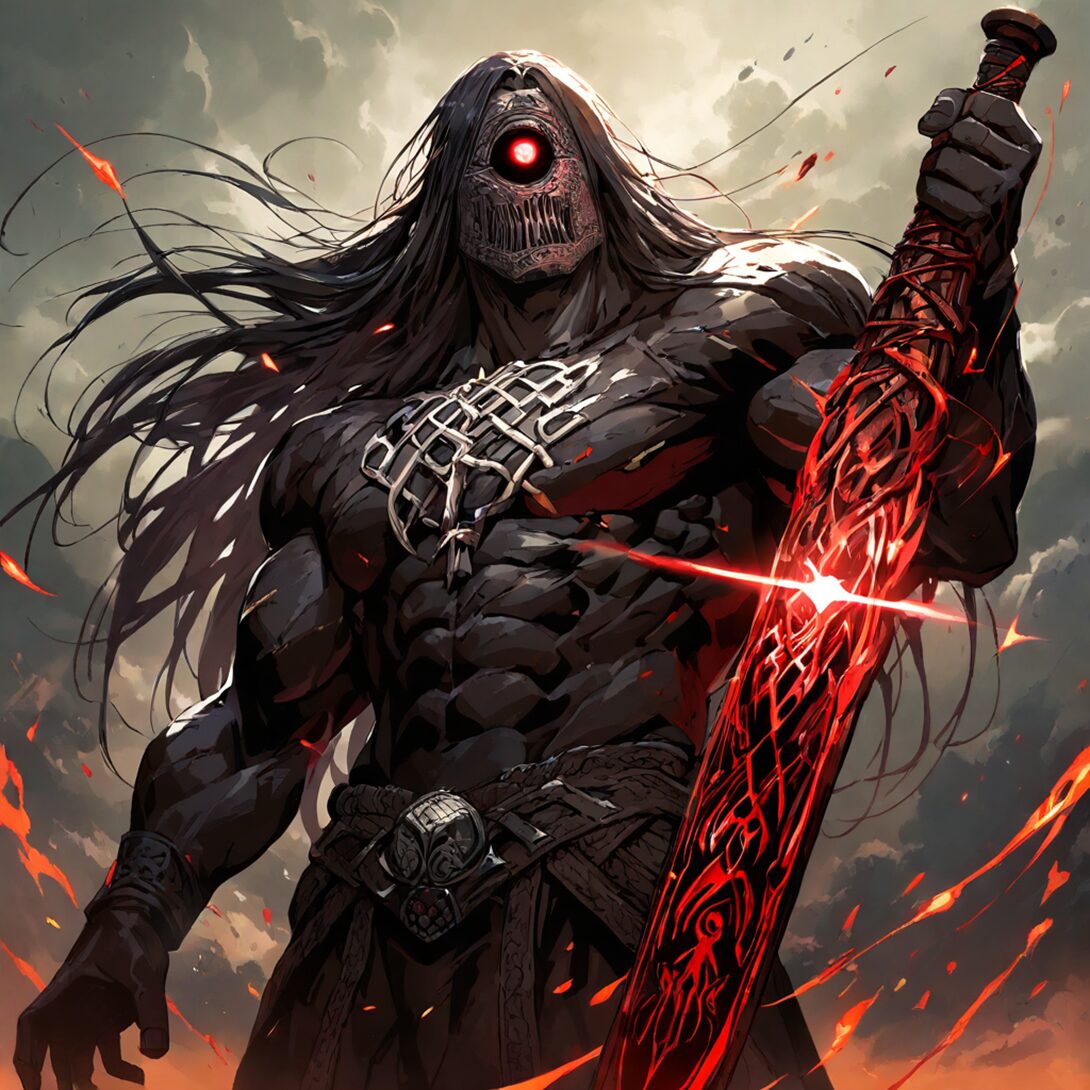
One is the death god Mot. A deification of “death” itself, he rules the underworld at the bottom of the earth and has a bottomless appetite, said to be so great that his lower lip reaches the earth and his upper lip the heaven. The other is the sea god Yam. Also called “Judge River (Nahar),” he symbolizes the raging sea = the primal chaos. That Baal subjugates these two gods (death and the sea) meant the very keeping of order in the world.
Other Gods
Besides these, on the Ugaritic clay tablets, many distinctive gods appear.
| God | What they govern |
|---|---|
| Dagan | The grain god. Baal’s father, with a great temple in Ugarit |
| Shapshu | The sun goddess. The “lamp of the gods.” Governs even the dead and the underworld, and is the gods’ messenger and mediator |
| Yarikh | The moon god. There is also a myth singing the wedding of the moon god and the fruit-tree goddess Nikkal |
| Kothar-wa-Khasis | The craftsman and smith god. Tied to Egypt and Crete, makes weapons, palaces, and the bow |
| Athtar | The Venus god. After Baal’s death he takes his throne, but is too small, his feet not reaching the footstool, and withdraws |
| Resheph | The god of plague and the underworld. Looses arrows to bring calamity |
| Shahar and Shalim | The twin gods of dawn and dusk. “Shalim” relates to the name of Jerusalem too |
The Council of the Gods
What I would like you to grasp in understanding Canaanite mythology is the idea of the “council of the gods (the assembly of the gods).”
The Canaanite gods do not move separately, but gather at the council presided over by the supreme god El and decide important things. In Article 1, that the sea god Yam demanded “hand over Baal” was also at this council of the gods. The gods are all called “the children of El,” forming, so to speak, a clan assembly connected under the father El.
This structure of “the supreme god opening a heavenly council, leading the other gods,” in fact appears in the Old Testament too, in a closely resembling form. The Bible too depicts scenes in which God opens a council, leading the “host of heaven” or the “sons of God.” This Canaanite-derived “council of the gods” is the very great key to unraveling the deep connection of the Bible and Canaanite mythology, seen in the next Article 5.
The Cult of Ugarit — Temples and the King
The gods were venerated deeply not only within myth, but in the real city of Ugarit. On the excavated acropolis (high ground) of Ugarit towered two great temples: the temple of the storm king Baal and the temple of his father, the grain god Dagan. Many of the clay tablets recording the stories of the gods were also found in such temples and the priestly libraries attached to them.
At the center of the cult was the king. The king of Ugarit was also the supreme religious authority, who offered sacrifices (cattle, sheep, etc.) to the gods and conducted festivals. The unearthed clay tablets include a ritual calendar that finely sets “to which god, when, and how many animals to offer,” and a god-name list arranging over 30 gods in order of rank. Behind the grand stories of myth, such concrete and practical undertakings of faith were certainly alive.
The Cult of the Dead — the Kings Who Became Spirits (Rapauma)
Not to be overlooked in considering Canaanite religion is the cult of the dead, especially the deceased successive kings.
The people of Ugarit thought that the dead past kings became spirits (afterlife beings) called “Rapauma” and still held power. When a new king acceded and the like, it is told that, by ritual, the spirits of these successive kings were called up from the bottom of the earth and invited to a banquet. The living and the dead, the current king and the ancestral kings, were connected through ritual.
This word “Rapauma” appears in the Old Testament too as “Rephaim” (the spirits of the dead in Sheol, or legendary giants). The Canaanite faith of revering the spirits of the dead is also connected, in wording, with the world of the Bible (the relation with the Bible is dealt with in Article 5).
The Features of the Canaanite Gods
Finally, let me summarize the individuality of the Canaanite gods.
First, it is a “family” with the aged father El at its summit. Second, within that family is the tension of generational change between old El and young Baal. Third, the gods are by no means omnipotent, but human-like beings bound by death (Mot) and the cycle of the seasons. And fourth, they have a structure in which the gods deliberate in a council.
The extremely human, family-like, drama-filled Canaanite gods. Their figure casts a clear shadow on the understanding of God in the Old Testament, which grew up next door. Now, at last, next time, let us look at that connection with the Bible.
To Learn More
Conclusion
In this article, I explained in detail the whole picture of the Canaanite (Ugaritic) gods, following the original texts. How was it?
The father of the gods El, the mother Asherah, the storm king Baal, the fierce Anat, and the chaos and death of Yam and Mot. I think you have felt that the Canaanite pantheon was one family with an aged father at its summit, and a world in which the gods deliberate in a council.
In the next Article 5 (the final installment), I will at last explain this series’ greatest highlight, “the Bible and Canaanite mythology.”
I hope you’ll read the next article too.
Also popular with readers
📚 Series: The Original Texts of Canaanite (Ugaritic) Mythology (5/6)