Thank you for visiting. This article is one part of a series explaining the “original texts” of the world’s mythologies and religions, and is an index page gathering the original texts of “Canaanite mythology (Ugaritic mythology).”
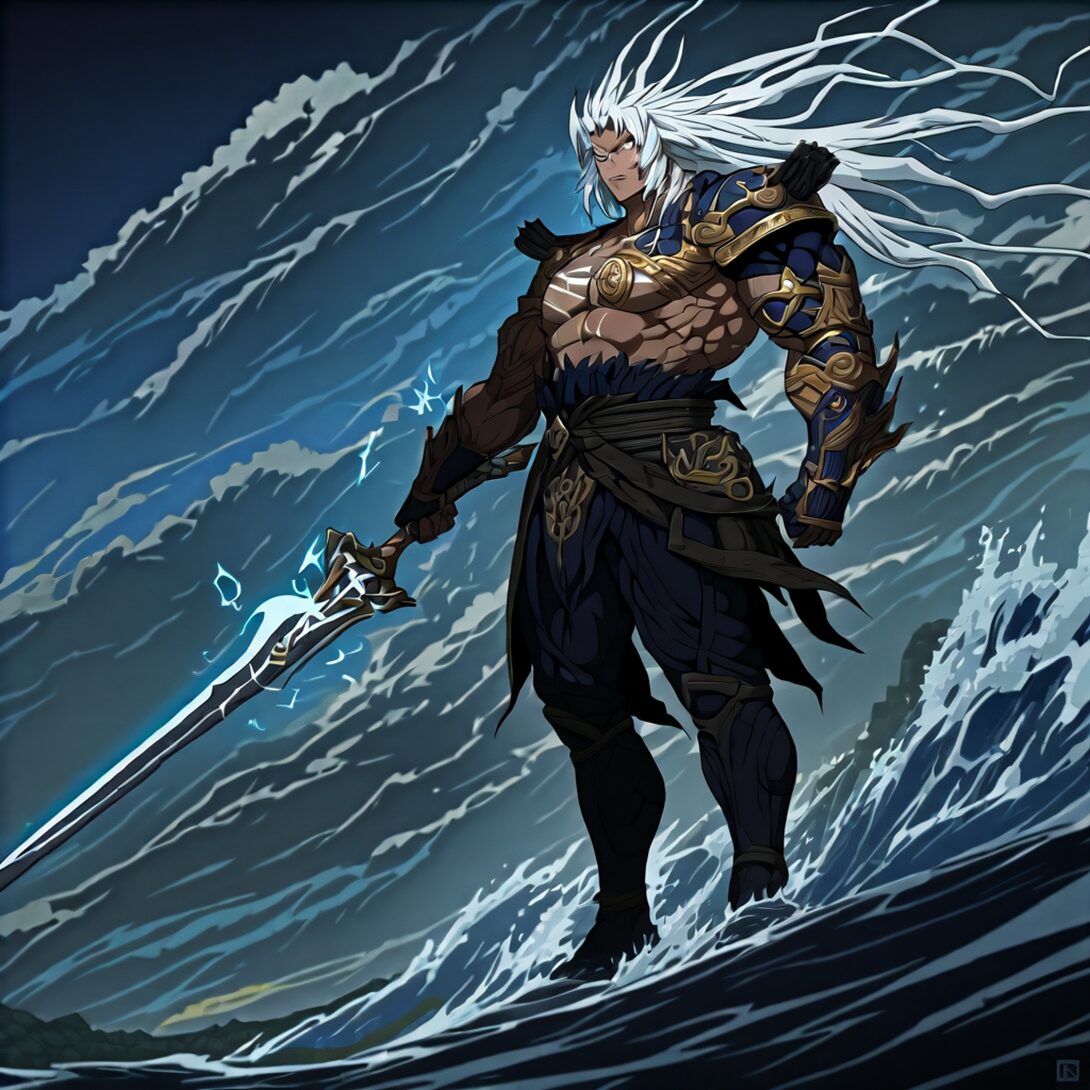
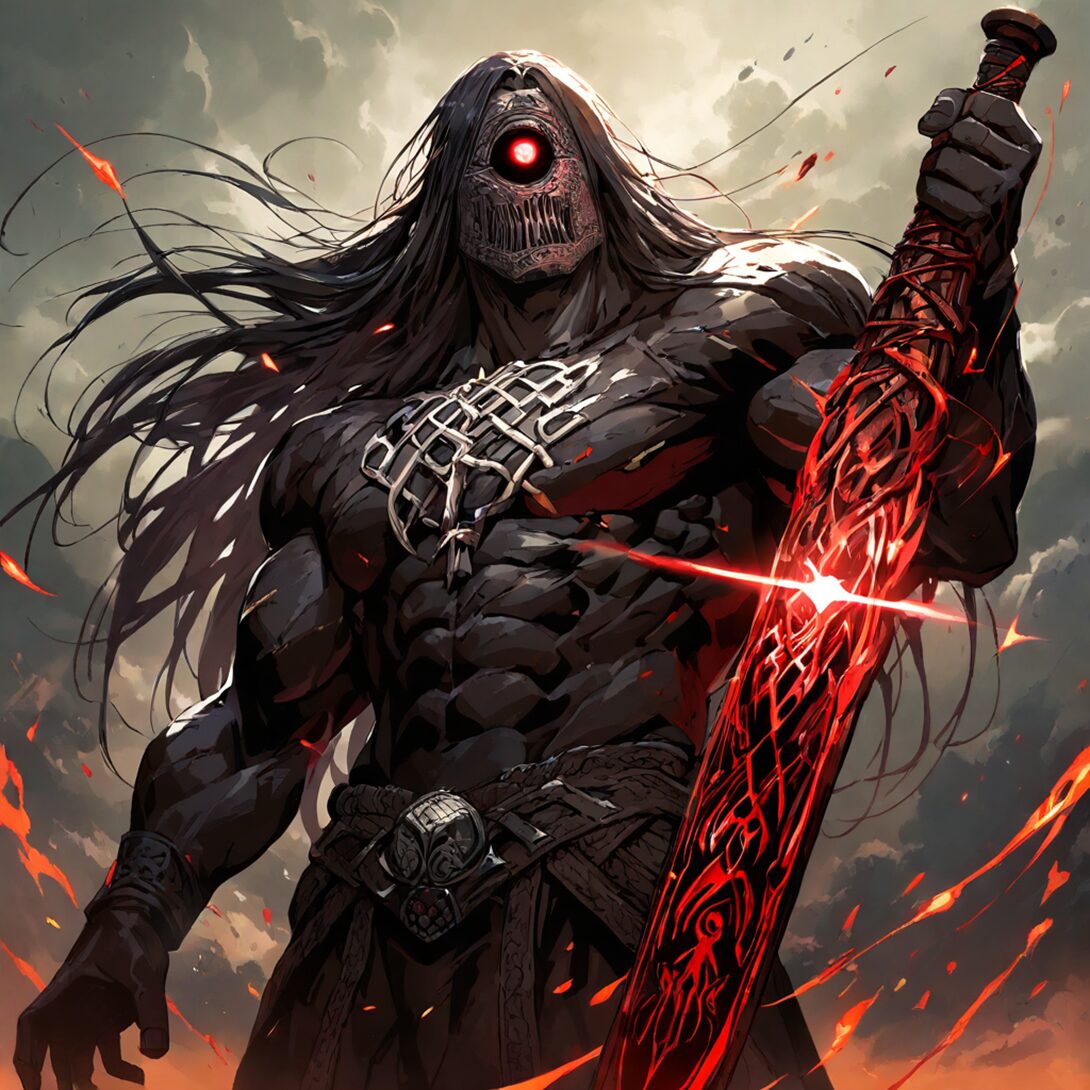
Even hearing “Canaanite mythology,” many may not be familiar with it. But this is the mythology believed in right “next” to the Old Testament. The pagan god “Baal,” whom the Bible repeatedly challenges in battle, and “El,” the word pointing to the God of the Bible — the very world in which these gods lived is Canaanite mythology.
For a long time, Canaanite mythology remained only as fragmentary abuse in the Bible, and its whole picture was unknown. But in the 20th century, a great quantity of clay tablets was found at a seaside ruin in Syria, and the lost Canaanite mythology was revived all at once from a sleep of over 3,000 years.
The comprehensive index of the world’s mythology and religion original texts, including others besides Canaanite mythology, can be seen on the following page.
The Discovery of Ugarit — the Canaanite Original Texts Buried in Sand
The story begins in 1928, on the Syrian coast facing the Mediterranean (near present-day Latakia). One farmer’s plow struck an old stone chamber underground. With this as a trigger, from the next year, 1929, the French archaeologist Claude Schaeffer began excavation.
What was dug up was the fact that this ruin, called “Ras Shamra (the hill of fennel),” was the port city “Ugarit,” which flourished in the 2nd millennium BC. Ugarit was destroyed around 1180 BC by the attack of the “Sea Peoples,” and, never rebuilt, slept beneath the sand.
From the palace and the ruins of temples such as the Temple of Baal and the Temple of Dagan, about 1,500 clay tablets were unearthed. Among them were the clay tablets recording the myths dealt with in this article — the stories of Baal and El. It was the moment when the living Canaanite mythology, written in an age older than the Bible, first returned to human hands.
The Ugaritic Script — the World’s Oldest Alphabet
What was also groundbreaking about the Ugaritic clay tablets was their script. The cuneiform known until then was a script hard to memorize, in which one sign represented a word or syllable. But the Ugaritic script was something entirely new — with only about 30 signs, each representing a “sound (an alphabet letter).”
This is one of the world’s oldest alphabetic scripts known at present. With the appearance of cuneiform but the mechanism of an alphabet — the one who deciphered this script was the Frenchman Charles Virolleaud. This invention of writing words with few signs in time connects to the Phoenician script, the Greek script, and today’s alphabet. The land of Canaan was, not only in mythology but in the history of “writing,” one of the world’s sources.
The Original Texts That Convey Canaanite Mythology
Of the literary works recorded on the Ugaritic clay tablets, the pillars of myth and legend are three works. Adding to these the whole picture of the gods and the relationship with the Bible, this series explains in 6 articles.
Listing the main original texts gives the following.
| Original text | Content |
|---|---|
| The Baal Cycle | The central myth in which the storm god Baal fights the sea god Yam and the death god Mot and wins kingship and fertility (6 tablets in all) |
| Epic of Kirta | A king’s story in which King Kirta, who lost his family, gains a consort by the guidance of the god El |
| Tale of Aqhat | The tragedy of the long-awaited son Aqhat, and of the goddess Anat over his bow |
| God-name lists and ritual texts | Records conveying the system of the Canaanite gods and cult, such as El and Asherah |
Article 1: The Baal Cycle — the Kingship of the Storm God
In the first installment, I explain the “Baal Cycle,” which forms the center of Canaanite mythology.
How the god of storm and rain Baal defeats the sea god Yam and becomes king, builds a magnificent palace, in time is swallowed by the death god Mot and dies, and is revived. It is a story of the death and rebirth of life, reflecting the cycle of dry season and rainy season.
Article 2: The Epic of Kirta — the King Chosen by a God
In the second installment, I explain the “Epic of Kirta (Keret),” whose protagonist is a human king.
How King Kirta, who lost his wife and all his children, by the guidance of the supreme god El, who appeared in a dream, sets out on an expedition and gains a new consort. It is a story of kingship, depicting what a king is, and how god and human are bound.
Article 3: The Tale of Aqhat — the Tragedy of the Bow and Death
In the third installment, I explain another king’s story, the “Tale of Aqhat.”
The childless wise king Danel is granted a son, Aqhat, by a god. Over his splendid bow, he comes into conflict with the goddess Anat, and the young man loses his life. It is a tragedy that gazed at the human destiny of being mortal.
Article 4: The Canaanite Gods — the Pantheon and the Council of the Gods
In the fourth installment, I explain the whole picture of the Canaanite gods who appear in these stories.
The aged supreme god El, his consort Asherah, the storm king Baal, the fierce goddess Anat, the death god Mot, and the sea god Yam. I cover up to the mechanism of the “council of the gods,” where the gods gather.
Article 5: The Bible and Canaanite Mythology
In the fifth installment (the final one), I explain this series’ greatest highlight, the connection with the Old Testament.
The god’s name El, Baal’s title “the rider of the clouds,” the Bible’s sea monster Leviathan and the serpent Lotan that Baal defeated, and the contest of Elijah and the prophets of Baal. I cover how deeply the Bible resonates with Canaanite mythology.
Why Is Canaanite Mythology Important?
What makes Canaanite mythology special is that it reflects “the very world that gave birth to the Old Testament.”
The people of Israel lived in this very land of Canaan, spoke the language of Canaan (Hebrew is a Canaanite-family language), and, in the very midst of the Canaanite gods, cultivated their faith in their one God. That the Bible so fiercely warns against Baal worship is because it was a real faith right next door, with an irresistible appeal.
The Ugaritic clay tablets gave the other voice to a world in which only “one voice,” the Bible, had remained. Knowing Canaanite mythology is nothing other than understanding the Old Testament more deeply in the context of its age.
The original texts of the Old Testament itself are explained in detail in the following series. Reading them alongside makes the resonance of the two appear even more clearly.
To Learn More
Conclusion
In this article, I introduced the whole picture of the original texts of Canaanite mythology (Ugaritic mythology) and the content the 5 articles in the series cover. How was it?
Canaanite mythology, revived from the clay tablets of Ras Shamra in the 20th century, has several faces — the myth of the storm god Baal, the epics of kings, and the background of the Old Testament. Let us walk, from the next article, one by one, the “other world” that was right next to the Bible.
I also explain the original texts of other mythologies and religions. For the full list, please see the Summary of the World’s Mythology and Religion Original Texts.
If you are curious about the strength of the gods and heroes, please also see this ranking article. The storm god Baal and the Bible’s monster Leviathan appear too.
I hope you’ll read the next article too.
Also popular with readers
📚 Series: The Original Texts of Canaanite (Ugaritic) Mythology (1/6)