Thank you for visiting. This article is the third installment in a series explaining the original texts of Canaanite (Ugaritic) mythology.
Continuing from last time (Article 2), this time too I take up a story about a human king, the “Tale of Aqhat.” A son granted by a god, a single bow, and the goddess who coveted it. What this story gazes at is the heavy theme of the “destiny of being mortal” that humans, unlike the gods, bear.
For an overview map of the original texts of Canaanite mythology as a whole, please see this summary article.
What Kind of Original Text Is the “Tale of Aqhat”
| Item | Content |
|---|---|
| Original text | The Ugaritic clay tablets (KTU 1.17–1.19, 3 tablets) |
| Main characters | The wise king Danel, his son Aqhat, his daughter Pughat |
| Theme | The human destiny of being mortal, hospitality, revenge |
| State | The end is missing, and the conclusion is unknown |
The “Tale of Aqhat” is an epic whose protagonists are the wise and just king Danel (Dan’el) and his long-awaited son Aqhat. Like the previous Epic of Kirta, this one too has the end of the clay tablet missing, and the final settling of the story is unknown.
Even so, this story gazes head-on at the universally human questions of “why do people die” and “can immortality be obtained.” Let me first put the flow of the story into a diagram.
The Wise King Danel, Who Sought a Child
The protagonist’s father Danel is depicted as a just judge who hears the widow’s plea and protects the orphan’s rights. Like the previous Epic of Kirta, here too “protecting the weak” is the proof of a good king.
But even such a fine king had one wish unfulfilled. He had no son to succeed him. Danel sought the gods’ help and, over seven days, offered food and drink to the gods at the temple and lay down at the sanctuary, praying on. It was a desperate prayer, single-mindedly wanting to be granted a child.
The Son Aqhat, Granted by a God
The one who answered that prayer was the storm god Baal. Baal went to the supreme god El and interceded, “Please grant Danel a son to succeed him.” El accepted this and blessed Danel. Thus the long-awaited boy Aqhat was born.
At this time, the original text records a famous passage on “what an ideal son does.” A good son is —
One who sets up the stela of the clan’s guardian god, takes the hand of his drunken father and supports him, mends the rain-soaked roof, and washes his father’s clothes.
It is one who reveres his father, protects the house, and cares for him who is a good son. From this passage, how much the people of Canaan valued the “house” and the “heir” well comes through.
Kothar’s Bow
One day when Aqhat had grown, the craftsman god Kothar-wa-Khasis visited Danel (that craftsman god who made Baal’s weapons and palace in the Baal Cycle). Danel hospitably entertained the guest.
In return for that hospitality, Kothar gave a splendid bow to the son Aqhat. It was an exceedingly powerful bow, made by the god’s hand. The boy Aqhat was granted a special treasure from the gods. But this very gift became the trigger of tragedy.
The Temptation of the Goddess Anat
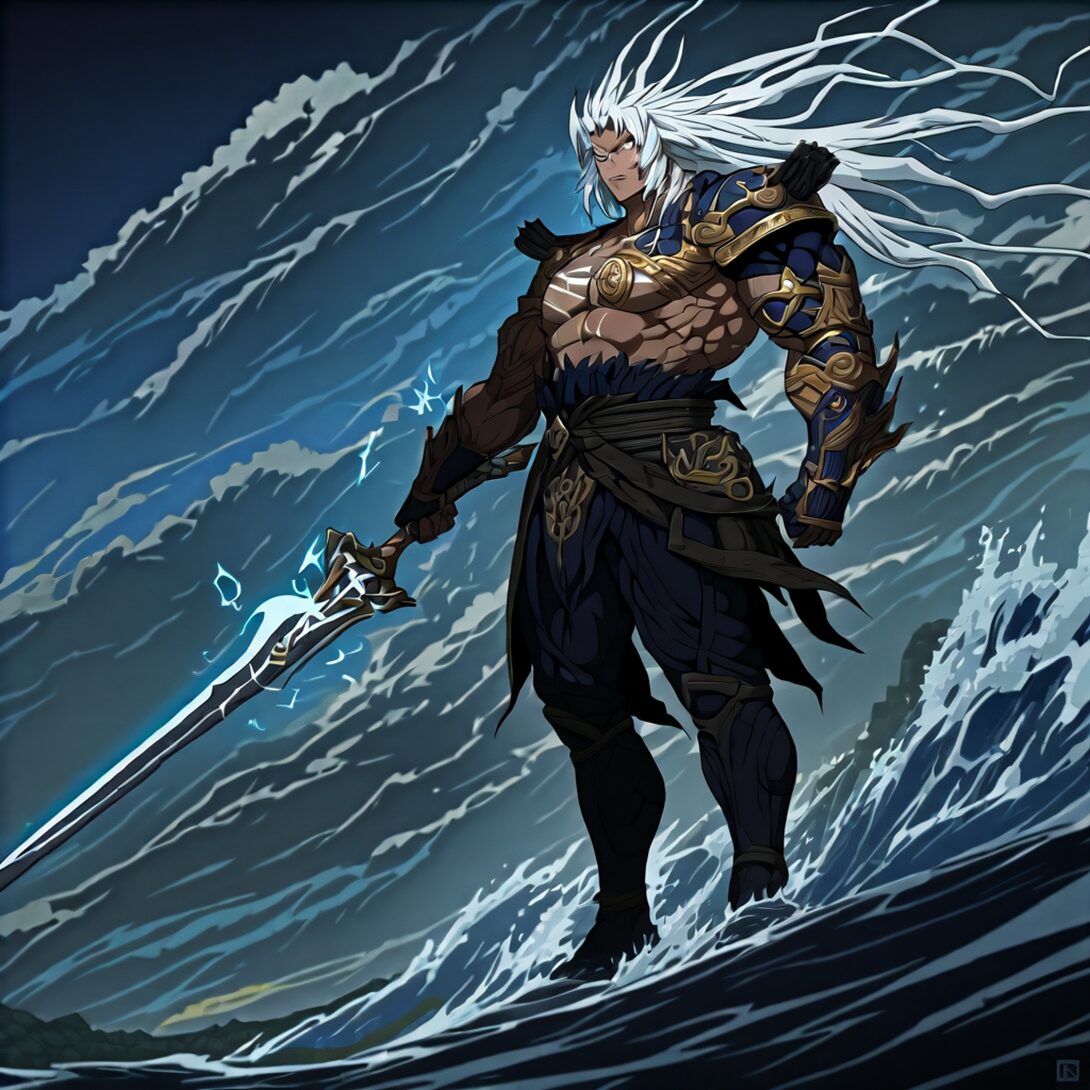
There was one whose heart was fiercely seized by that bow. The fierce goddess of war Anat. She, fond of hunting and battle, wished to make the god’s bow her own at any cost, and pressed Aqhat to hand it over.
Anat first offered silver and gold. When Aqhat refused, the goddess at last presented the ultimate reward that a human can never obtain.
Ask for life, Aqhat, and I will give it. Ask for immortality, and I will let you live forever. Let you count your years endlessly, alongside Baal.
“Immortality.” A deathless life, the same as the gods’. There is no greater temptation than this. But Aqhat’s answer was a firm rejection.
Do not deceive me, goddess. Your lies are like dust to a hero. What a human meets at the last is fixed. Everyone dies. I too will die, as all people die.
Aqhat saw through the goddess’s words as a lie, that “immortality is not something a god could give to a human.” Further, he even spoke words insulting the goddess: “The bow is a warrior’s thing. What would a woman do, holding a bow?” This set fire to Anat’s anger.
Aqhat’s Death
The insulted Anat rushed to the supreme god El and, pressing fiercely, gained permission to punish Aqhat. And she hired the rough warrior Yatpan and carried out a loathsome plan.
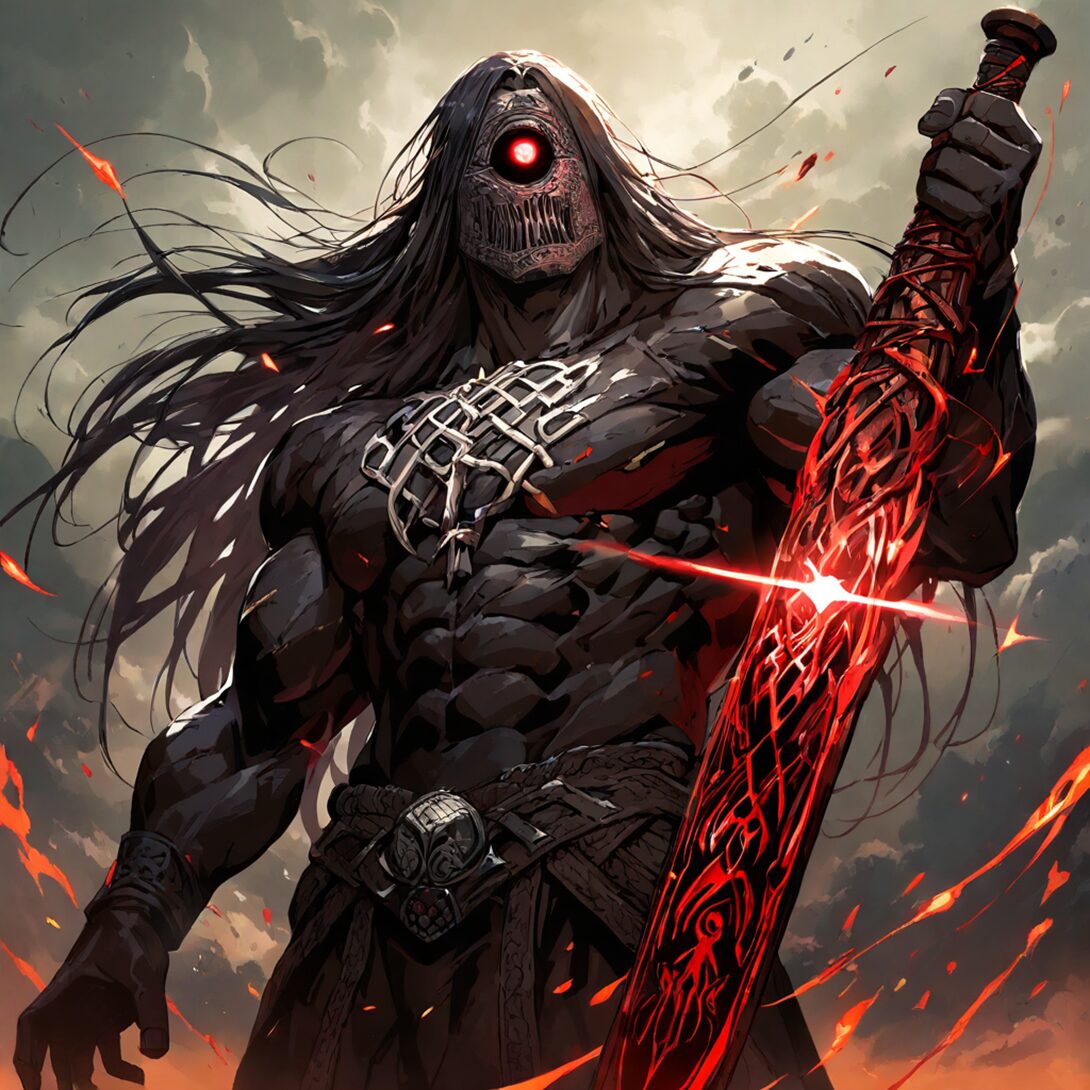
Anat hid Yatpan among a flock of eagles. As Aqhat was eating, the flock of eagles swooped down from the sky, and from among them Yatpan attacked Aqhat. Struck on the head, Aqhat died.
But Anat’s scheme did not fully succeed. In the confusion of the killing, that bow fell into the sea, broke, and was lost. Though she killed the young man out of desire for the bow, the very bow was not obtained. Anat is told to have shed tears and lamented before the irrevocable deed she had committed with her own hand.
The Earth’s Drought, and the Father’s Lament
Aqhat’s death did not stop at the death of a single young man. As in the previous Baal Cycle, the hero’s death caused the earth’s drought. Rain and dew ceased, and for many years the land lost its harvest.
The father Danel did not yet know of his son’s death. But he first noticed the earth’s anomaly. Danel, going round his fields, before the cracked earth, felt in his own body the drought, “For seven years, let Baal’s rain and dew cease.” In time, seeing the flock of eagles ominously circling over the palace, he realized the worst. Danel prayed to Baal, shot down the eagles, and split their bellies one after another. And at last, from within the belly of the great eagle Samal, the mother of the eagles, he found the remains of his son Aqhat.
When Danel had buried the remains with care, he laid a curse on the towns near the land where Aqhat was killed. “It was beside you that the king’s son was killed. Calamity be upon you.” And gathering those who lamented, he kept mourning his son’s death for as long as seven years. A single young man’s death spreading as the earth’s drought and a curse on the towns — the weight of this story lies in the point that an individual’s tragedy is inseparably tied to the barrenness of the whole world.
The Sister Pughat’s Revenge
The one who rises here is Aqhat’s sister Pughat. She was a wise woman, praised as “one who knows the course of the stars.” Pughat received her father’s blessing and resolved to avenge her brother.
Her disguise was splendid. She hid a warrior’s dagger beneath her garment and, over it, put on a woman’s attire, and went into the camp of the enemy Yatpan. The drunken Yatpan proudly boasted that he had struck down Aqhat. Pughat, watching for the chance for revenge, kept pouring that man wine —.
But at that very tense scene, the clay tablet breaks off. Whether Pughat accomplished her aim, and whether there was a path of rebirth for Aqhat. The story’s conclusion remains, even now after 3,000 years, an eternal mystery.
The “Death” the Tale of Aqhat Gazes At
Though lacking its end, the core of the “Tale of Aqhat” is clear. It lies in the point of gazing head-on at the solemn fact that humans, unlike gods, must die.
Though offered immortality by a goddess, Aqhat firmly accepted his own destiny of being mortal, saying “all people die.” Not trying to become a god, but knowing his station as a human — this stance resonates deeply with the theme of the “Epic of Gilgamesh,” which failed in seeking immortality. The eternal life of the gods, and the limited life of humans. That stark boundary line was the principle of the world that the people of Canaan gazed at.
Note that the protagonist’s father Danel (Dan’el) is sometimes identified with a figure whose name is raised in the Old Testament’s Book of Ezekiel as a “righteous man” alongside Noah and Job. The name of a Canaanite wise king resonating even into the far-later Bible — that is one example (the relation with the Bible is dealt with in detail in Article 5).
To Learn More
Conclusion
In this article, I explained in detail the Ugaritic “Tale of Aqhat,” following the flow of the original text. How was it?
The son Aqhat, granted by a god, comes into conflict with the goddess Anat over Kothar’s bow, repels the temptation of immortality, and loses his life. His death brings drought, and his sister Pughat rises for revenge. I think you have felt that this tragedy, which firmly gazed at the human destiny of being mortal, resonates with Gilgamesh and the Bible too.
In the next Article 4, I will survey the Canaanite gods who have appeared so far, and explain the mechanism of their pantheon and the “council of the gods.”
I hope you’ll read the next article too.
Also popular with readers
📚 Series: The Original Texts of Canaanite (Ugaritic) Mythology (4/6)