Thank you for visiting. This article is the first installment in a series explaining the original texts of Canaanite (Ugaritic) mythology.
This time, I look in detail at the “Baal Cycle,” which forms the center of Canaanite mythology, following the flow of the clay tablets’ account. The storm god Baal fights over kingship, dies once, and is revived — it is the greatest story of Canaanite mythology, grandly depicting the death and rebirth of life.
For an overview map of the original texts of Canaanite mythology as a whole, please see this summary article.
What Kind of Original Text Is the “Baal Cycle”
| Item | Content |
|---|---|
| Original text | The Ugaritic clay tablets (KTU 1.1–1.6, 6 tablets in all) |
| Script | Ugaritic script (the oldest alphabetic cuneiform) |
| Date | 14th–13th century BC |
| Theme | The kingship, fertility, death and rebirth of the storm god Baal |
The “Baal Cycle” is a series of myths in six tablets, recorded on the Ugaritic clay tablets. The name of the scribe Ilimilku is recorded, and it is thought to have been written down under the priests. Because some is missing, there is also debate over the exact order of the tablets, but it is read roughly in the flow of “the battle with the sea god Yam → the building of the palace → the battle with the death god Mot and the revival.”
What this myth tells repeatedly is the question “who becomes the king of the gods.” That kingship is won by force by the young god Baal, who brings storm and rain. Let me first put the flow of the story into a diagram.
What Is the Storm God Baal
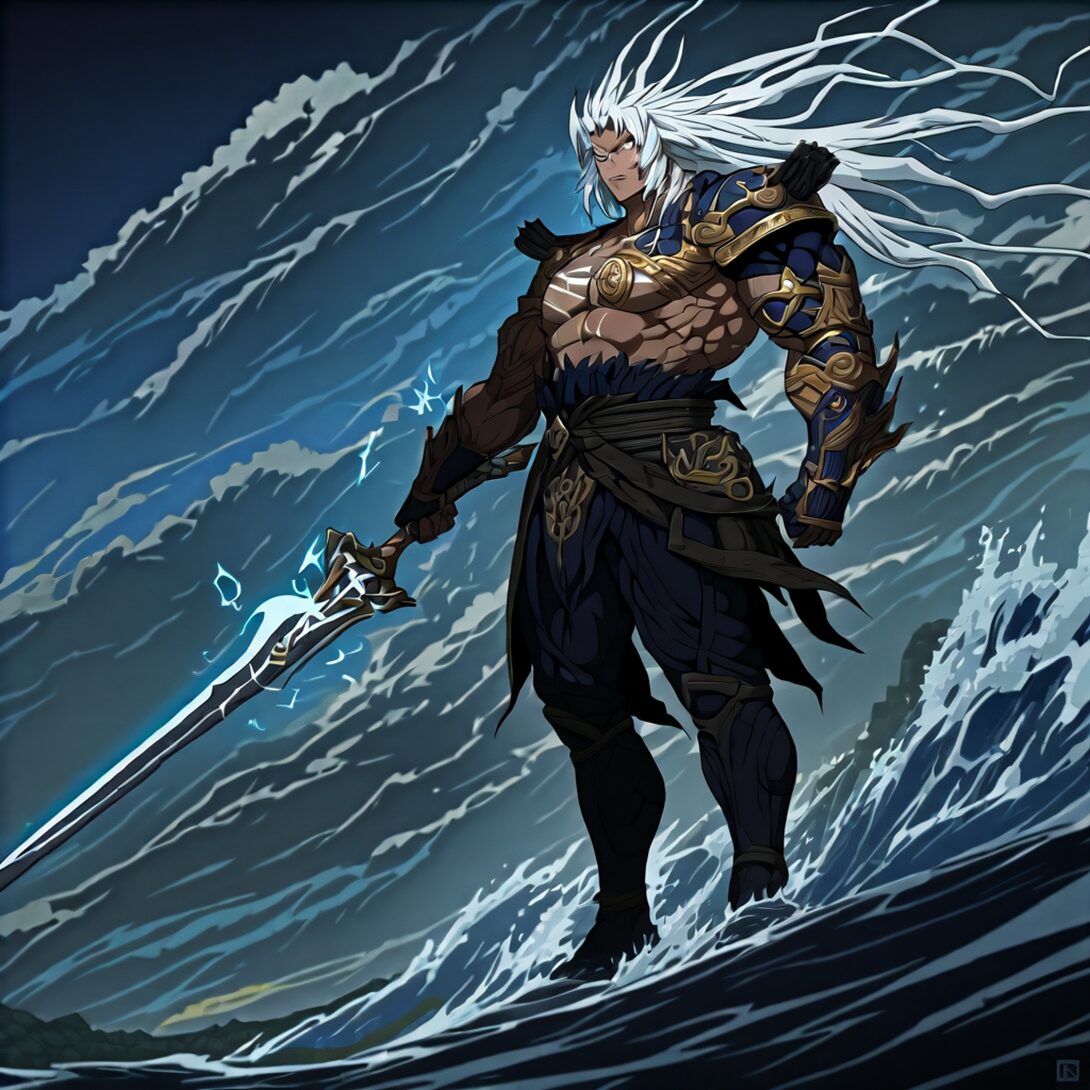
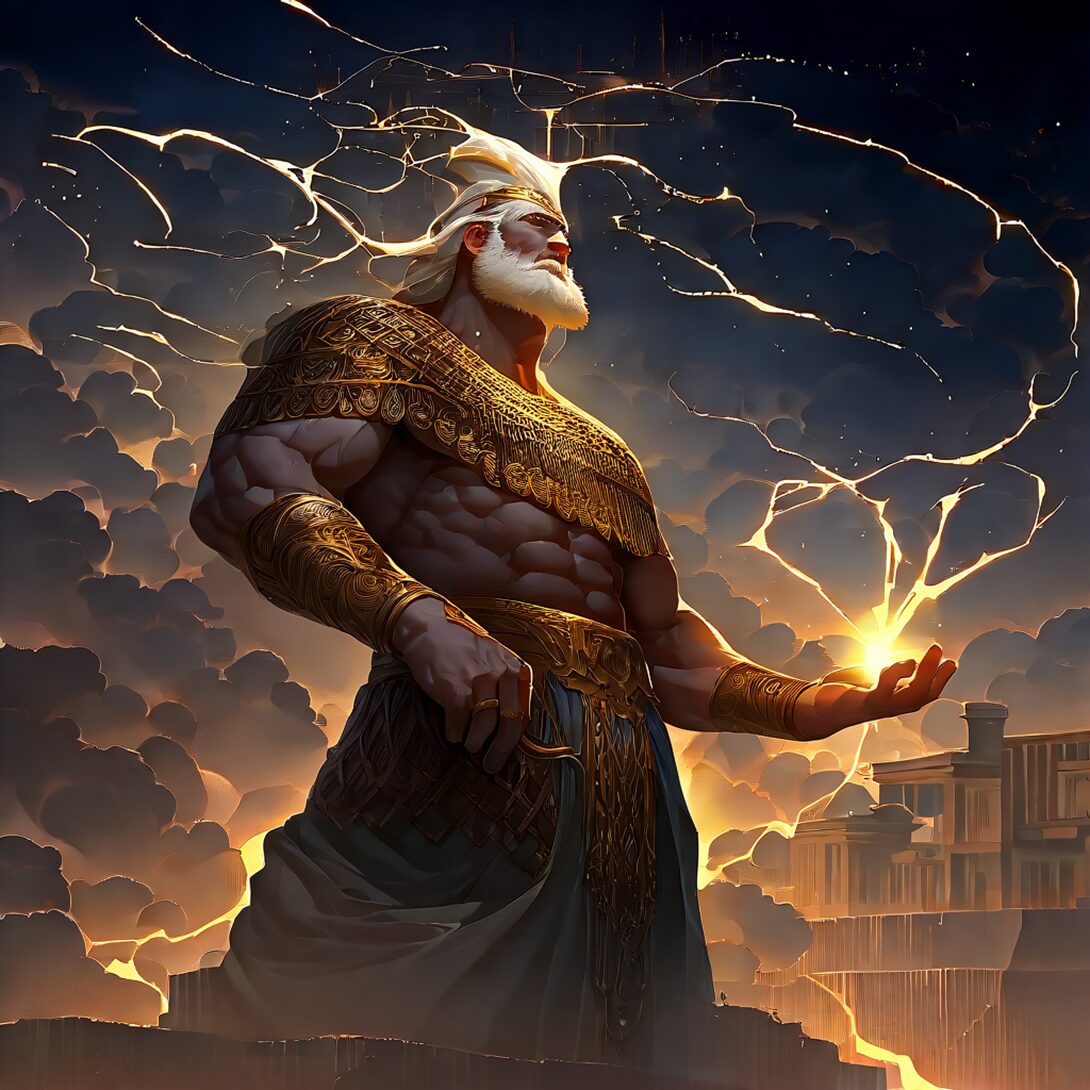
The protagonist “Baal” is a young god governing storm, thunder, and rain. Originally “Baal” is a title meaning “lord (master),” and his proper name is Hadad. Held to be the son of the grain god Dagan, he was a god who made rain fall with thunder and brought the harvest to the earth.
For the people of Canaan, living in a dry land, Baal, who controls the rain, was the very god who decides life. He is often praised as “the rider of the clouds” and “the lord of the earth.” This title “the rider of the clouds,” as we see later, becomes an important key in the connection with the Bible too.
The Battle with the Sea God Yam — Staking Kingship
The story first begins with a struggle over the throne of the king of the gods. The supreme god El favored the god of sea and river “Yam” (meaning “sea”; also called “Judge Nahar [River]”) and tried to make him king.
The empowered Yam sent a messenger to the council of the gods and arrogantly demanded thus: “Hand over Baal. I will make that one my slave.” The gods feared and hung their heads. Even El tried to accept this demand to avoid strife. But Baal alone refused to yield and chose confrontation with Yam.
The one who sided with Baal at this time was the craftsman god Kothar-wa-Khasis. He forged two magic weapons (maces) and gave each a name: “Yagrush (the chaser)” and “Aymur (the driver).”
Kothar says, “Yagrush, drive out Yam, drive River from his throne.”
With the first blow, Yam did not fall. But when the second weapon Aymur smashed Yam between the eyes, the sea god at last collapsed. The goddess Athtart (Astarte) cried, “Scatter him, victorious Baal,” and Baal finished off Yam. Thus Baal struck down the raging sea (chaos) and won the throne of the king of the gods.
Baal’s Palace — the Proof of a King
The Baal who became king lacked just one thing: his own palace (temple). While the other gods all had splendid halls, Baal, who should be king, still had no house of his own. A palace fit for a king is the very proof of his authority.
So Baal’s sister and goddess of war, Anat, and the mother goddess Asherah negotiated with the supreme god El. When El at last gave permission, the craftsman god Kothar built a magnificent palace of cedar of Lebanon, silver, and gold.
Here there is a famous scene over a “window.” Kothar tried to set a window in the palace, but Baal at first stubbornly refused a window. He feared that the sea god Yam, whom he should have defeated, would slip in through the window. But at Kothar’s persuasion, Baal at last gave in and opened a window in the palace. And through that window Baal made his sacred voice resound. It was thunder, and that window represented the rift in heaven through which lightning runs, splitting the rain clouds. Baal became the king who, from his own temple, looses storm and rain upon the world.
The Confrontation with the Death God Mot
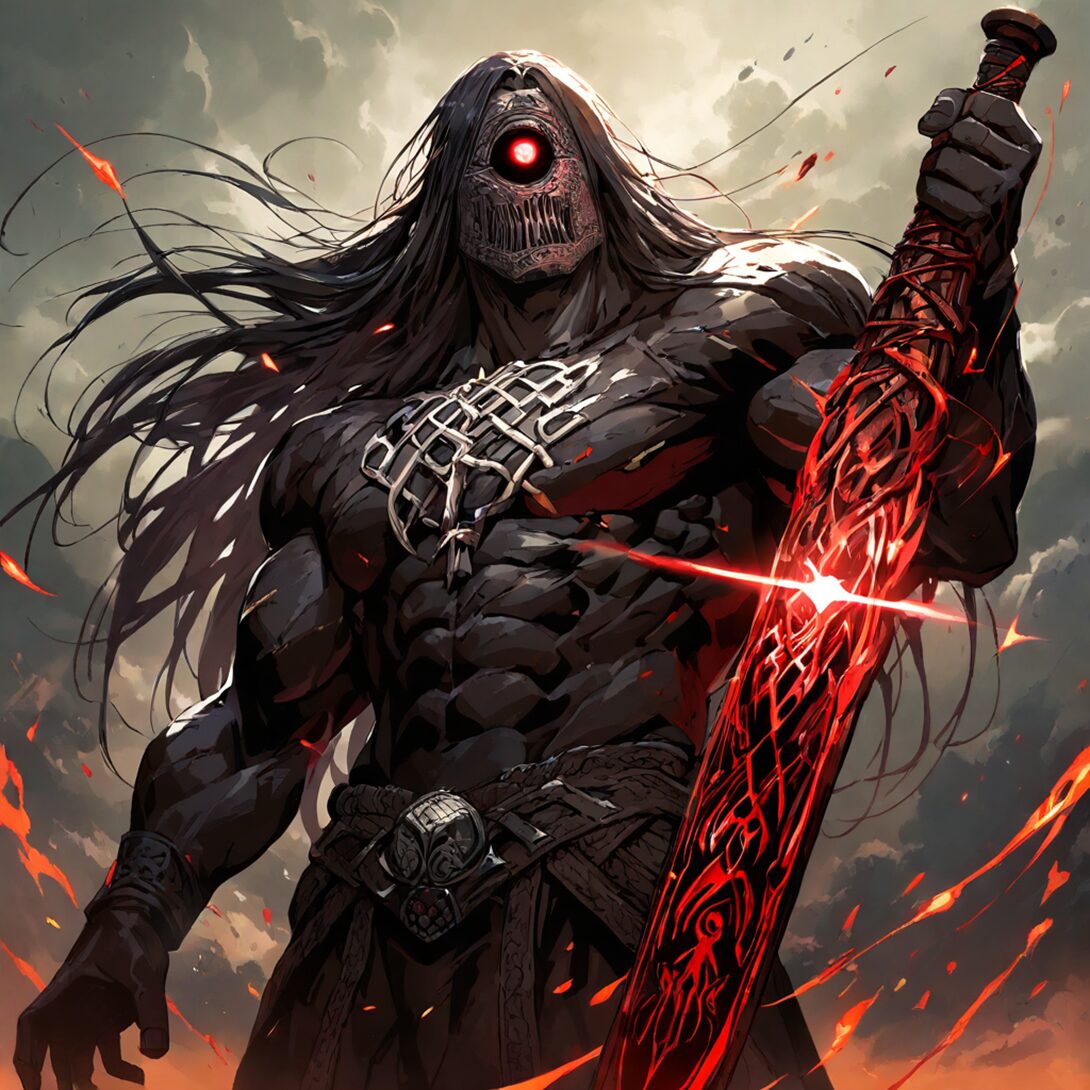
Though Baal became king of heaven and earth, there was still one he had not subjugated: the death god “Mot.” Mot was the deification of “death” itself, dwelling at the bottom of the earth (the underworld), with a bottomless appetite that tries to swallow all living things.
Baal sent a messenger to have Mot too acknowledge his kingship. But Mot’s reply was loathsome. “My appetite, like a lion’s, seeks the wilderness. I will swallow you like a slice of meat carried to the mouth.”
Before this threat, even Baal trembled in fear. He could only surrender, telling Mot, “Death god Mot, I am your slave. I am yours forever.” Receiving the advice of the sun goddess Shapshu, Baal left a substitute behind and, leading his clouds, winds, and rain, descended alive into the underworld. The god who brings rain vanishing to the bottom of the earth — it meant that rain would cease from the world and the earth would dry up.
Baal’s Death, and the Lamenting Gods
In time, the news “Baal is dead” reached the gods. The grief of the world that lost the rain god clearly appears in the lament of the king of the gods, El.
The supreme god El came down from his throne, sat on the ground, and poured dust over his head. And he cut his cheeks and chest with a stone and wept aloud. “Baal is dead. What will become of the people, the people of the earth?” Baal’s sister Anat too cut her body in the same way and lamented her brother’s death.
Anat, with the help of the sun goddess Shapshu, at last found Baal’s corpse at the entrance to the underworld. She carried it on her shoulders to the sacred mountain, buried it with care, and offered many sacrifices. But that was not the end. In Anat’s heart burned an intense desire for revenge on the death god Mot, who had killed her brother.
Athtar, Who Could Not Take the Throne
That Baal died and the throne of the king of the gods became vacant was a great matter for the world. The supreme god El consulted with his consort Asherah (Athirat), “Let us set up one of your children as king,” and named the Venus god Athtar as the successor.
Athtar triumphantly climbed Baal’s sacred mountain Zaphon and tried sitting on its throne. But the original text strikingly depicts this scene: Athtar’s feet did not reach the throne’s footstool, and his head did not reach the throne’s back. His body was far too small for Baal’s throne.
Realizing that he could not serve as a substitute for Baal, Athtar quietly came down from the throne and decided to rule the earth. What this scene conveys is the fact that Baal’s kingship, which brings storm and rain, cannot be replaced by anyone else. Without Baal, the harvest does not return to the world — the weight of his absence is keenly told through the empty throne.
Anat’s Revenge and Baal’s Revival
Anat, lamenting her brother Baal’s death, is not a goddess who only grieves. In another scene of the original text, she is depicted as a fierce goddess of war, filling the hall with the blood of soldiers and reaping the heads and hands of enemies as if reaping rice. When satisfied with battle, she purifies herself with perfumed oil and wipes the blood that has stuck to floor and walls. That fierce Anat at last heads for her brother’s enemy, the death god Mot.
When Anat found the death god Mot, she captured him and destroyed him in a terrible way. Its depiction is just like the manner of processing harvested grain.
She split Mot with a sword, sifted him with a winnowing fan, burned him with fire, ground him in a stone mill, and scattered him in the field. Birds pecked at his flesh.
Reaping, grinding, and scattering death like grain — this intense scene hints that, overcoming even death, a new harvest sprouts.
In time, the supreme god El had a dream. It was a scene of fertility, in which the heavens rained down oil and the valley streams ran with honey. El, seeing it, rejoiced and realized: “Victorious Baal lives. The lord of the earth surely is.” Just as those words said, Baal was revived and returned again to the throne. To the dead earth, the rain returned again.
After that, the revived death god Mot and Baal clash again in the seventh year. The two grappling like two wild bulls, like blazing flames. But when the sun goddess Shapshu warned Mot, “El will overturn your throne,” Mot at last yielded and acknowledged Baal’s kingship. Thus Baal’s throne became unshakable.
The Myth as the Cycle of the Seasons
The death and rebirth the “Baal Cycle” depicts is deeply tied to the harsh nature of Canaan.
The land of Canaan is clearly divided into a hot and dry dry season, when no rain falls, and a rainy season, when the blessing rain moistens the earth. That the rain god Baal is swallowed by the death god Mot and vanishes to the bottom of the earth represents the scorching dry season when rain ceases. And that Baal is revived and returns to the throne is read as representing the coming of the rainy season, when the earth is moistened again.
The drama of death and rebirth repeated every year. It was not a mere story, but the very cycle of nature, for which people prayed in order to live. Baal’s kingship is the power that holds down chaos (the sea Yam) and death (Mot) and keeps bringing order and harvest to the world. Here the earnest worldview of the people of Canaan, who looked up to the storm god as king, well appears.
How Strong Are the Characters? — the Strongest Ranking
The protagonist of this article, Baal, is also introduced in order of strength in the “Mythology, Religion, and Legend Strongest Ranking.” Please enjoy both his activity in the original texts and his “strength.”
To Learn More
Conclusion
In this article, I explained in detail the center of Canaanite mythology, the “Baal Cycle,” following the flow of the clay tablets’ account. How was it?
The storm god Baal defeats the sea god Yam and becomes king, builds a palace, is swallowed by the death god Mot and dies, and, through his sister Anat’s revenge, is revived. I think you have felt that his death and rebirth reflect Canaan’s cycle of dry season and rainy season.
In the next Article 2, I will explain the epic whose protagonist is, rather than gods, the human king Kirta.
I hope you’ll read the next article too.
Also popular with readers
📚 Series: The Original Texts of Canaanite (Ugaritic) Mythology (2/6)