Thank you for visiting. This article is the first installment in a series explaining the original texts of Hindu mythology.
This time, I take up Hinduism’s oldest and most sacred scriptures, the “Vedas.” We look carefully at the structure of the four Vedas, the gods appearing in them, and the world of “ritual,” the center of ancient Indian faith.
For an overview map of Hindu mythology’s original texts as a whole, please see this summary article.
What Are the Vedas — Revealed Scripture
“Veda” means “knowledge,” and the Vedas are Hinduism’s oldest and most authoritative scriptures, composed over a long span from around 1500 BC. They are the fundamental scriptures of the later “Brahmanism” believed by the people who migrated into India (the Aryans), and the source of present-day Hinduism.
The Vedas have two great features.
First, the Vedas are taken to be “Shruti (revelation).” This means “eternal truth granted from the divine to humans, not made by humans.” They are scriptures of the highest authority, placed above books handed down by sages in later ages (Smriti, tradition).
And one more: the Vedas were originally not written down but handed from teacher to disciple by oral transmission. The sacred words, including their sound and intonation, had to be transmitted exactly, and were recited word for word, unaltered, over many generations. This tradition of keeping the divine word exactly as sound is an interesting aspect of scripture, akin to the later recitation of the Qur’an.
The Four Vedas
The Vedas consist of the following four, each with a different role in ritual.
| Veda | Meaning | Content |
|---|---|---|
| Rigveda | The knowledge of hymns | A collection of hymns (mantras) to the gods. The oldest and most important Veda |
| Samaveda | The knowledge of chants | A hymnal of hymns set to melody, for singing in ritual |
| Yajurveda | The knowledge of sacrificial formulas | A practical book of ritual, recording the procedures and words to recite |
| Atharvaveda | The knowledge of spells | A spell collection for everyday wishes and magic (healing, warding off disaster, love) |
The center is the oldest, the “Rigveda.” A hymn collection of about 1,000 hymns and over 10,000 verses; much of the other three Vedas are re-arrangements of the Rigveda’s hymns for singing and reciting. The last to be composed, the “Atharvaveda,” is, unlike the other three that treat solemn ritual, marked by containing many spells close to the lives of common people — healing illness, cursing enemies, prayers for safe childbirth — and is a precious source for knowing the lives of people of the time.
The Four Layers of the Vedas
Further, each Veda is composed of four layers of differing date of composition.
- Samhita (collection): the hymns and sacrificial formulas to the gods themselves. The core of the Veda
- Brahmana (ritual text): prose explaining how to perform rituals and what they mean
- Aranyaka (forest text): deeper, mystical interpretations of ritual, to be learned in the forest away from people
- Upanishad (esoteric text): philosophy that, departing from ritual, asks the nature of the cosmos and the self
Worth noting is that these four layers show the flow in which interest shifts from “the practice of ritual” to “philosophical contemplation.” The last layer, the Upanishad, located at the end (close) of the Veda, is also called “Vedanta (the culmination of the Veda)” and became the high point of Indian philosophy. Because of its importance, I explain the Upanishads in detail again next time (Article 2). In this article, let’s look at the world of the hymns (Samhita), the core of the Veda.
The Gods of the Rigveda
In the oldest, the “Rigveda,” many gods appear, deifying natural phenomena and cosmic forces. Unlike the later age when Shiva and Vishnu become central in Hinduism, the protagonists of this age were gods close to the forces of nature themselves.
| God | Domain |
|---|---|
| Indra | God of thunder and battle. King of the gods. The most hymns are dedicated to him |
| Agni | The fire god. The keystone of ritual, delivering offerings to the heavenly gods |
| Varuna | God who governs the cosmic order (rita) and watches over human good and evil |
| Mitra | God of contract and friendship. Often paired with Varuna |
| Surya | The sun god. Crosses the sky in a chariot |
| Soma | A sacred drink used in ritual, and the god deifying it |
| Ushas | Goddess of the dawn. Appears each morning, dispelling the darkness |
| Vayu | The wind god |
Besides these major gods, a great variety are praised: “Yama (the prototype of Enma)” who rules the land of the dead; “Rudra,” who governs storm and fierce power and is the prototype of the later Shiva; his retinue the storm gods “Maruts”; the sky father “Dyaus”; and the earth mother “Prithvi.”
Especially worth noting is the order god “Varuna.” Varuna is depicted as, so to speak, an ethical supreme god who guards “rita (the cosmic and moral order),” watches over human good and evil from the sky, and punishes lies and sin. On the other hand, Shiva and Vishnu, who become chief gods in later ages, were still mere supporting players in the Rigveda. That the leading gods change over time is a great feature of Indian mythology.
The World of Ritual (Yajna) — Connecting to the Gods Through Fire
The religion of the Veda was above all centered on “ritual (yajna).” Rather than worshipping images of the gods, they communed with the gods by lighting a fire, offering offerings, and reciting hymns.
At its center was the fire god “Agni.” Agni was the very fire kindled on the altar and was taken to be the “mediator between gods and humans,” carrying the offerings (butter and grain) to heaven with the smoke and delivering them to the gods. That the Rigveda begins with a hymn to Agni shows his importance.
Another important one is the sacred drink “Soma.” This drink, said to be made from the juice of a certain plant, was held to bring exaltation and inspiration when drunk, was offered to the gods (especially Indra) in ritual, and was drunk by the priests themselves. Soma eventually came to be praised as a god itself, and the Rigveda has a whole book of hymns dedicated to Soma.
The ones who carried out such rituals were the priestly class, the “Brahmins.” It was thought that by reciting the right words rightly and performing the ritual by the right procedure, one could move even the gods to gain the desired result, and the authority of ritual and the Brahmins who govern it came to stand at the top of society.
Indra and Vritra — the Greatest Myth of the Rigveda
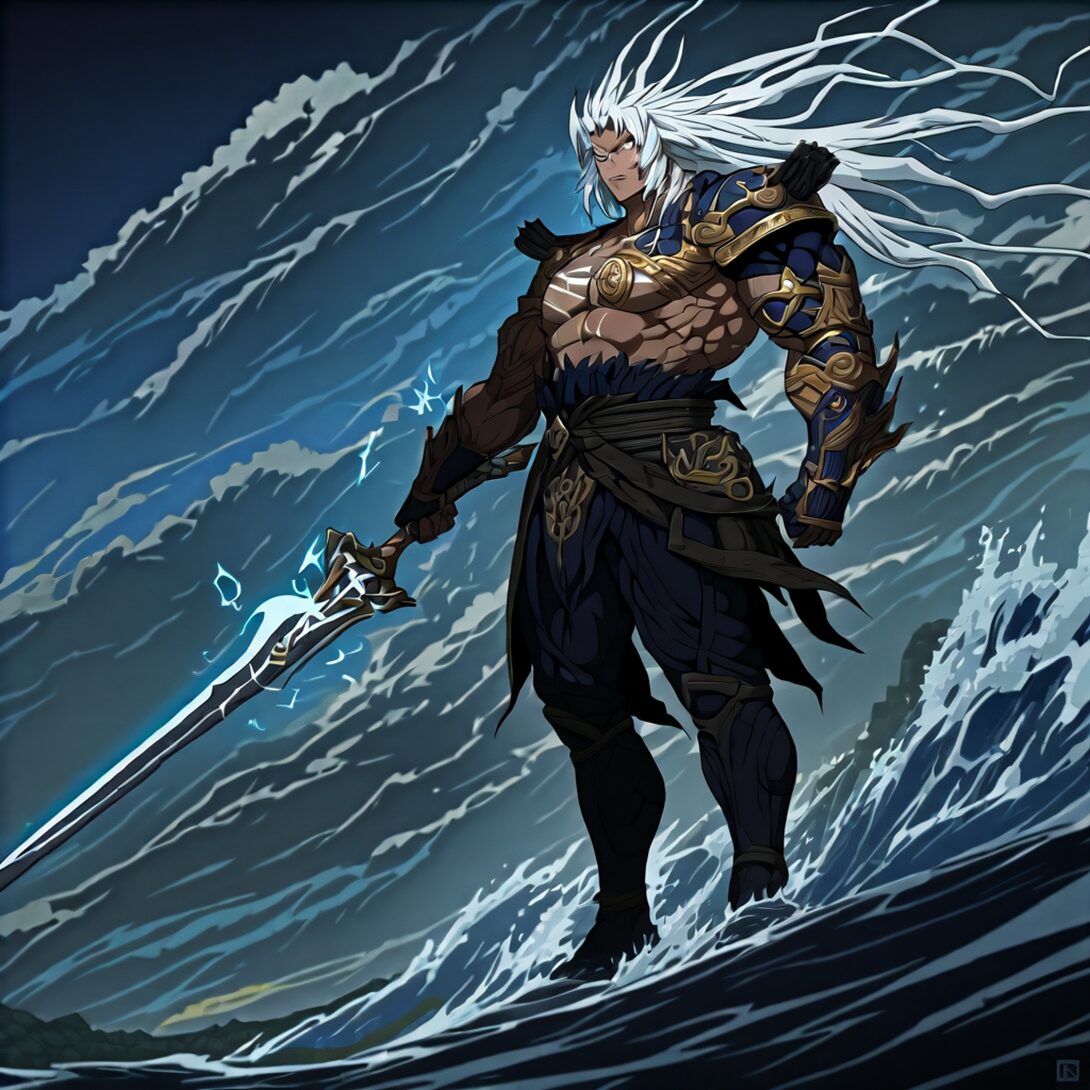
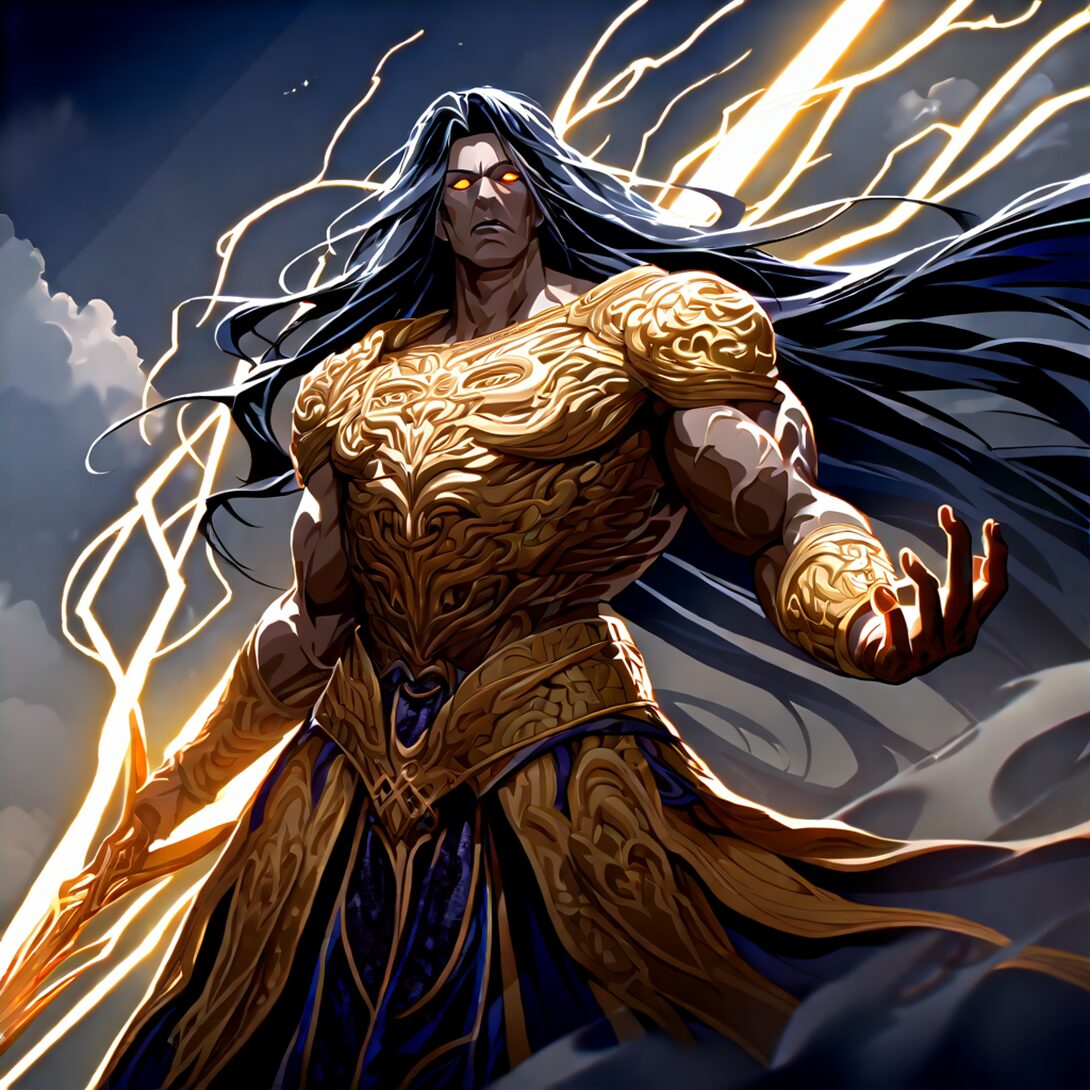
Among the many gods, the thunder god “Indra” is the greatest hero god of the Rigveda, with about a quarter of all hymns dedicated to him. He is depicted as a powerful war god, fighting boldly and drinking great amounts of Soma.
Indra’s representative feat is the “slaying of Vritra.”
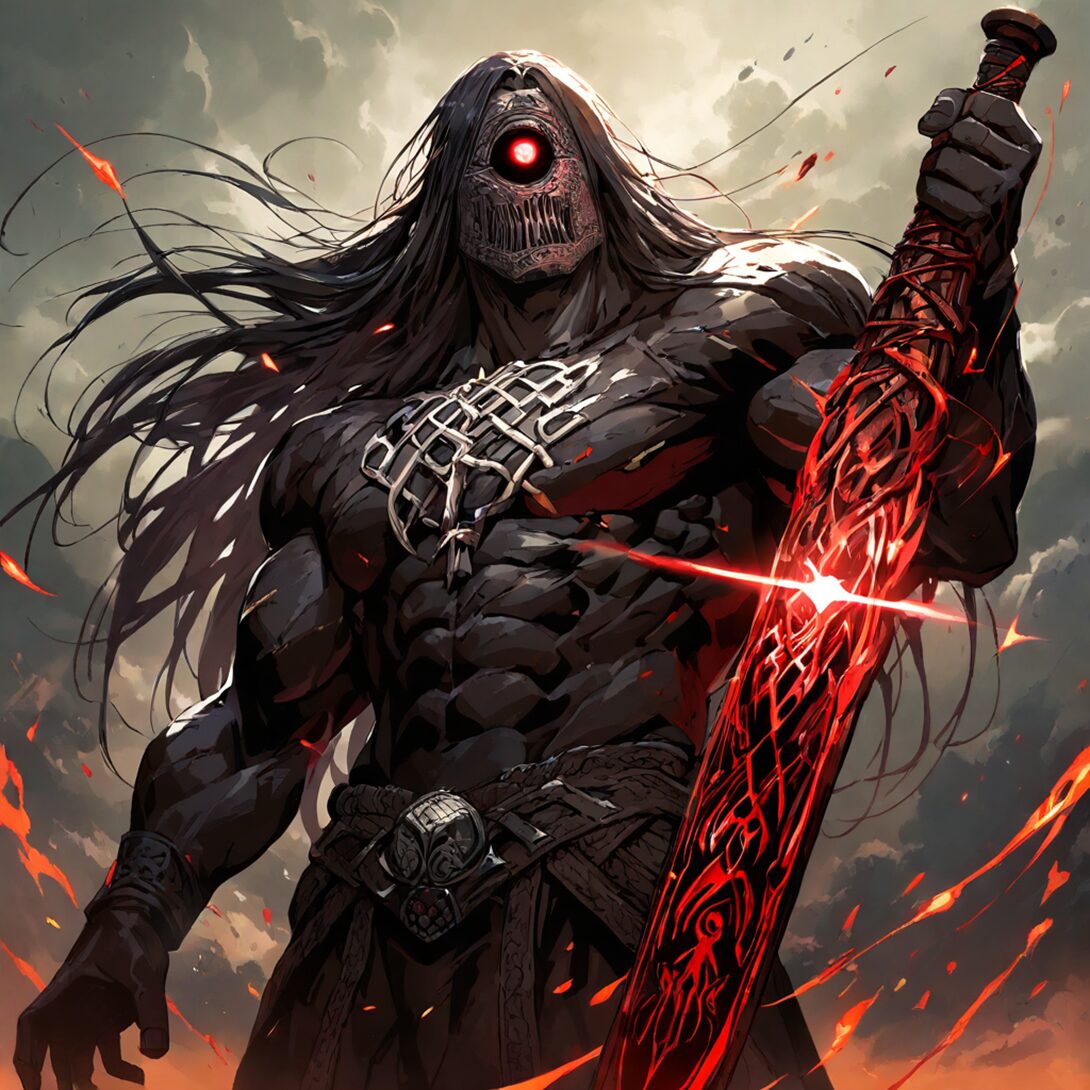
A giant demon in the form of a dragon (serpent), “Vritra,” had dammed up all the waters of the world, bringing drought to the earth. Vritra’s name means “the coverer, the obstacle.” It is a crisis in which water is shut off and the world withers and stagnates.
Indra, drinking the sacred drink “Soma” to rouse his strength, faces Vritra with the thunder-weapon “Vajra” forged by the craftsman god Tvashtri. After a fierce struggle, he strikes down Vritra, and the seven rivers that had been dammed flowed out all at once, and water and life revived in the world.
This story is not a mere monster-slaying. It depicts a fundamental drama of the world — breaking through chaos and stagnation (Vritra) and restoring order and the flow of life (water). Here is a universal theme of myth, common also to the “dragon-slaying” of the North and Mesopotamia.
Where Did the World Come From? — the Primeval Man Purusha and the “Hymn of Non-Being”
The Rigveda also contains profound hymns singing of the origin of the world. Let’s look at two famous creation hymns that became starting points of later Indian thought.
One is the “Purusha Sukta (Hymn of the Primeval Man).” Here it is sung that the gods offered the primeval giant “Purusha (the cosmic man)” as a sacrifice, and the world was born by dividing his body. From his mouth the Brahmins (priests), from his arms the Kshatriyas (kings and warriors), from his thighs the Vaishyas (commoners), and from his feet the Shudras (servants) were born. The origin of the “four classes (varna) = caste” that would bind later Indian society is carved into this hymn as myth.
The other is, by contrast, the contemplative “Nasadiya Sukta (Hymn of Non-Being).” It begins with the famous line “Then there was neither non-being nor being,” singing the state before the world arose, that can be called neither being nor non-being. And astonishingly, this hymn closes at the end with “Where did this creation come from? Even the gods appeared after the world was born. So who could know? Does the overseer in the highest heaven know — or perhaps even he does not” — closing as a question, that the source of creation is unknowable to anyone. Mythic story, and a philosophical question looking beyond it. One sees that the deep sprout of contemplation, connecting to the later Upanishads (Article 2), already dwells in this oldest scripture.
The Two Creation Hymns
The Rigveda has several hymns singing of the world’s origin, but let me introduce two especially famous and contrasting ones.
The Purusha Sukta — the World Born from a Primeval Giant
One is the “Purusha Sukta.” It teaches that the primeval giant “Purusha (the cosmic man)” was offered as a sacrifice by the gods, and everything in the world was born from each part of his body.
It is sung that the moon arose from his mind, the sun from his eye, the wind from his breath, heaven from his head, and the earth from his feet — this is the creation pattern of “the body of a primeval being = the world,” akin to Ymir of Norse mythology and Pangu of China.
And this hymn left a decisive influence on later Indian society. From each part of Purusha’s body, the Brahmins (priests) from the mouth, the Kshatriyas (kings, warriors) from the arms, the Vaishyas (commoners) from the thighs, and the Shudras (servants) from the feet — four classes were born, taken as the mythic basis of India’s class system, “caste (varna).”
The Nasadiya Sukta — Cosmic Genesis That “Even the Gods Do Not Know”
The other is the “Nasadiya Sukta (Hymn of Cosmic Genesis).” This, by contrast, is extremely philosophical and contemplative.
Then there was neither non-being nor being. There was no air, nor the heaven beyond it.
Beginning with this striking line, it questions how the world arose from “nothing.” And astonishingly, this hymn shows no clear answer. It closes at the end, avoiding easy assertion: “Where did this creation come from — perhaps even the overseer in the highest heaven does not know.”
This posture of, though myth, keeping questioning the source of the world, is highly valued as anticipating the later Upanishadic philosophy (Article 2). That within the same Veda coexist a mythic creation, where the world is born from a giant’s body, and a philosophical creation that keeps questioning the source — herein lies the depth of the original text called the Veda.
How Strong Are the Characters Here? — The Power Ranking
The gods and heroes appearing in this article are also introduced in strength order in the “Mythology, Religion & Legend Power Ranking.” Enjoy their exploits in the original text alongside their “strength.”
To Learn More
Conclusion
In this article, I explained Hinduism’s oldest original text, the “Vedas,” in detail, centered on their structure, gods, and ritual. How was it?
The Vedas were four scriptures, handed down orally as revelation (shruti) granted from the divine. Depicted in them were the nature gods such as the thunder god Indra and Varuna, the world of ritual mediated by the fire god Agni, and the contrasting creation views of the Purusha Sukta and the Nasadiya Sukta.
In the next article (Article 2), I will explain the “Upanishads,” located in the last layer of the Veda and the high point of Indian philosophy — the profound thought of the oneness of Brahman and Atman, rebirth, and liberation.
I hope you’ll read the next article too.
Also popular with readers
📚 Series: The Original Texts of Hindu Mythology (2/8)