Thank you for visiting. This article is the fourth installment in a series explaining the original texts of Mesopotamian mythology.
This time’s protagonist is the most popular and most turbulent goddess in Mesopotamian mythology, “Inanna.” Called “Ishtar” in Babylonia, she is the goddess of love, war, and Venus. She challenges the underworld and dies once, seizes the powers of civilization, proposes to the hero Gilgamesh and looses a monster — I explain together this myth cycle conveyed by the Sumerian clay tablets.
For an overview map of Mesopotamian mythology’s original texts as a whole, please see this summary article.
What Kind of Original Text Are Inanna’s Myths?
| Item | Content |
|---|---|
| Original text | Sumerian clay tablets (The Descent of Inanna, ~400 lines, and others) |
| Main find sites | Ancient cities such as Nippur |
| Protagonist | Inanna = goddess of love, war, and Venus (Ishtar in Babylonia) |
| Related texts | Inanna and Enki, The Huluppu Tree, Epic of Gilgamesh tablet 6 |
Inanna is the great Sumerian goddess enshrined in the Eanna temple of the city of Uruk. As the morning star and the evening star — Venus — she shines in the sky, and while granting love and abundance, she also delights in war — a fierce, many-sided character.
The myths concerning her are not a single book but remain on clay tablets as several independent Sumerian stories. The representative one is The Descent of Inanna, renowned as a masterpiece of Mesopotamian literature. First, let me put the flow of the story into a diagram.
The Descent — the Goddess Who Passes Through Seven Gates
The story begins with Inanna’s utterly bold resolve. Having gained heaven and earth, she descends into the underworld, seeking to gain also the underworld (the land of the dead) ruled by her sister “Ereshkigal.” The original text sings at the opening: “From the great above, to the great below, the goddess set her mind.”
Before setting out, Inanna had taken careful measures. She left word with her faithful servant “Ninshubur”: “If I do not return after three days, go around the gods and ask for help.” This thoroughness later saves her life.
The underworld had seven gates. The gatekeeper Neti, by Ereshkigal’s command, demanded that Inanna give up one thing she wore each time she passed a gate. Crown, earrings, necklace, breast ornament, bracelet, robe — these were not mere ornaments but the goddess’s power itself. Along with the words “The ways of the underworld are perfect. Inanna, you must not question them,” her power was stripped away one layer at a time. And when she passed the last gate, Inanna had lost all her power and stood naked as she was born.
Ereshkigal on her throne and the seven judges of the underworld (the Anunnaki) turn the eye of death on the now-powerless Inanna. At that, Inanna instantly turned into a corpse, and her body was hung on a hook on the wall. The goddess of love and abundance had lost her life in the underworld.
Enki’s Rescue — Messengers Born from the Dirt of His Nails
On the earth above, with Inanna’s absence, all the workings of life stopped. After three days passed, the servant Ninshubur, as instructed, went around the gods to beg for help. Both Enlil and Nanna coldly refused, saying “It was she herself who desired the ways of the underworld,” but one god alone, the wisdom god Enki, acted.
From the dirt of his own nails, Enki created two small, sexless beings, “Kurgarra” and “Galatur,” and sent them into the underworld. The two drew close to Queen Ereshkigal, who was groaning as if in the pains of childbirth, and showed sympathy by endlessly echoing her laments: “You are suffering within,” “You are suffering without.” When the opened-hearted Ereshkigal said, “Let me give you a reward,” the two declined the river water and the grain and asked only one thing: “Give us the corpse hanging on the wall.” And they sprinkled on the body the “plant of life” and “water of life” entrusted by Enki — and Inanna revived.
Moving the queen of the dead not by force but by words of empathy. This rescue is a famous scene showing the depth of wisdom in Sumerian literature.
Dumuzi the Substitute — How the Seasons Were Born
But the ways of the underworld were strict. For one who has once entered the underworld to return to earth, they must offer a substitute. The underworld’s demons (the galla) accompany Inanna, walking the earth searching for a substitute.
Inanna shielded her servant Ninshubur, mourning in funeral clothes, saying “this is the one who saved me.” The same with her sons. But what she saw when she returned to her own city was — her husband “Dumuzi (Tammuz),” far from mourning, sitting on the throne dressed in fine robes. Inanna fixed her husband with the eye of wrath and said, “Take this one away.”
Dumuzi flees, having the sun god Utu change his form to resist, but is finally captured. In the end, his sister Geshtinanna, who loves her brother, takes on half of his fate, and Dumuzi comes to spend half the year in the underworld and the other half on earth. While the shepherd god Dumuzi is below, the earth withers, and when he returns, the green revives — it is the origin myth of the cycle of seasons. It has a structure much like Persephone in Greek mythology, and the custom of wailing women mourning Tammuz even shows up in the later Old Testament (Ezekiel).
Seizing the Powers of Civilization “Me” — Inanna and Enki
Another original text showing Inanna’s boldness and wisdom is the story of Inanna and Enki.
The ambitious Inanna decided to obtain the “me (ME)” guarded by the wisdom god Enki. The “me” are the sacred powers governing every element that makes up civilization — kingship, the priesthood, law, the art of writing, music, crafts, wisdom, even strife and sexual love.
Inanna visits Enki’s city of Eridu and attends a feast. In high spirits, downing cup after cup, the drunken Enki gave Inanna more than 100 “me,” one after another. Sobered and pale, Enki sent monsters and messengers again and again to take them back. But Inanna, with her servant Ninshubur’s help, repelled them all and, loading the “me” onto the “boat of heaven,” returned in triumph to her own city, Uruk. All the powers of civilization were brought to Uruk — a myth that tells the prosperity of Uruk, Sumer’s foremost city, as a story of the goddess’s wit.
The Huluppu Tree and Gilgamesh
What tells of the bond between Inanna and Uruk’s hero Gilgamesh (Article 2) is the story of The Huluppu Tree.
A young Inanna transplants into her garden a single huluppu tree that grew on the bank of the Euphrates, and tends it carefully, thinking, “Someday I will make a throne and a bed from this tree.” But as the years pass, unwelcome residents take up dwelling in the tree: a snake in its roots, the monster bird Anzu in its branches, the demoness Lilitu in its trunk. The one who answered the tears of the despairing Inanna was the hero Gilgamesh. He wielded his axe to slay the snake, drove off the monster bird and the demoness, felled the tree, gave the goddess a throne and a bed, and himself gained treasures from its roots and branches — so it is sung. Myth and the hero epic shake hands here.
As Ishtar — the Proposal to Gilgamesh and the “Bull of Heaven”
In the Babylonian and Assyrian periods, Inanna is more widely revered under the name “Ishtar.” In tablet 6 of the Epic of Gilgamesh, the goddess herself proposes to Uruk’s king Gilgamesh.
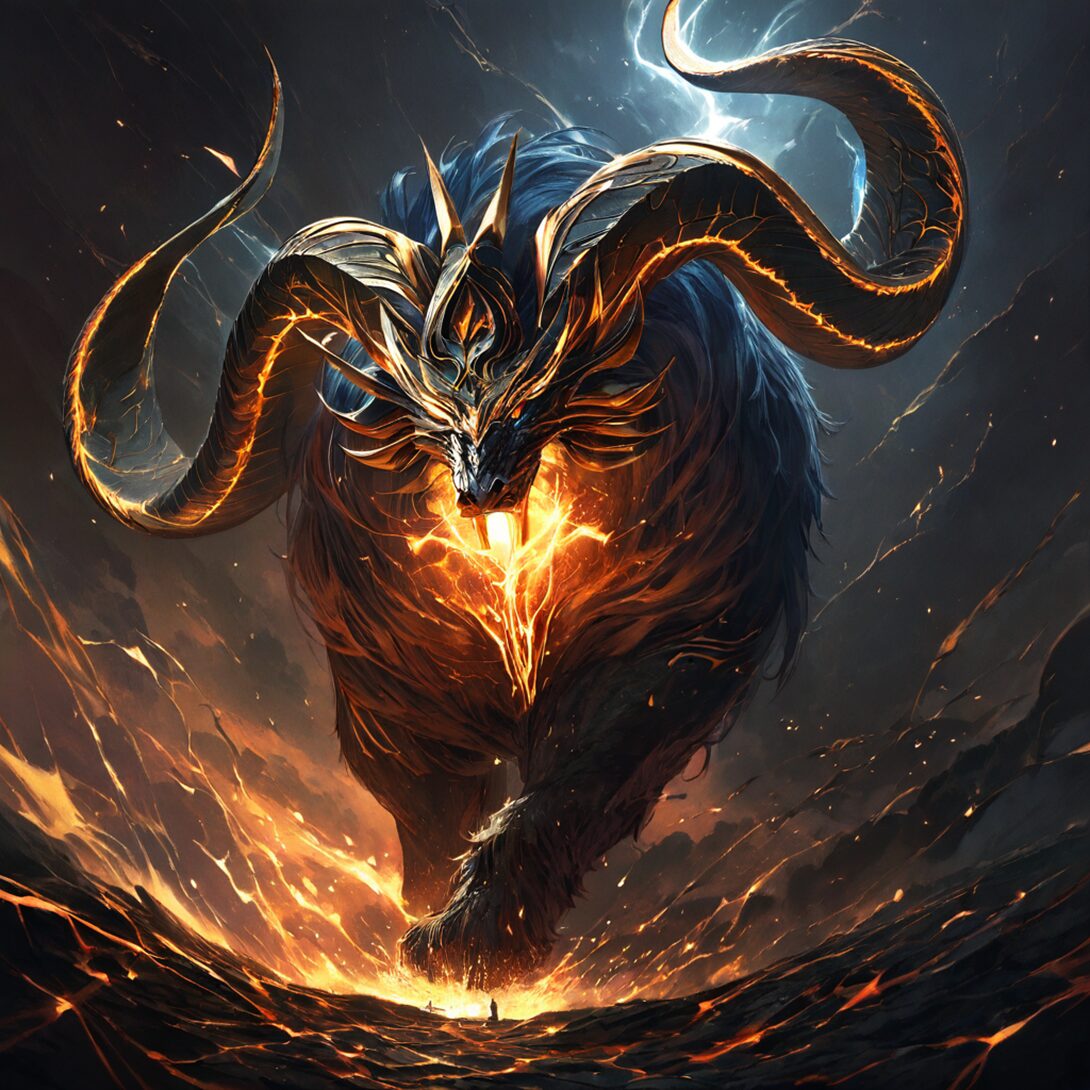
But Gilgamesh bitingly rejects her, listing the fates of her successive lovers, beginning with Dumuzi: “What end did all those you loved meet?” Enraged, Ishtar presses the sky god Anu and looses the “Bull of Heaven (Gugalanna)” onto the earth. Gilgamesh and Enkidu slay this monster, whose single bellow splits the ground, but this affair eventually brings on the story’s greatest turning point — the death of Enkidu (Article 2).
The Babylonian version, The Descent of Ishtar, also remains on clay tablets. In this version, shorter than the Sumerian, the goddess is depicted in a more ferocious form, threatening at the underworld gate, “If you do not open, I will smash the gate, raise the dead, and let them devour the living.”
Enheduanna — the World’s Oldest “Author,” Who Sang of the Goddess
A figure to be specially noted in speaking of Inanna’s original texts: around the 23rd century BC, the daughter of the Akkadian king Sargon and high priestess of the moon god at Ur, “Enheduanna.”
Her works, such as the Inanna hymn Nin-me-šara (Lady of All the Me), are taken to be the world’s oldest literature whose author’s real name is known. In the hymn she appeals to the goddess about her own plight, having been driven from her priestly seat in a political upheaval, and sings of Inanna as the supreme goddess who shakes heaven and earth. That the first to carve a name into the literary history of humankind was a woman singing of Inanna — this fact itself tells of the greatness of this goddess’s presence.
In the cult of Inanna/Ishtar, the rite of “sacred marriage” is thought to have been performed, in which the city’s king played the role of Dumuzi to pray for abundance, and the goddess kept standing at the center of the royal cult, not only in myth. Her figure eventually cast a long shadow over the Mediterranean world, to the Phoenician Astarte and on to the Greek Aphrodite.
How Strong Are the Characters Here? — The Power Ranking
The “Bull of Heaven” Gugalanna that Ishtar loosed is also introduced in strength order in the “Mythology, Religion & Legend Power Ranking.” Enjoy its depiction in the original text alongside its “strength.”
To Learn More
Conclusion
In this article, I explained the myth cycle of the goddess Inanna (Ishtar), following the Sumerian clay tablets. How was it?
The descent to the underworld, where she is stripped of power at seven gates and dies, then revives by the water of life. The cycle of seasons born of her husband Dumuzi’s substitution. The boldness of outwitting the wisdom god to carry home the powers of civilization, the “me.” And the glory sung by the world’s oldest named author, Enheduanna — I hope you could feel that the story of the goddess of love and war is an independent, large body of original texts within Mesopotamian mythology.
With this, the four-article series on Mesopotamian mythology’s original texts is complete. I also explain the original texts of other myths and religions. For the full list, see the complete index of the world’s myths and religions.
I hope you’ll read the next article too.
Also popular with readers
📚 Series: The Original Texts of Mesopotamian Mythology (5/5)