Thank you for visiting. This article is one installment in a series that explains the “original texts” of the world’s myths and religions — the finale (the eighth) of eight articles dealing with the Christian Bible.
At last, I will explain the “Book of Revelation,” all 22 chapters, that crowns the end of the Bible’s 66 books. The seven seals, the beast 666, Armageddon, and a new heaven and a new earth — it is the peak of apocalyptic literature, which keeps exerting immeasurable influence on later literature, film, and games.
For the explanation of the Epistles, please see this article.
What Kind of Original Text Is “Revelation”?
| Item | Content |
|---|---|
| Chapters | 22 |
| Author | John (records seeing visions on the island of Patmos) |
| Literary type | Apocalyptic literature (depicts the end with vision and symbol) |
| Central theme | The final defeat of evil and God’s completion of the world |
“Apocalypse (apokalypsis)” is a word meaning “to remove the covering = to reveal what is hidden.” In an age of fierce persecution, it shows the end of history through vision and symbol and encourages suffering believers — this literary type is called “apocalyptic literature” (the Old Testament’s Daniel was its forerunner).
The author John records seeing visions on the island of Patmos in the Aegean, where he had been exiled by persecution, on “the Lord’s Day.” Behind it lies the shadow of the Roman Empire, which forced emperor worship, and many of the book’s symbols could be read by readers of the time as a code for Rome.
First, let’s put the overall flow into a diagram.
Letters to the Seven Churches (chs. 1–3)
At the opening of the vision, the glorified Christ appears before John. His form — eyes like blazing fire, hair like white wool, a sharp double-edged sword from his mouth — is utterly different from the earthly Jesus of the Gospels, full of overwhelming majesty. John records that he “fell at his feet as though dead.”
Christ first commands John to write and send a letter, one each, to the seven churches of Asia Minor (present-day Turkey). They are letters of praise and rebuke that see through the reality of each church.
| Church | Key message |
|---|---|
| Ephesus | Their labor is admirable, but “they have forsaken the love they had at first” |
| Smyrna | To a church amid poverty and persecution: “Be faithful unto death” |
| Pergamum | Admonishes compromise with false teaching |
| Thyatira | Praises love and service, but blames tolerance of a false prophetess |
| Sardis | ”You have a name for being alive, but you are dead” |
| Philadelphia | To a church that kept the word though weak, the promise of an open door |
| Laodicea | A warning to a faith that is “neither hot nor cold, but lukewarm” |
The line in the letter to Laodicea, “Behold, I stand at the door and knock,” is a famous saying that became the subject of paintings. The seven churches were read as real churches and, at the same time, as a mirror reflecting the church of every age.
The Heavenly Throne and the Slain Lamb (chs. 4–5)
Next, John sees the throne room of God through a door opened in heaven. Around the throne are 24 elders and four living creatures covered with eyes, who, day and night, offer the praise “Holy, holy, holy.”
In the right hand of God on the throne was a scroll sealed with seven seals. This is the book recording the end of history. But no one in heaven or on earth can open these seals. As John weeps, an elder tells him, “Do not weep. The Lion of the tribe of Judah has triumphed; he can open the seals.”
Yet what appears is not a valiant lion but a “Lamb looking as if it had been slain.” Jesus, who died on the cross, is the only one worthy to open the seals of history — the core of this book is concentrated in this paradox, that not a lion but a Lamb holds the key to the world.
The Seven Seals and the Four Horsemen (chs. 6–8)
Each time the Lamb breaks a seal, an event occurs on earth. Appearing at the first four seals are the renowned “Four Horsemen of the Apocalypse.”
| Horseman | Color of horse | Symbol |
|---|---|---|
| First | White | Conquest (victory) |
| Second | Red | War — takes peace from the earth |
| Third | Black | Famine — holds scales, announcing soaring grain prices |
| Fourth | Pale | Death — Hades follows behind it |
At the fifth seal, the souls of the martyrs cry out, “How long until you judge?” and at the sixth seal, cataclysms occur — the sun darkens and the stars fall. And when the seventh seal is opened — heaven was wrapped in silence for about half an hour. An impressive scene, recalling the calm before the storm.
The Seven Trumpets, and the Woman and the Dragon (chs. 8–12)
Breaking the silence, seven angels in turn blow trumpets. Each time, disasters strike the earth — hail mixed with blood, a burning mountain falling into the sea, the fall of a star called “Wormwood,” and an army of locust-monsters.
In chapter 12, one of the most vivid visions of the book is depicted. A woman clothed with the sun and with the moon under her feet is about to give birth to a male child, and before her, a huge red dragon with seven heads and ten horns lies in wait to devour the child. The child is caught up to God, and in heaven a war breaks out between the dragon and the army of angels led by the archangel Michael.
Then war broke out in heaven. Michael and his angels fought against the dragon.
The defeated dragon is hurled down to the earth. Here the original text clearly reveals the dragon’s identity: “This great dragon, the ancient serpent, is the one called the devil, or Satan, who deceives all humankind.” The serpent that deceived Eve in Genesis reveals its identity at the end of the Bible and heads toward the final battle.
The Two Beasts and “666” (ch. 13)
The dragon cast down to earth summons its agents: the beast that rises from the sea and the beast that rises from the earth (the false prophet). The sea-beast receives power and a throne from the dragon, rules all peoples, and makes people worship it. To readers of the time, this was a figure suggesting the Roman Empire, which forced emperor worship.
And that famous passage is recorded. Without the beast’s mark, no one could buy or sell.
Here is wisdom. Let the one who has insight calculate the meaning of the beast’s number, for it is the number of a man. And the number is six hundred sixty-six.
Many interpretations of “666” have been made over the ages. A leading one is that it is a code using the numerical values of Hebrew letters, with “Emperor Nero’s” name converted into numbers. It was, in other words, a code of resistance intelligible only to readers under persecution.
The Fall of Babylon the Great and Armageddon (chs. 14–19)
In the next vision, seven angels pour out the seven bowls of God’s wrath on the earth, and the final disasters fall. Among them, that place name appears as where the evil spirits gather the kings of all the world: “the place called in Hebrew Armageddon.” The word that became a byword for the final battle of good and evil appears in only this one place in the Bible.
In chapters 17–18, the “great harlot Babylon,” riding a scarlet beast, is depicted. This city, gathering the world’s wealth and luxury into itself, is a symbol of earthly prosperity and arrogance suggesting Rome. But its collapse comes in just one hour. “Fallen, fallen is Babylon the Great” — while the merchants mourn, in heaven a great shout goes up.
And in chapter 19, at last the “King of kings and Lord of lords” on a white horse appears from heaven, and the beast and the false prophet are captured and thrown into the lake of fire.
The Millennium and the Last Judgment (ch. 20)
The dragon (Satan) is bound with a chain and sealed in the bottomless pit for a thousand years. During that time, the martyrs rise and reign with Christ — this is the vision called the “millennium” (how to interpret this thousand years has been a great debate throughout Christian history).
After the thousand years, the freed Satan plots a final rebellion (Gog and Magog), but is consumed by fire from heaven and thrown into the lake of fire forever.
And before a great white throne, all the dead are made to stand. It is the “Last Judgment.” Many books and the “Book of Life” are opened, and the dead are judged according to their deeds. Death and Hades are thrown into the lake of fire, and here death itself is destroyed.
A New Heaven and a New Earth (chs. 21–22)
After the judgment, the vision turns at once into a dazzling scene of hope.
Then I saw a new heaven and a new earth. The first heaven and the first earth had passed away, and there was no longer any sea.
From heaven, like a bride adorned for her husband, the holy city “New Jerusalem” descends. The city is pure gold, its 12 gates pearls, its foundations adorned with gems, and there is no temple — because God himself dwells with the people.
God himself will be with them and be their God. He will wipe away every tear from their eyes. There will be no more death, no more sorrow or crying or pain.
Through the center of the city flows the river of the water of life, and on its banks grows the tree of life, bearing fruit every month. The tree of life, lost from the Garden of Eden at the opening of Genesis, is returned to humankind at the end of the Bible. The Bible that began with the Creation (Genesis) closes the circle with a new creation (Revelation). And the whole Bible lowers its curtain with the prayer “Amen. Come, Lord Jesus.”
How Were the 27 Books Settled? — The Canonization of the New Testament
Finally, to close out the series, let me touch on the path by which the New Testament’s 27 books became “one book.” Originally the Gospels and letters circulated separately. The work of settling which documents were “the word of God (the canon)” was “canonization.”
One trigger was a 2nd-century figure named Marcion. Because he denied the God of the Old Testament and compiled his own biased “scripture,” the Church was pressed to make clear “what the correct documents are.” The criteria for judgment were roughly: (1) deriving from an apostle (or his disciple), (2) having been widely read across the whole Church, and (3) being orthodox in the content of its faith.
Revelation itself was, due to the difficulty of its symbolism, one of the books over which debate dragged on longest before it was recognized as canon. Ultimately, the list given by Athanasius, bishop of Alexandria, in a letter of 367 became the first record listing exactly the same 27 books as today (including Revelation), and confirmed at the Council of Carthage (397) and elsewhere, the 27 New Testament books were settled.
Note: The Catholic and Orthodox “Deuterocanon”
The 66 books explained in this series are the structure of the Bible used in the Protestant churches. The Catholic Church and Orthodox churches include, in addition, books called the “Deuterocanon” (Tobit, Judith, Wisdom, Sirach, Maccabees, and so on) in the Old Testament. So the total book count of the Bible differs by denomination.
How Strong Are the Characters Here? — The Power Ranking
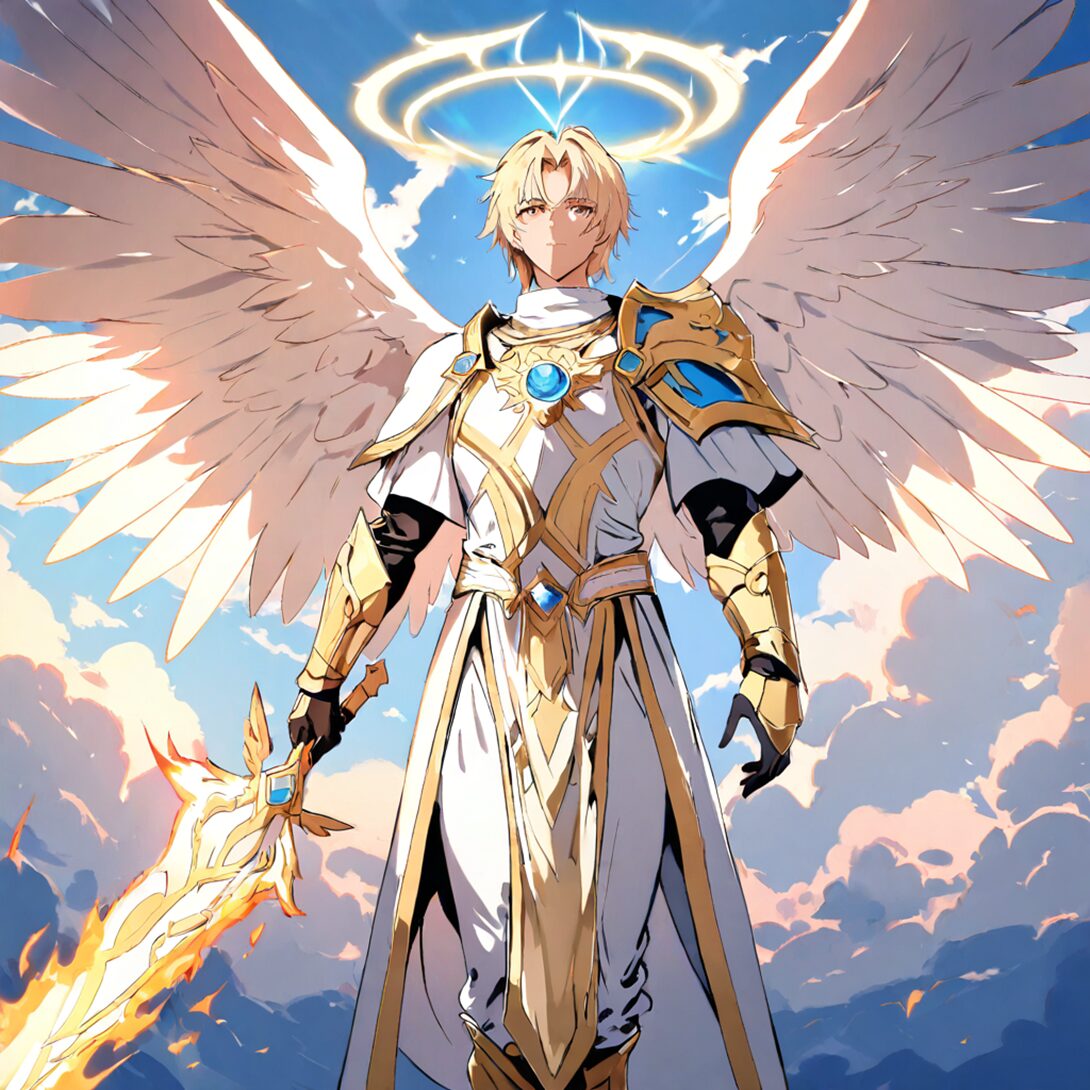
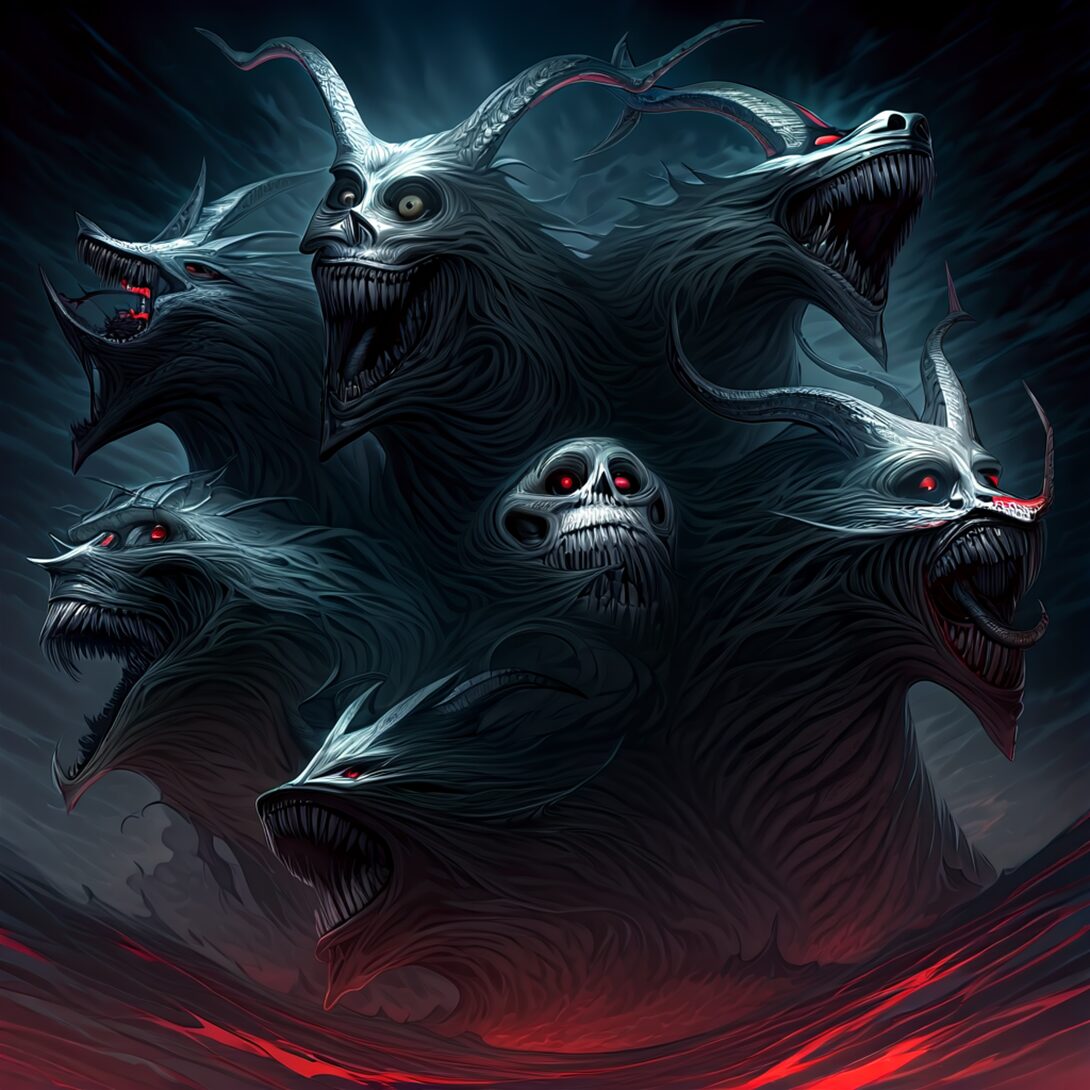
The archangel Michael and the beast of Revelation, who appear in this article, are also introduced in strength order in the “Mythology, Religion & Legend Power Ranking.” Enjoy their depiction in the original text alongside their “strength.”
To Learn More
Conclusion
In this article, I explained the Bible’s final book, “the Book of Revelation,” all 22 chapters, following the flow of the original text. How was it?
Beginning with the letters to the seven churches, through the threefold judgment of seals, trumpets, and bowls, the beast 666 and Babylon the Great, Armageddon and the Last Judgment, and on to a new heaven and a new earth — I hope you could feel that this book, written to encourage believers under persecution, is a grand conclusion that closes the whole Bible, beginning with Genesis, with a “new creation.”
And with this article, the series explaining the Christian original text — “the Bible, 66 books” — in eight articles is complete. I hope you have savored the Bible’s grand structure, beginning with the Creation and completed in a new heaven and a new earth.
For an overview map of the whole Bible, please see this summary article.
I hope you’ll read the next article too.
Also popular with readers
📚 Series: Christianity: The Bible (66 Books) Explained (9/9)