Thank you for visiting. This article is the first installment in a series explaining the original texts of Egyptian mythology.
This time, we look in detail at the several creation myths of Egyptian mythology and the major gods beginning with the sun god Ra.
Egypt has no single book that says “this is the creation myth.” The stories treated here are recorded scattered across several original texts of differing character: the spell collection on pyramid walls, the Pyramid Texts; the Coffin Texts written on coffins; the Shabaka Stone, conveying the creation at Memphis; and the Amduat, depicting the sun god’s journey through the underworld. In this article, I read them while showing which original text each myth comes down in.
For an overview map of Egyptian mythology’s original texts as a whole, please see this summary article.
Egypt Had Several “Creation Myths”
In its long history, ancient Egypt had several cities serve as religious centers. So slightly differing creation myths are handed down by city. The three representative ones are as follows.
| Creation myth | Central city | Creator god |
|---|---|---|
| Heliopolis myth | Heliopolis | Atum (= the sun god Ra) |
| Hermopolis myth | Hermopolis | The Ogdoad (eight gods) |
| Memphis myth | Memphis | The creator god Ptah |
Most widely known is the “Heliopolis myth,” centered on the sun god. Its oldest form appears in the oldest extant religious text, the Pyramid Texts (c. 24th century BC), and it is told in more detail in the following Coffin Texts. The following is the story reconstructed from these funerary texts.
The Heliopolis Creation Myth and the Ennead
The beginning of all was the “primeval waters Nun,” where nothing existed. From these chaotic waters appeared the first god, who created himself, “Atum” (later identified with the sun god Ra).
Atum, all alone, produces the first pair of gods. The major nine gods born through the generations from there are called the “Ennead.”
First, from Atum are born the air god “Shu” and the moisture goddess “Tefnut.” How did Atum, existing all alone in the primeval waters, give birth to the first pair of gods? The Pyramid Texts depict this vividly: Atum “sneezed out Shu like a sneeze and spat out Tefnut like spittle” from his own mouth (variants have him produce them from his hand or seed). The idea is that a single god without a consort produces the world from himself. From these two were born the earth god “Geb” and the sky goddess “Nut.”
Egypt’s image of heaven and earth is the reverse of Greece’s or Japan’s: the sky is a goddess (Nut), the earth a god (Geb). Geb (earth) and Nut (sky) loved each other strongly and embraced, but their father Shu came between the two, lifting Nut high and separating them. This is taken as the origin of the world’s form — “a star-strewn heaven arching over the earth” — and in Egyptian iconography, the starry sky goddess Nut was favored as bending over the earth Geb, with Shu supporting her between them.
And born as the children of Geb and Nut are the four gods who become the protagonists of the later Osiris myth: “Osiris,” “Isis,” “Seth,” and “Nephthys” (their story is explained in detail in Article 2).
The Creation Myths of Hermopolis and Memphis
As important as the Heliopolis myth are two creation myths told in other cities. That even for the same “beginning of the world” the conception differs greatly by city is the interesting thing about Egyptian mythology.
The Hermopolis Myth — the Eight Primeval Gods, the Ogdoad
At Hermopolis, the “primeval waters (chaos)” themselves, before the world was born, were represented as four pairs, eight gods, the “Ogdoad.” These deified the qualities of a world that did not yet take form.
| Pair | Gods (male-female pair) | What they represent |
|---|---|---|
| 1 | Nun and Naunet | The primeval waters |
| 2 | Heh and Hauhet | Infinity (endlessness) |
| 3 | Kek and Kauket | Darkness |
| 4 | Amun and Amaunet | The hidden (the unseen) |
From the chaos where these eight stirred, the first land, the “primeval mound,” rose up. This image of “a mound first appearing from the water” is taken to reflect Egypt’s very landscape, where fertile land appears each year after the Nile’s flood recedes, and the sanctuary of the temple and the prototype of the pyramid (the Benben stone) are also thought to have modeled this primeval mound. And from an egg placed on the mound, or an opened lotus flower, the sun god that lights the world appeared. The sacred bird “Bennu,” said to have cried out with the sun’s appearance, is said to have become the prototype of the “Phoenix,” which burns itself and revives. Of the four pairs, “Amun (the hidden)” later became, as the patron god of Thebes joined with the sun god Ra, “Amun-Ra,” rising to be effectively the supreme god in the New Kingdom.
The Memphis Myth — Creation by Word
At Memphis, the creator god “Ptah” was thought to have made the world. Worth noting is his method of creation.
In other myths, a god produces the world through the concrete act of emitting bodily fluids or words, but the Ptah of the Memphis myth first conceived all things in his “heart (thought),” and created by uttering it with his “tongue (word).” This is an intellectual, philosophical view of creation rather than a material one.
This thought is recorded on a stele, the “Shabaka Stone.” The idea that “the world was created by word” is often noted as akin to the later New Testament Gospel of John’s “In the beginning was the Word.”
The Sun God Ra — Days Circling Heaven and the Underworld
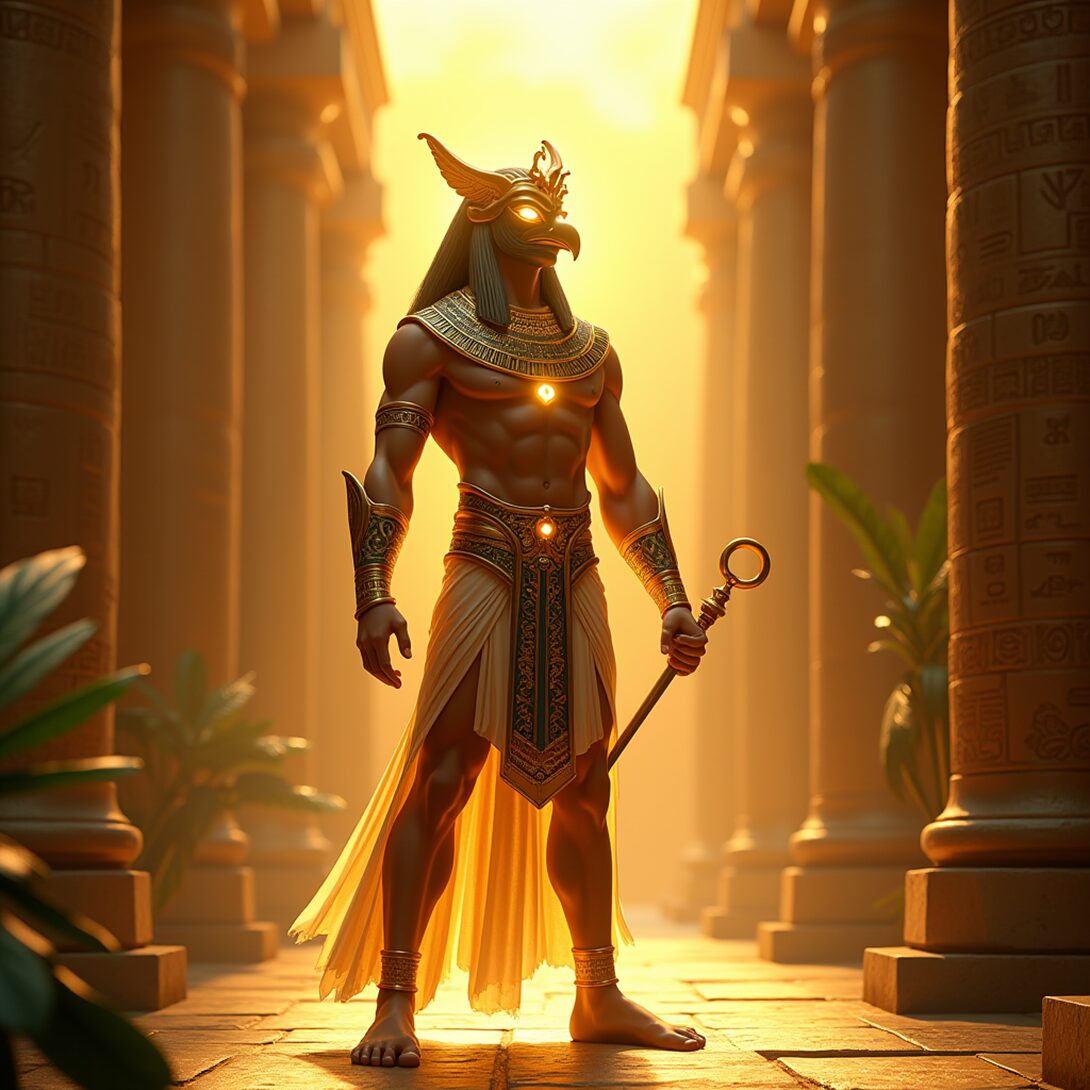
Egypt’s supreme god is the sun god “Ra.” Identified with the creator god Atum, he is the being that brings light and life to the world.
Ra was thought to travel the sky each day aboard the “solar boat.” This explains the sun’s movement, rising in the east and setting in the west.
And at night, Ra enters the underground underworld (Duat) from the western horizon, sails the 12 hours (12 regions) by boat, and rises again from the eastern horizon. The original texts depicting this night voyage hour by hour are the Amduat (Book of What Is in the Underworld) and the Book of Gates, recorded in New Kingdom royal tombs.
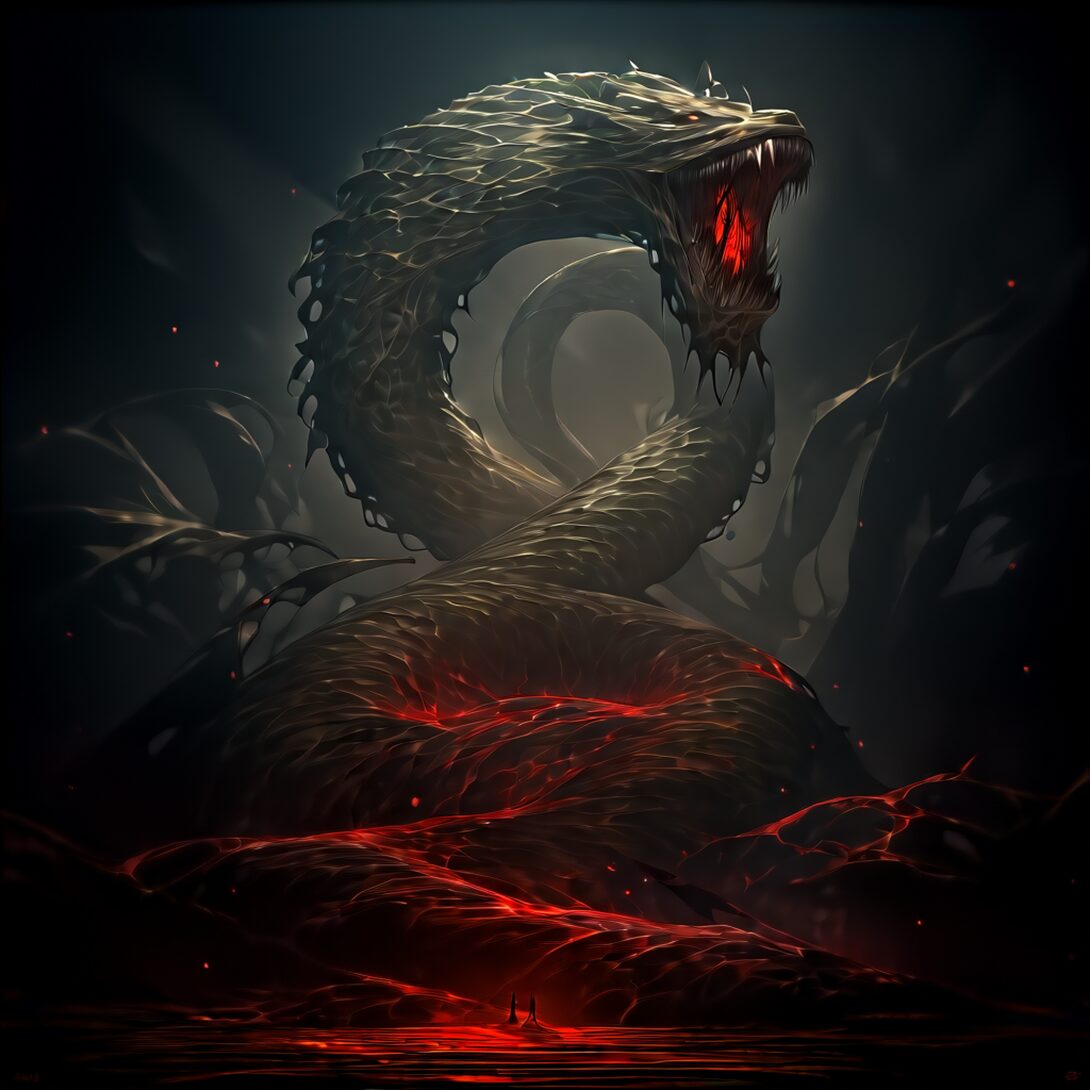
This night voyage held a great trial. The giant serpent “Apophis,” symbolizing chaos, attacks every night to block Ra’s way. Ra and the gods who follow him repel Apophis each night. If Ra were defeated, the next morning’s sun would not rise, and the world would be swallowed by chaos.
So for the Egyptians, sunrise was not “a matter of course” but “the result of order (Maat) prevailing over chaos (Apophis) every day.”
Ra and the Rebellion of Humankind — the Crisis of Human Annihilation
Many striking myths remain of the sun god Ra. One is the story, recorded in the “Book of the Heavenly Cow,” in which Ra nearly destroyed humankind.
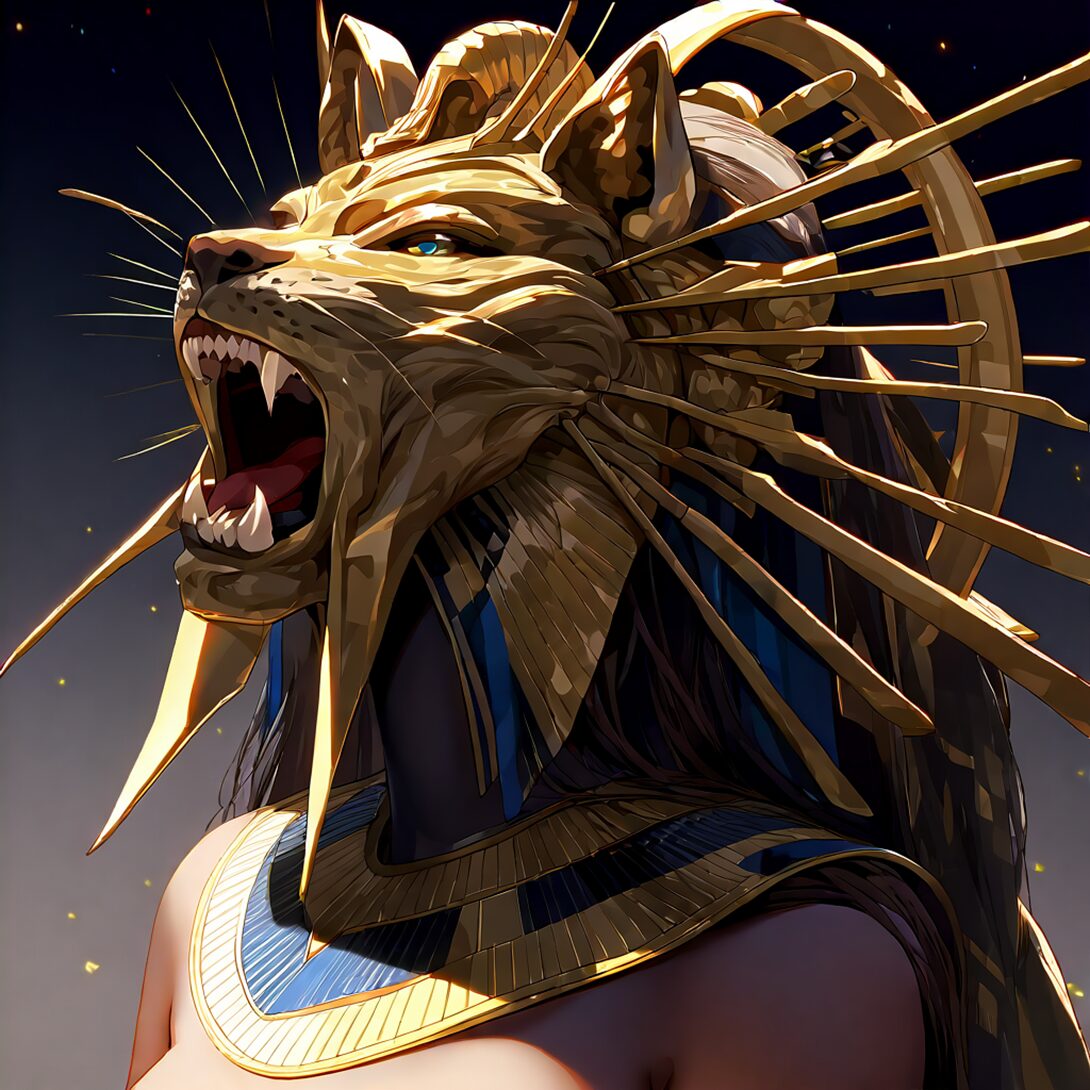
As the aged Ra’s rule declined, humankind scorned him and plotted rebellion. The angry Ra sent down the lion goddess “Sekhmet,” born from his own “eye,” to punish them. But Sekhmet became drunk on slaughter and ran rampant to the point of nearly exterminating humankind.
Seeing this, Ra pitied humankind and devised a scheme. He dyed a great amount of beer red and spread it over all the land. Sekhmet, thinking it human blood, drank it up, became drunk, and stopped the slaughter. Thus humankind narrowly escaped annihilation.
But Ra, weary of humans, lost the will to keep ruling on earth, withdrew to heaven on the back of a “cow” into which the sky goddess Nut had changed, and thereafter watched over the world from the sky.
Isis and Ra’s “Secret Name”
Another famous one is the story in which the magic goddess “Isis” steals away the source of Ra’s power. This is a tradition recorded in New Kingdom papyri (a magical text held in Turin) and the like.
Isis, seeking to become the most powerful magician in the world, plots to obtain Ra’s “secret true name,” which he reveals to no one. She makes a venomous snake from the aged Ra’s spittle and earth, places it on Ra’s path, and has it bite him.
To the suffering Ra, struck by an unknown deadly poison, Isis says, “If you tell me your true name, I can remove the poison with the power of that name.” Unable to bear it, Ra finally revealed his true name to Isis. Thus Isis gained immense magical power and became one of the foremost among the gods. This power leads to the scene of reviving her husband in the later Osiris myth (Article 2).
The Distinctive Gods
A great feature of the Egyptian gods is that they are often depicted with a human body and an animal head. This is held to be because each god’s governed power was likened to an animal’s nature. The major gods are as follows.
| God | Form / symbol | Domain |
|---|---|---|
| Ra | Sun disk, falcon | Sun, creation of all things |
| Osiris | Mummy form | Underworld, death and rebirth, agriculture |
| Isis | Throne crown | Magic, motherhood, protection |
| Seth | Head of a mysterious beast | Chaos, desert, storm, violence |
| Horus | Falcon head | Sky, kingship (guardian of pharaohs) |
| Anubis | Jackal head | Mummification, burial, guiding to the underworld |
| Thoth | Ibis head | Wisdom, writing, calendar, magic |
| Hathor | Cow horns | Love, beauty, music, joy |
| Maat | Ostrich feather | Truth, justice, cosmic order |
| Bastet | Cat | Home, protection, fertility |
Among them, the falcon god “Horus” is the guardian of kingship, and the living pharaoh (king) was considered the incarnation of Horus. The wisdom god “Thoth” governs writing and the calendar and later serves as recorder in the judgment of the dead. And the concept of “Maat (order, justice)” symbolized by the truth goddess “Maat” formed the very root of the Egyptian worldview.
How Strong Are the Characters Here? — The Power Ranking
The gods and heroes appearing in this article are also introduced in strength order in the “Mythology, Religion & Legend Power Ranking.” Enjoy their exploits in the original texts alongside their “strength.”
To Learn More
Conclusion
In this article, I explained the creation myths and major gods of Egyptian mythology in detail. How was it?
I hope you have grasped the genealogy running from the sun god Atum (Ra), born from the primeval waters Nun, to the Ennead; the cycle in which the sun god Ra circles the underworld each night while fighting Apophis; and the distinctive forms of the animal-headed gods.
In the next article (Article 2), I will explain Egyptian mythology’s most important story, the “Osiris myth,” played out by Osiris, Isis, Seth, and Horus of the Ennead.
I hope you’ll read the next article too.
Also popular with readers
📚 Series: The Original Texts of Egyptian Mythology (2/5)