Thank you for visiting. This article is the second installment in a series explaining the original texts of Greek mythology.
This time, taking up Homer’s epic “Iliad” — said to be the starting point of Western literature — we look at it in detail, following the flow of its text.
For an overview map of Greek mythology’s original texts as a whole, please see this summary article.
What Kind of Original Text Is the “Iliad”?
| Item | Content |
|---|---|
| Author | Homer (a bard of c. 8th century BC) |
| Structure | 24 books (about 15,000 lines) |
| Main figures | Achilles, Hector, Agamemnon, Patroclus |
| Main content | The final phase of the Trojan War and the wrath of the hero Achilles |
The Iliad is a long heroic epic in 24 books, set in the “Trojan War” fought between the Greek (Achaean) coalition and Troy. The title means “the song of Ilios (another name for Troy).”
Crucial here is that this original text depicts only about 50 days of events in the final year of a 10-year war. As its opening line proudly declares — “Sing, goddess, the wrath of Achilles, son of Peleus” — the story depicts, as a consistent theme, the rise and calming of the “wrath” of the hero “Achilles.”
The flow the Iliad narrates is roughly as follows.
The Outbreak of the War — the Judgment of Paris (prehistory)
Because the Iliad text begins in the war’s 10th year, why the war broke out is not told in detail within the work. Its origin is the “Judgment of Paris,” handed down by later works. Let’s keep it in mind as the premise of the story.
The trigger was the wedding of the hero Peleus and the sea goddess Thetis. The goddess of discord, “Eris,” who was not invited to this feast, in spite throws in a golden apple inscribed “to the most beautiful goddess.”
Then the three goddesses Hera, Athena, and Aphrodite begin to quarrel over who is the most fitting. The troubled Zeus entrusts the judgment to the Trojan prince “Paris.” Each of the three goddesses tries to bribe Paris.
| Goddess | Promise to Paris |
|---|---|
| Hera | Rule over all of Asia (power) |
| Athena | Victory in every battle, and wisdom |
| Aphrodite | The most beautiful woman in the world |
Paris chose “the world’s most beautiful woman” promised by Aphrodite. But that beauty was “Helen,” who was already the wife of the Spartan king Menelaus.
Paris, who carried off Helen (eloped) by Aphrodite’s power. Menelaus, robbed of his wife, and his brother, the supreme commander “Agamemnon,” lead a great coalition army gathered from all of Greece’s heroes and attack Troy. Thus the 10-year Trojan War began. The Iliad depicts its final phase.
The Flow of the “Iliad” Text
The Outbreak — the Conflict Between Achilles and Agamemnon (Book 1)
One day, with the war into its 10th year, a plague spreads through the Greek camp. The cause was the wrath of the god Apollo at the supreme commander Agamemnon’s refusal to return the daughter of an Apollo priest, whom he had taken as spoils, even when the father pleaded.
Forced to return the daughter, Agamemnon, as compensation, forcibly takes the woman “Briseis,” the spoils of the mightiest hero Achilles. Deeply wounded in his honor by this, Achilles is enraged and declares “I will fight no longer” and withdraws from the front.
Achilles asks his mother, the sea goddess “Thetis,” to work on Zeus so that “the Greek army would struggle so badly that I would want to return to the ranks.” Zeus consents, and the tide of battle turns to Troy’s advantage.
Midpoint — Hard-Pressed Without the Mightiest Hero
The Greek army, lacking its strongest warrior, is gradually cornered by the fierce fighting of Troy’s mightiest hero, “Hector.” The Trojan forces finally break through the Greek wall and fall into such a crisis that they are about to set fire to the ships moored on the shore.
The gods intervene in this battle too. On the Greek side are Hera, Athena, and Poseidon; on the Trojan side, Apollo, Aphrodite, and Ares — and that the conflict among the gods is reflected directly in the human war is a great feature of the Iliad.
The Turn — the Death of His Friend Patroclus
Achilles’s friend “Patroclus,” unable to bear the allies’ plight, asks Achilles to lend him his armor and heads for the battlefield, hoping at least to drive off the enemy himself.
Seeing Achilles’s armor, the Trojan forces tremble, thinking he has returned, and Patroclus fights gloriously. But in the end he is slain by Hector, aided by the god Apollo, and Achilles’s armor is taken.
By losing his one true friend, the target of Achilles’s wrath turns completely from Agamemnon to Hector. He is told by his mother Thetis, “If you slay Hector, you yourself are fated to die soon after,” yet he still chooses revenge.
The Climax — the Single Combat Between Achilles and Hector
For Achilles, who has sworn revenge, his mother Thetis has the smith god “Hephaestus” make new armor and a shield. The depiction of this “Shield of Achilles” — into which every aspect of the world, the earth, sea, and sky, and a city at peace and a city at war, is intricately worked — is a scene famous in literary history.
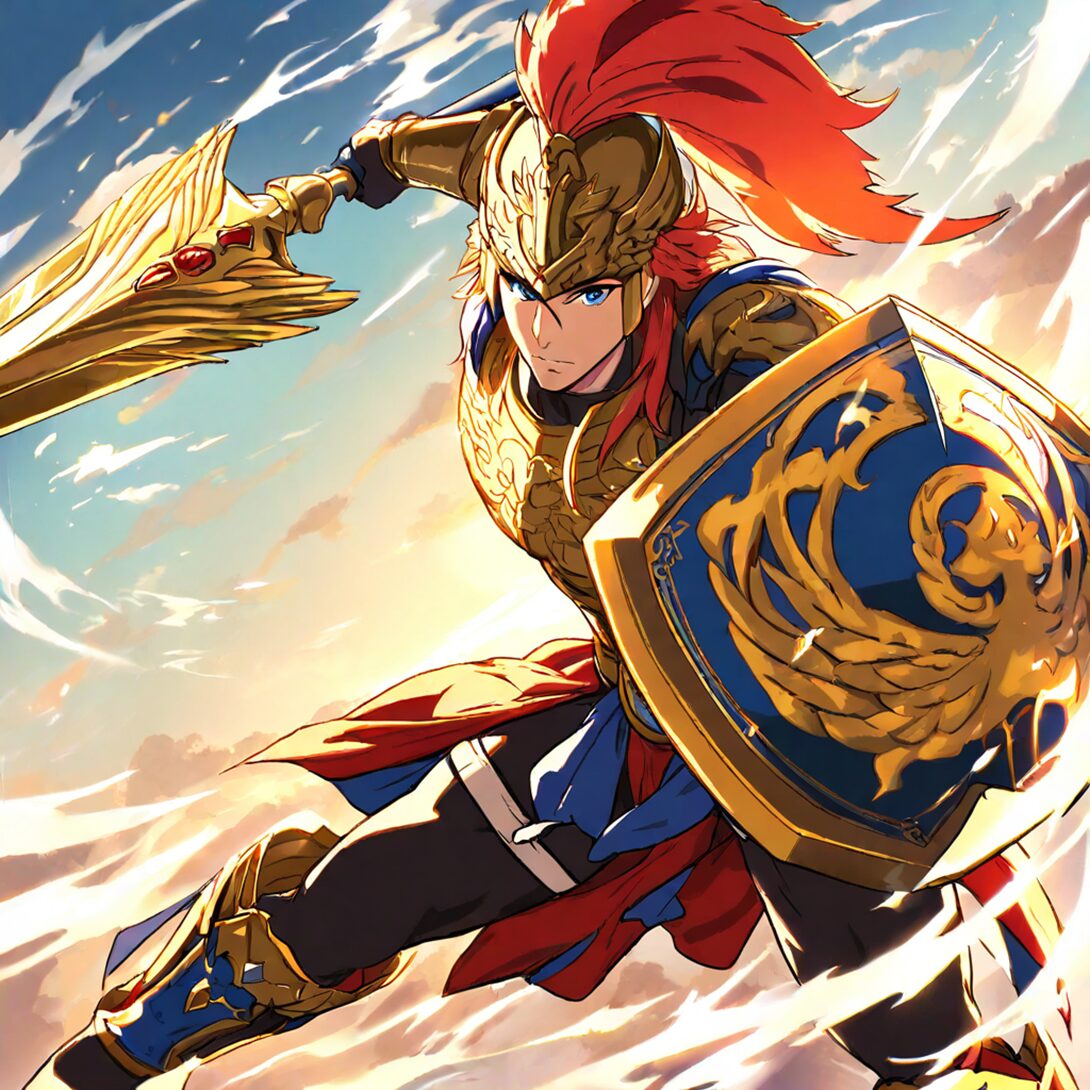
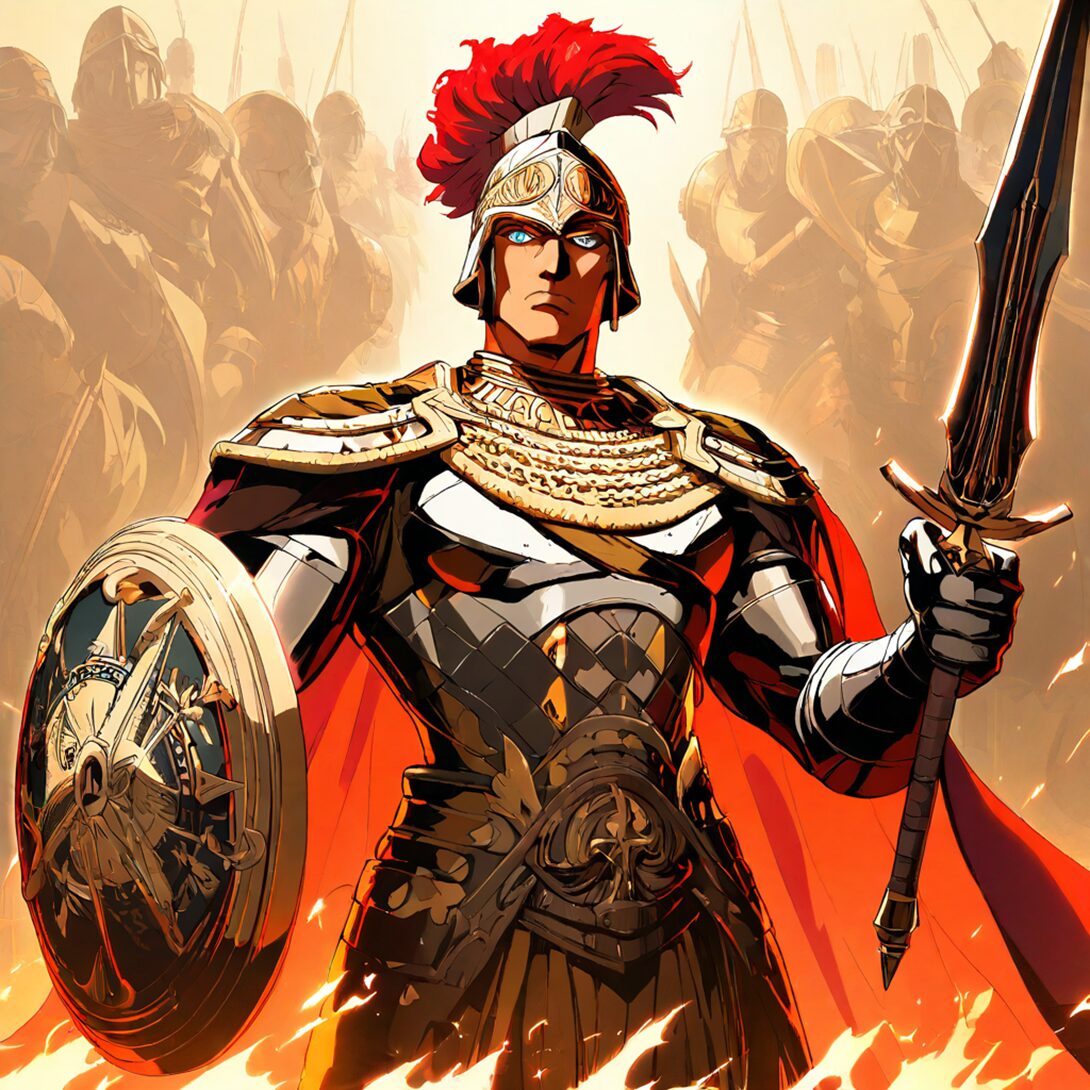
Returning to the ranks, Achilles mows down the Trojan forces in his fury and finally confronts Hector before the city gate. Once, facing the mightiest Achilles, Hector was afraid and fled three times around the walls, but he resolves himself and stands to fight, and after a fierce duel falls with his throat pierced by Achilles’s spear.
At the brink of death, Hector pleads for his body to be returned to his family, but Achilles, his wrath unabated, refuses. And he tied Hector’s body to his chariot and, day after day, dragged it around the walls of Troy in humiliation.
The Ending — the Plea of the Old King Priam (Book 24)
Crowning the story is a moving scene of reconciliation. Hector’s father, the old Trojan king “Priam,” under the gods’ guidance, slips alone into the enemy camp at night. And he kneels before Achilles, who killed his son, kisses his hands, and pleads for the return of his son’s body.
Achilles, recalling his own aged father left behind at home, at last calms his wrath, and weeping together with Priam, returns the body. And so the Iliad quietly closes with the “grand funeral of the hero Hector.” It ends not with the outcome of the war but with the hero’s wrath and the reconciliation that follows it — this is the structure of the original text called the Iliad.
The Famous Scenes That Adorn the “Iliad”
While the Iliad turns on a single strong line — the wrath of Achilles — it inserts many unforgettable scenes in between. The joy of reading the original text lies, rather, in such details.
- The Catalogue of Ships (Book 2): a passage enumerating at length the forces gathered from all of Greece, down to how many ships came from which land. It is also valued as a source conveying the geography of ancient Greece.
- The view from the walls = Teichoscopia (Book 3): at the request of Troy’s elders, Helen explains the Greek commanders on the plain (Agamemnon, Odysseus, and others) one by one from atop the walls. It is a skillful structure, introducing the enemy commanders through the eyes of the very woman who caused the war. Then Paris and Menelaus fight in single combat, but as Paris is about to lose, Aphrodite wraps him in mist and carries him off to safety.
- The Aristeia of Diomedes (Book 5): the hero Diomedes shows godlike prowess, an astonishing scene in which a human strikes gods — he even wounds the goddess Aphrodite and the war god Ares, who had intervened on the battlefield.
- The parting of Hector and Andromache (Book 6): among the most moving scenes in the whole work, in which the Trojan hero Hector, going off to battle, is seen off at the city gate by his wife Andromache, holding their infant. To the infant Astyanax, crying in fear at the gleam of his father’s helmet and its horsehair crest, Hector takes off his helmet and soothes him — a moment of a warrior’s home life foreshadows the coming tragedy.
- Agamemnon’s embassy (Book 9): Agamemnon, in dire straits, sends an embassy including Odysseus, offering reconciliation with the return of Briseis and immense gifts, but Achilles still stubbornly refuses.
- The death of Sarpedon (Book 16): in the scene where the hero Sarpedon, Zeus’s own son, is slain, even father Zeus cannot overturn his son’s fate and can only rain down blood in grief. The Greek worldview seeps through here — that even the gods cannot defy “fate (moira).”
In this way the Iliad depicts not only the heroes’ valor but also the gods’ intervention, the affection of family, and the weight of fate in layers, becoming a human story that goes beyond a mere war chronicle.
The “Trojan Horse” and the Fall, Told by the Epic Cycle
Because the Iliad ends with Hector’s funeral, the famous “Trojan Horse” and the war’s conclusion are not included in this original text. These are told in a series of works compiled in later ages, called the “Epic Cycle.”
The subsequent developments are roughly as follows.
- Achilles loses his life when Paris’s arrow pierces his only weak point, his heel (the origin of “Achilles tendon”).
- Paris too dies, struck by a poisoned arrow.
- The cunning Odysseus devises the stratagem of the “Trojan Horse,” hiding soldiers inside a giant horse.
- The Trojan army carries the horse into the city as spoils, and by the soldiers who slip out at night, impregnable Troy finally falls.
And so the 10-year war ended in victory for the Greeks. And the story of the homecoming of the cunning Odysseus, who survived this war, continues into the next original text, the Odyssey.
How Strong Are the Characters Here? — The Power Ranking
The gods and heroes appearing in this article are also introduced in strength order in the “Mythology, Religion & Legend Power Ranking.” Enjoy their exploits in the original text alongside their “strength.”
To Learn More
Conclusion
In this article, I explained Homer’s epic the Iliad in detail, following the flow of its text. How was it?
The Iliad, across all 24 books, depicted a single theme — the “wrath” of the hero Achilles — an original text portraying honor, friendship, and death in war, and a reconciliation that transcends friend and foe.
In the next article (Article 3), I will explain Homer’s other epic, the Odyssey, which depicts Odysseus’s homecoming after the Trojan War.
I hope you’ll read the next article too.
Also popular with readers
📚 Series: The Original Texts of Greek Mythology (3/6)