Thank you for visiting. This article is the first installment in a series explaining the original texts of Greek mythology.
This time, taking up Hesiod’s two works Theogony and Works and Days — which form the “creation myth” of Greek mythology — we look in detail at how the world and the gods were born.
For an overview map of Greek mythology’s original texts as a whole, please see this summary article.
What Is Hesiod’s “Theogony”?
| Item | Content |
|---|---|
| Author | Hesiod (a poet of c. 700 BC) |
| Main content | The beginning of the world, and the birth, genealogy, and transfer of rule of the gods |
| Key point | The most important original text — the “creation myth” of Greek mythology |
The Theogony is an original text forming the foundation of Greek mythology, singing in some 1,000 lines of verse how the world was born, how the gods came into being, and how, through three generational successions, the rule of Zeus was established.
The flow of that grand genealogy is as follows.
The Beginning of the World — Born from Chaos
The story begins with “Chaos” coming into being before anything else. Rather than “disorder,” this is said to mean a “gaping void.”
After Chaos are born the broad-breasted earth goddess “Gaia,” the abyss “Tartarus,” and “Eros,” the most beautiful love that masters the minds of the gods. Further, from Chaos are born darkness “Erebus” and night “Nyx,” and from that Night are born light “Aether” and day “Hemera.”
In this way the Theogony depicts the world taking shape as abstract concepts themselves are born one after another as gods. From the night goddess Nyx, too, are born gods concerned with human fate — death “Thanatos,” sleep “Hypnos,” and the three Fates, the “Moirai.”
The First Generation — the Children of Uranus and Gaia
Gaia first brings forth, on her own, the sky god “Uranus,” of the same size as herself, and makes him her husband. She also brings forth the mountains (Ourea) and the sea (Pontus).
Between Gaia and Uranus are born the first generation of gods who rule the world.
| Kind | Content |
|---|---|
| The twelve Titans | Oceanus, Coeus, Crius, Hyperion, Iapetus, Theia, Rhea, Themis, Mnemosyne, Phoebe, Tethys, and the youngest, Cronus |
| The three Cyclopes | Giants with a single eye in the forehead. Skilled in smithing, they later give Zeus the “thunderbolt” |
| The three Hecatoncheires | Giants of tremendous strength, with 50 heads and 100 arms |
Among the Titans are many gods who play important roles in later myth. For example, “Iapetus” is the father of Prometheus and Atlas, and “Mnemosyne (Memory)” later bears with Zeus the nine Muses who govern the arts.
But Uranus hated these gods, his own children, as ugly and terrible, and pushed them, as soon as they were born, back into the womb of their mother Gaia (the depths of the earth).
The Second Generation — the Rebellion and Rule of Cronus
Gaia, suffering with her children confined within her, makes a great sickle (a sickle of adamant) and calls on her children to rebel against their father. But the only one with the courage to face the terrible Uranus was the youngest and boldest Titan, “Cronus.”
Cronus lies in wait for his father Uranus, who came to Gaia at night, and castrates his father with the sickle, seizing his rule.
The severed part fell into the sea, and from its foam (aphros) the goddess of beauty, “Aphrodite,” is said to have been born. And from the blood that ran down to the earth were born the goddesses of vengeance, the “Erinyes,” and the Gigantes (giants).
Becoming king of the world, Cronus takes his sister Titan “Rhea” as his wife and has six children: Hestia, Demeter, Hera, Hades, Poseidon, and Zeus. These become the core of the later “Olympian gods.”
But Cronus had been told by his parents Gaia and Uranus the prophecy, “You too will be overthrown by your own child.” Fearing this, Cronus swallows each newborn one after another, every time his wife Rhea gives birth.
Rhea, losing her children one after another, grieves deeply and devises a scheme when bearing her youngest, Zeus. Instead of the baby, she has Cronus swallow a “stone wrapped in swaddling clothes,” and hides the real Zeus in a cave on Crete, having nymphs and spirits raise him.
The Third Generation — Zeus’s Victory, the “Titanomachy”
The grown Zeus first (with the help of his grandmother Gaia and the wisdom goddess Metis) makes his father Cronus drink a drug, causing him to vomit up the swallowed siblings, in order from the last swallowed. The decoy stone swallowed first is also disgorged, and this stone was later enshrined at the sacred site of Delphi.
Joining forces with the siblings thus rescued, Zeus plunges into all-out war with the Titans led by Cronus. This is the 10-year great war, the “Titanomachy.”
The battle would not be decided for a long time, but Zeus freed and won over the “Cyclopes” and “Hecatoncheires,” who had been imprisoned underground by Uranus and Cronus.
In return for their freedom, the smith-skilled Cyclopes gave each of the three brothers a powerful weapon.
| God | Weapon received |
|---|---|
| Zeus | The thunderbolt |
| Poseidon | The trident (triaina) |
| Hades | The helm of invisibility |
And with the fierce attack of the Hecatoncheires, hurling 300 rocks at once with their 100 arms, Zeus’s side finally defeated the Titans. The defeated Titans were imprisoned in the abyss of “Tartarus,” with the Hecatoncheires as their guards.
But this was not the end. The earth goddess Gaia, angry at the Titans’ defeat, brings forth as a final trump card the mightiest monster in history, “Typhon,” between herself and the abyss of Tartarus.
Zeus wins even the fierce battle against this giant monster, which has 100 dragon heads and breathes fire from its mouths, with his thunderbolt, and seals Typhon in Tartarus (in one account, beneath the volcano Etna). And so Zeus became the ruler of the whole world in name and in fact.
The Twelve Olympians — the Rulers of the New World
The new gods with Zeus at their head are called the “Olympian gods” because they made their home on “Mount Olympus,” towering into the heavens. The 12 chief deities at their center are collectively called the “twelve Olympians.”
| God (Greek name) | Domain |
|---|---|
| Zeus | King of all gods. Governs the sky, thunder, and order |
| Hera | Zeus’s wife. Goddess of marriage and the home |
| Poseidon | Governs the sea, earthquakes, and horses; Zeus’s brother |
| Demeter | Goddess of the earth’s harvest, grain, and agriculture |
| Athena | Goddess of wisdom, strategy, and crafts. Born from Zeus’s head |
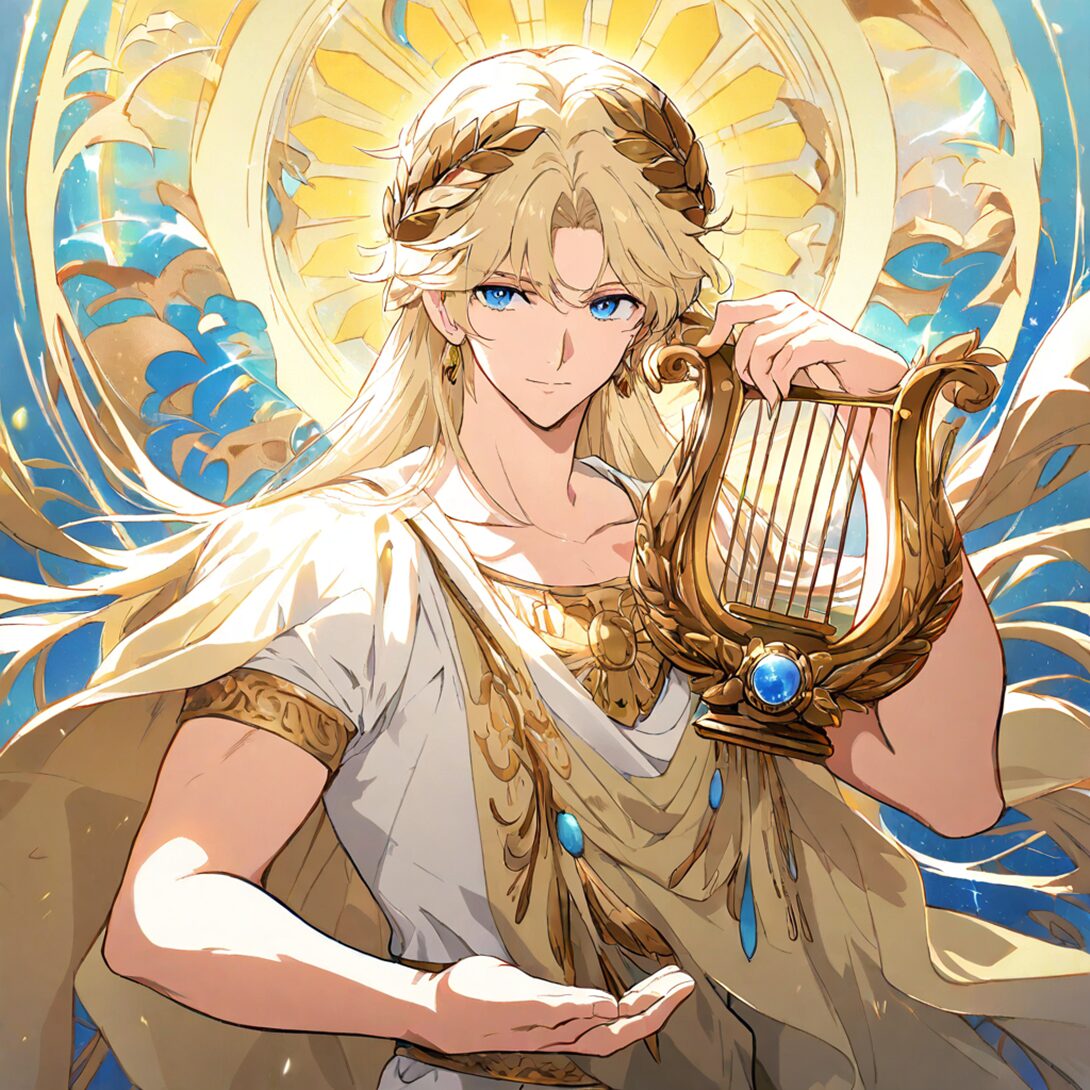
| Apollo | God of the sun, music, prophecy, and medicine |
| Artemis | Goddess of the moon, hunting, and chastity. Apollo’s twin sister |
| Ares | God who governs war (the frenzy of battle) |
| Aphrodite | Goddess of love and beauty |
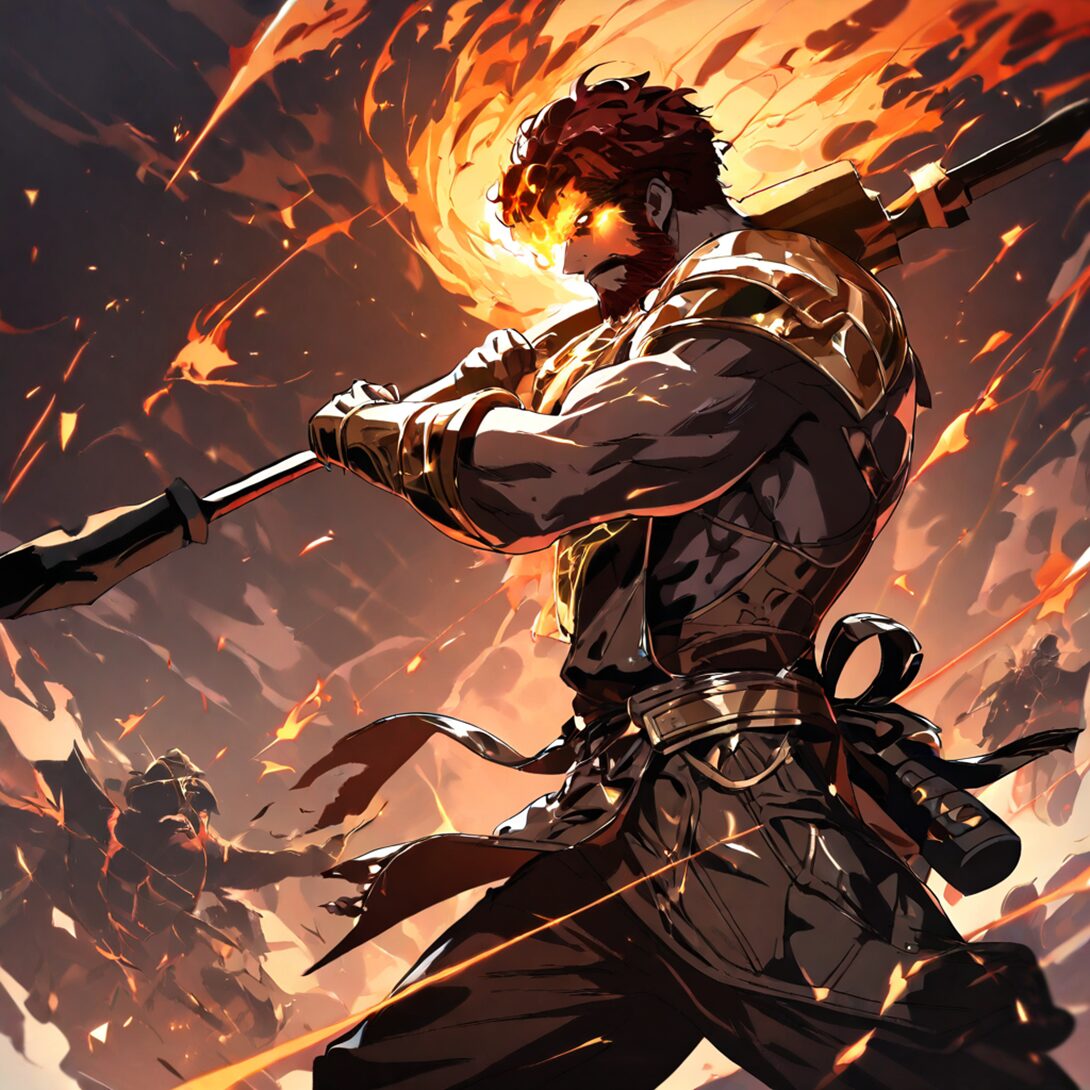
| Hephaestus | God of the forge, fire, and craftsmen |
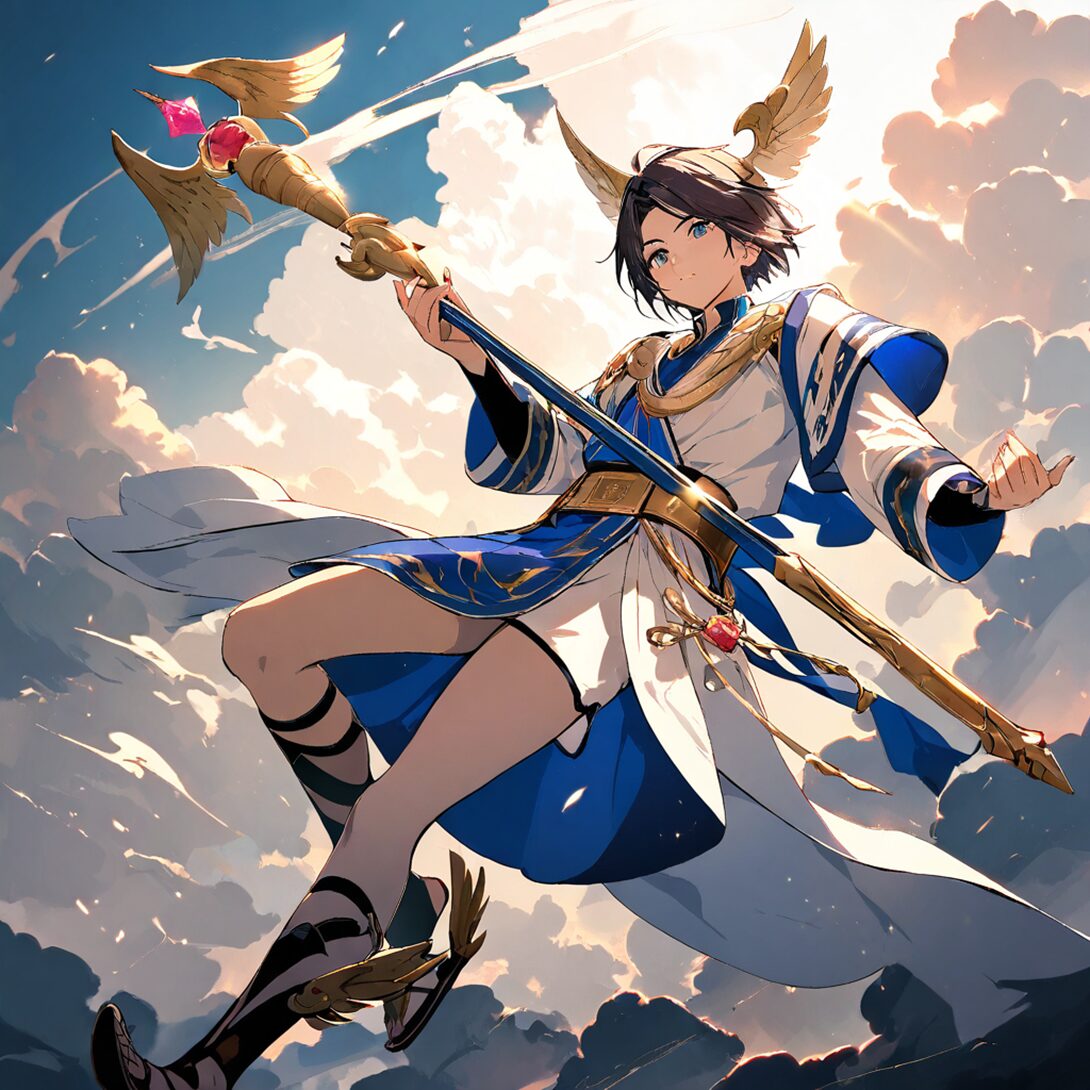
| Hermes | Governs travel, commerce, and heralds; serves as the gods’ messenger |
| Dionysus | God who governs wine, abundance, and theater |
Many of these gods are children born from Zeus’s many love affairs.
For example, the wisdom goddess “Athena” is said to have sprung out fully armed, after Zeus swallowed his first wife Metis, by splitting his head open. “Apollo and Artemis” are the twins of Zeus and the goddess Leto; the herald god “Hermes” is the child of Maia; and the wine god “Dionysus” is the child of the human woman Semele.
These tales of Zeus’s amorous career and his jealous lawful wife Hera are the wellspring of the many episodes of Greek mythology.
Another Genealogy the “Theogony” Depicts — the Gods of Night and Sea
The Theogony is not a poem that tells only of the twelve Olympians. Most of it is a grand family tree (a catalog) that sings on and on of “from which god which god was born.” Here, gods and monsters indispensable to later myth appear one after another.
First, from the night goddess “Nyx,” without a husband, dark gods who sway human fate are born one after another.
| Children of Nyx | Domain |
|---|---|
| Moros / Ker | Appointed death, doom |
| Hypnos / Thanatos | Sleep, death |
| The Moirai (three goddesses) | Spin, measure, and cut the thread of fate |
| Nemesis | The wrath and retribution of the gods |
| Eris | Strife, discord |
Meanwhile, from the descendants of the sea, “Pontus,” whom Gaia bore on her own, spread the sea gods and many genealogies of monsters. From “the old man of the sea,” Nereus, and his 50 daughters, the Nereids (one of whom is Thetis, mother of the hero Achilles), and from the terrible goddess Ceto, are born the three Gorgon sisters (Medusa and the others), who turn those who look at them to stone, and the Graeae, old women who share a single eye. Further, between Echidna — a monster with the upper body of a beautiful woman and the lower body of a serpent — and Typhon are born, one after another, the monsters that heroes later confront: the underworld watchdog Cerberus, the nine-headed Hydra, and the Chimera.
Also, from the ocean god Oceanus and his sister Tethys are said to be born the three thousand rivers of the world and the three thousand Oceanids (water nymphs), depicting the world being filled with countless deities. In the middle of the Theogony there is also a passage (the Hymn to Hecate) that praises at length the goddess “Hecate,” whom Zeus especially honored, as a being whose power reaches over heaven, earth, and sea — letting us glimpse even which gods Hesiod especially revered.
What Is Hesiod’s “Works and Days”?
| Item | Content |
|---|---|
| Author | Hesiod |
| Main content | The history of humankind (the five ages) and lessons of labor and justice |
| Key point | The original text in which the myth of Prometheus and Pandora is told |
Hesiod’s other work, Works and Days, is a didactic poem that focuses not on the gods but on how humans should live. It is written in the form of Hesiod admonishing his lazy brother Perses, with whom he quarreled over an inheritance.
The poem begins with the insight that “there are, in fact, two kinds of Strife (Eris).” One is the bad Strife that breeds war and quarrel. The other is the good Strife (healthy competitiveness) that, seeing a neighbor’s prosperity, drives one to work diligently so as “not to be outdone.” Hesiod teaches that this good Strife is what makes people work and the world prosper, and admonishes his brother, who idles and relies on others’ wealth. This introduction, moving from mythic explanation to everyday ethics, shows well that Works and Days was not a mere story collection but a “textbook of how to live” of ancient Greece.
Prometheus and Pandora — the Origin of Human Suffering
Why must humans toil and work to live? The reason given is the famous myth of “Prometheus” and “Pandora.”
The wise god Prometheus favored humankind. He first tricks Zeus at a place called Mecone, where gods and humans first settled the “division of the sacrifice.” Dividing a slaughtered ox into two, he made one a pile wrapped in tasty-looking fat but containing only bones, and the other a pile wrapped in an unappealing stomach but containing fine meat, and had Zeus choose. Lured by the fat, Zeus took the pile of bones. From then on, humans burn bones and fat as sacrifice to the gods and eat the meat themselves — this myth explains the origin of an actual rite.
Angered when he noticed this, Zeus took fire away from humans, whereupon Prometheus stole the fire of heaven, hid it in a fennel stalk, and gave it to humans.
Enraged, Zeus delivers two punishments. One is to chain Prometheus himself to a rocky mountain, giving him the endless torment in which by day an eagle pecks at his liver, and by night it regrows (this torment is later ended by the hero Heracles).
The other is the punishment of humankind. Zeus commands the gods to make the first woman, “Pandora.” She was given beauty and charm, but also had curiosity and a deceitful nature embedded in her.
Pandora is sent to earth carrying a “jar (commonly called ‘Pandora’s box’)” that must never be opened. When she gives in to curiosity and opens its lid, every kind of disaster — sickness, toil, sorrow, strife — flies out into the world. When she hastily closed the lid, the only thing left inside was “hope (elpis).”
From then on, it is taught, humans came to be unable to live in a world full of disasters without working by the sweat of their brow.
The Five Ages of Man
Hesiod also divides the history of humankind into five ages, teaching that with each age it degenerates.
| Age | Character |
|---|---|
| Golden race | The reign of Cronus. An ideal age living like gods, without toil or aging |
| Silver race | Foolish and irreverent toward the gods; destroyed by Zeus |
| Bronze race | A violent age that loved weapons and war, killing one another to self-destruction |
| Heroic race | The noble age of demigod heroes who fought at Thebes and in the Trojan War |
| Iron race | The “present” age, full of toil, injustice, and strife, in which Hesiod himself lived |
What is interesting is that into a flow that should grow worse step by step (“bronze → iron”), an exceptionally noble “heroic race” age is inserted. This reflects how the people of Hesiod’s time revered as special beings the heroes who were active in the Trojan War and the like.
On that basis, Hesiod repeatedly teaches his brother Perses that “following justice (Dike) rather than injustice (hubris), and working honestly, is the path to prosperity.”
In the latter half, the poem specifically tells of the agricultural calendar of when to sow and when to harvest, the seasons suited for sailing, and even detailed taboos of daily life, making it a precious original text for understanding the life of farmers of the time.
How Strong Are the Characters Here? — The Power Ranking
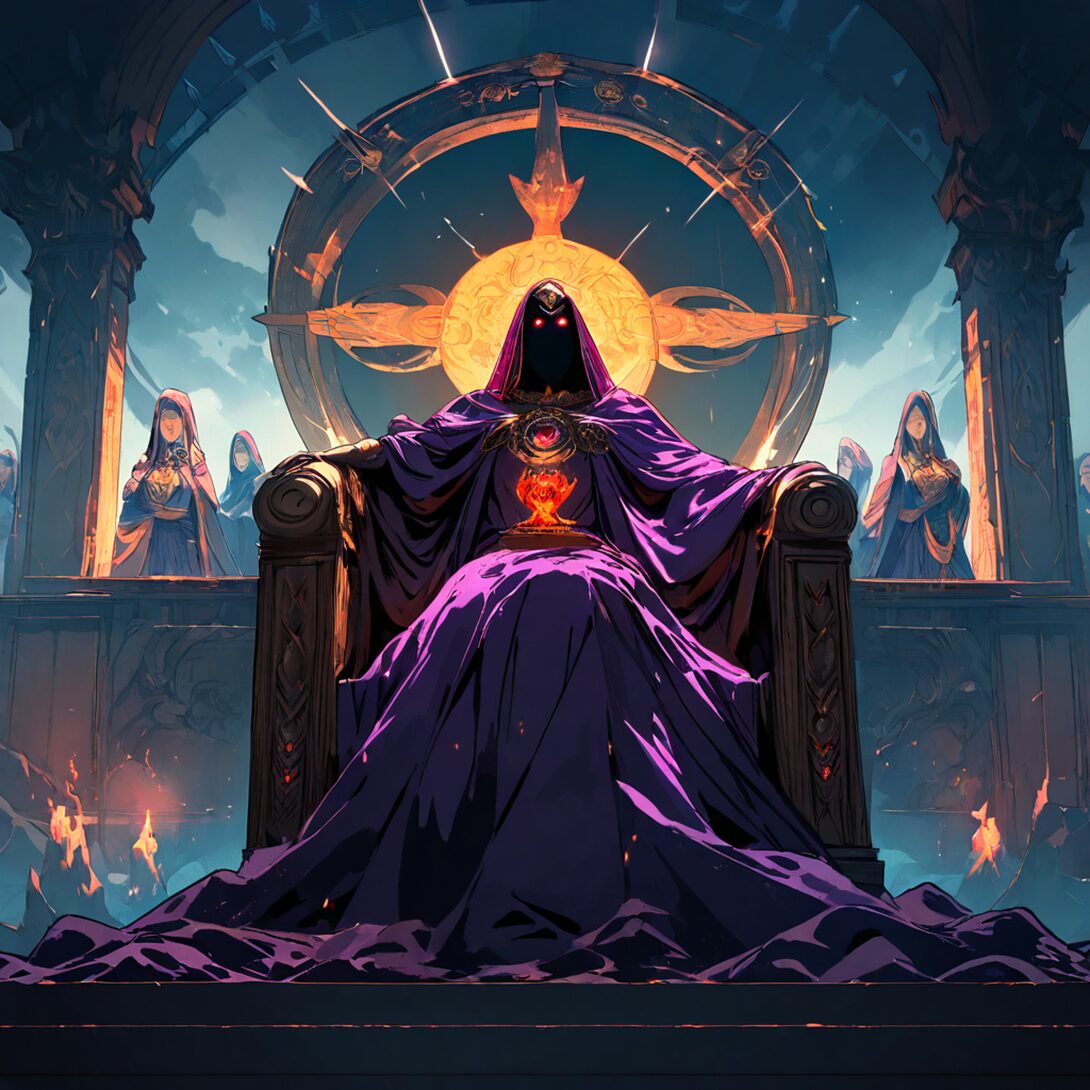
The gods and heroes appearing in this article are also introduced in strength order in the “Mythology, Religion & Legend Power Ranking.” Enjoy their exploits in the original texts alongside their “strength.”
To Learn More
Conclusion
In this article, I explained Hesiod’s Theogony and Works and Days in detail as the creation myth of Greek mythology. How was it?
The Theogony depicted the story that forms the foundation of all Greek mythology — beginning with Chaos and, through three generational successions of Uranus → Cronus → Zeus, finally establishing a stable order under the twelve Olympians.
And Works and Days, through Prometheus’s fire and Pandora and the five ages of man, taught the origin of human suffering and the importance of living rightly and diligently.
In the next article (Article 2), against the backdrop of this ordered world of the gods, I will explain Homer’s heroic epic “Iliad” — the story of the “Trojan War.”
I hope you’ll read the next article too.
Also popular with readers
📚 Series: The Original Texts of Greek Mythology (2/6)