Thank you for visiting. This article is the second installment in a series explaining the original texts of Mesopotamian mythology.
This time, we look in detail at the oldest extant literary work in the world, the “Epic of Gilgamesh.” Composed about 4,000 years ago, it treats universal themes that still resonate today — friendship, the fear of death, and eternal life.
For an overview map of Mesopotamian mythology’s original texts as a whole, please see this summary article.
The Epic of Gilgamesh as an Original Text
Before entering the story, let’s grasp its making as an original text. The Epic of Gilgamesh was not completed all at once.
Originally it was several independent short stories written in Sumerian. These were later gathered into one long epic in Akkadian (the Babylonian language), and finally arranged into the “standard version” of 12 clay tablets by an editor named “Sîn-lēqi-unninni.”
This story came to light again in the 19th century. In 1872, the British Museum researcher “George Smith,” while deciphering tablets excavated from the library of King Ashurbanipal, discovered a “great flood story” closely resembling Noah’s Ark in the Bible. This great discovery showed that a flood myth existed in a document older than the Bible, and gave a great shock to Europe at the time.
The story begins with a passage praising the magnificent walls of Uruk that Gilgamesh built, and ends again with the scene of looking up at those same walls. The theme “a person may perish, but what they build remains” is already set into this frame-like structure. The broad flow of the story is as follows.
The Tyrant Gilgamesh and the Wild Man Enkidu
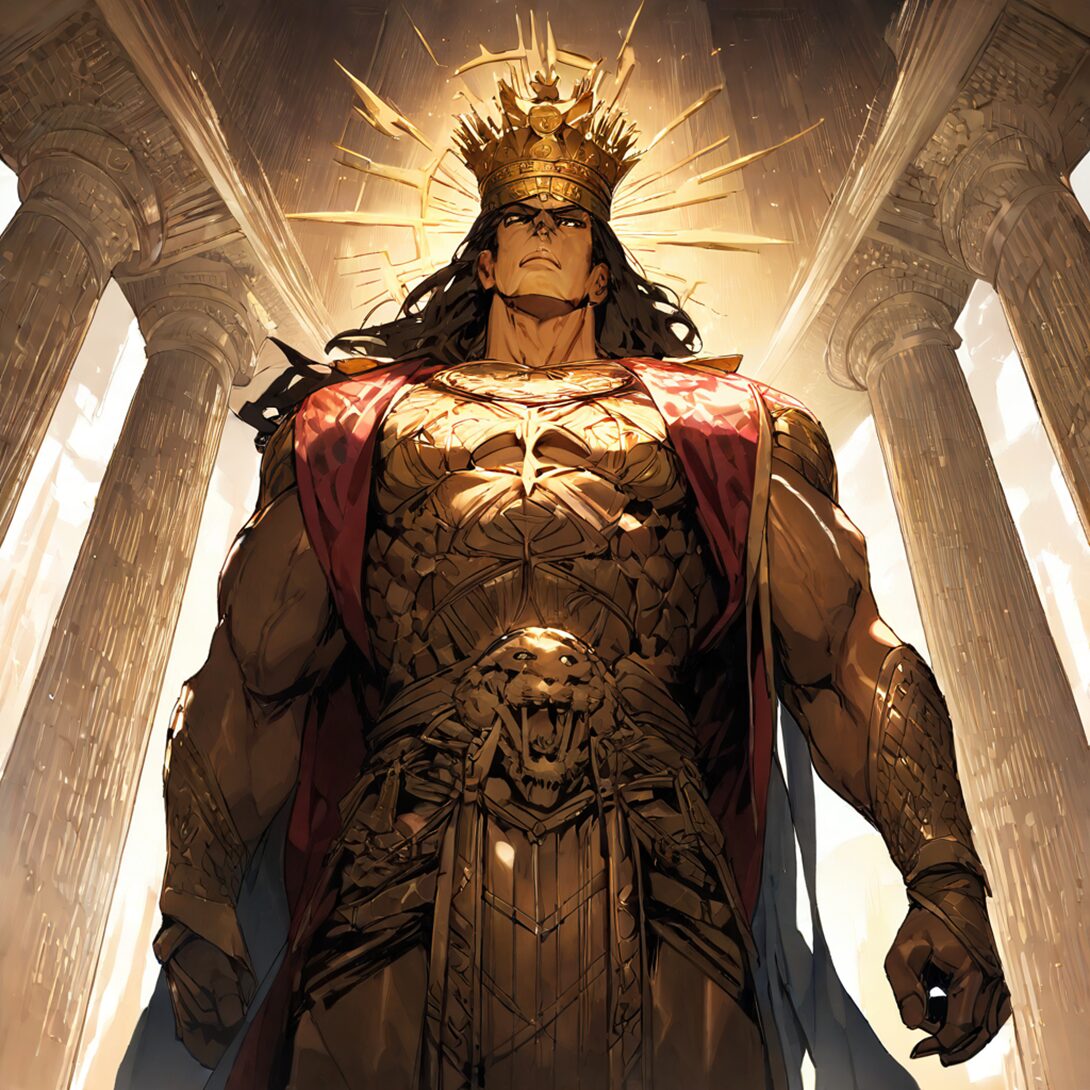
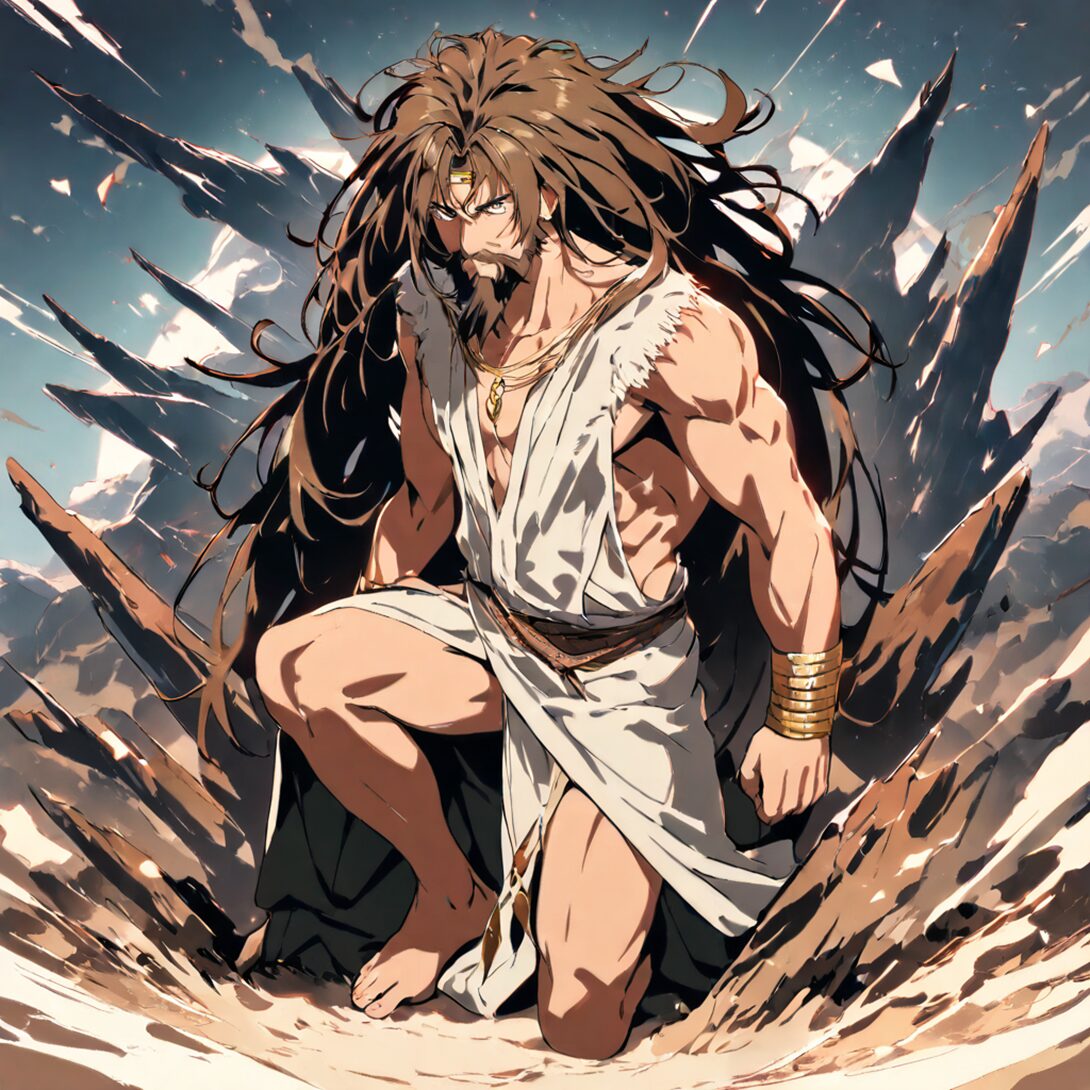
The hero “Gilgamesh” is the king of the city-state Uruk. A demigod, two-thirds god and one-third human, he was stronger and more beautiful than anyone.
But with his overflowing power he worked the people brutally and behaved as a tyrant. The gods, hearing the appeal of the suffering people, decide to make a being who can stand against Gilgamesh. That is “Enkidu.”
Enkidu was made from clay by the mother goddess Aruru and was born a “wild man,” covered all over in hair, grazing on grass and drinking water with the beasts on the steppe. A hunter troubled by him ruining his traps sends the temple woman “Shamhat” to the steppe. Enkidu spends six days and seven nights with Shamhat, and when he then tries to return to the beasts, the beasts that had been his companions now fear him and flee. In their place he has gained “discernment (wisdom).” By knowing sexual love, one leaves the world of beasts and becomes human — this scene gazing at the border of civilization and the wild is one of the most famous passages in the epic. Thus led by Shamhat, Enkidu heads to the city of Uruk as a human.
Meeting in Uruk, Gilgamesh and Enkidu grapple fiercely. After an evenly matched, life-or-death struggle, the two acknowledge each other’s strength and become inseparable friends.
The Adventures of Friendship — Humbaba and the Bull of Heaven
Now friends, the two set out together on great adventures.
Humbaba, Guardian of the Cedar Forest
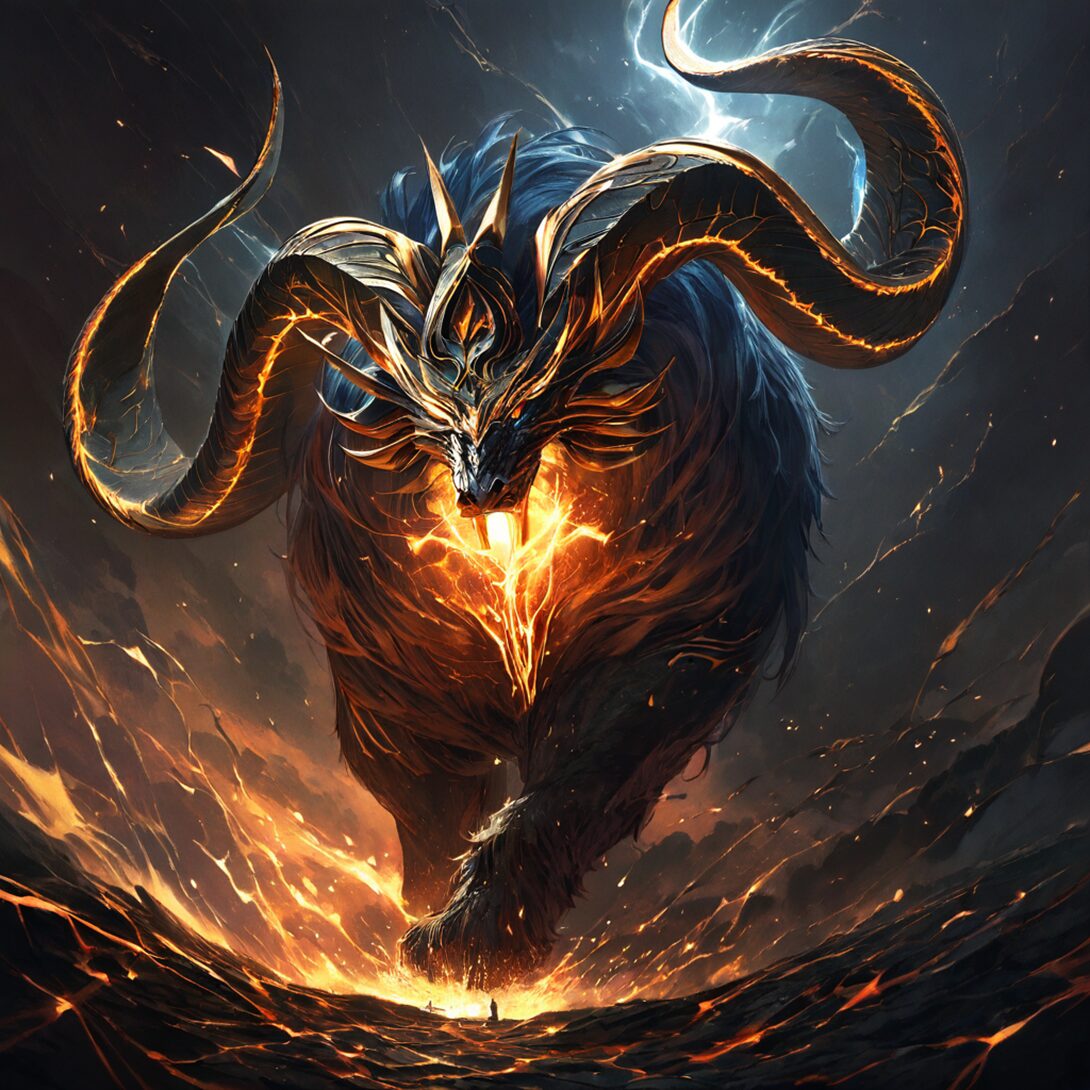
Gilgamesh, wishing to “gain a name that lasts forever,” decides on an expedition to the faraway “Cedar Forest.” Guarding this forest was a terrible monster the gods placed as its keeper, “Humbaba (Huwawa),” who breathed fire from his mouth and whose roar thundered like a flood.
Enkidu, worried about the danger, tries to stop him, but Gilgamesh will not bend his resolve. After a long journey they reach the forest, and they advance with Enkidu encouraging Gilgamesh that the ominous dreams Gilgamesh sees are “good omens.” Then the 13 winds sent by the sun god “Shamash” seal Humbaba’s movements, and the two finally corner the monster.
Humbaba desperately begs for his life: “Spare only my life. I will become your servant.” Gilgamesh hesitates for a moment, but Enkidu argues, “If we do not kill him here and now, it will become a calamity later,” and the two finish off Humbaba. They fell the cedars and return in triumph to Uruk.
Ishtar’s Courtship and the Bull of Heaven
At Gilgamesh’s heroic figure on his return to Uruk, the goddess of love and war, “Ishtar,” falls in love at first sight and proposes. But Gilgamesh flatly rejects her. “Did not all those you once loved meet a miserable end?” — he insulted her, naming one after another her past lovers, abandoned by her and turned into beasts or wounded.
Enraged, Ishtar rushes up to heaven, weeps to her father, the sky god “Anu,” and borrows the “Bull of Heaven” to destroy the earth. When the Bull of Heaven rampaged, its snorting alone opened great fissures in the ground, swallowing hundreds of men.
Even so, Gilgamesh and Enkidu confront it in splendid coordination. Enkidu grips the bull’s tail and holds it, Gilgamesh thrusts his sword into its neck, and they slay even the Bull of Heaven. Enkidu even goes so far as to provoke Ishtar, who was watching, by throwing the bull’s leg at her.
The Death of His Friend, and the Fear of Death
The gods are angry that the two have killed two sacred beings, Humbaba and the Bull of Heaven, and as punishment decree that one of the two must die.
The one chosen was “Enkidu.” He takes to his sickbed and, in his suffering, dreams a vision of where the dead go — the underworld, a “house without light, where one wears a garment of feathers like a bird and eats dust and clay.” This scene conveys well the gloomy view of the afterlife the Mesopotamians held. Enkidu curses Shamhat, who made him human, then reconsiders and blesses her, and after wasting away for twelve days, finally breathes his last.
At the death of his inseparable friend, Gilgamesh was struck down fiercely. He would not leave the body’s side for seven days and seven nights, until he saw a maggot fall from it, and wandered the wilderness clad in animal skins. And he realizes, with terror, one fact he had never even considered: “Someday, I too will surely die.”
Possessed by the fear of death, Gilgamesh resolves to set out, all alone, on an aimless journey in search of “eternal life (immortality).”
The Quest for Immortality and Utnapishtim
What Gilgamesh aimed for was “Utnapishtim,” said to have survived the great flood of old and to be the “only human granted immortality” by the gods. He was said to dwell at the end of the world, and the road there was a harsh one no human could ever pass.
That long journey crossed many obstacles.
- Mount Mashu and the scorpion-men: the entrance of the twin “Mount Mashu,” where the sun rises and sets, was guarded by “scorpion-men,” human above and scorpion below. Acknowledging Gilgamesh’s resolve, they permit him passage into the pitch-dark tunnel that is the sun’s path.
- The dark tunnel: since he would be burned if the sun caught up to him, Gilgamesh runs through 12 leagues (about half a day) of darkness and reaches a garden of the gods where jeweled fruit grows.
- The tavern keeper Siduri: the tavern keeper “Siduri” by the sea admonishes the haggard Gilgamesh, “You cannot gain immortality. Eat delicious food, love your family, and enjoy life,” but he does not give up.
- The ferryman Urshanabi and the Waters of Death: with the help of the boatman “Urshanabi,” he crosses the “Waters of Death,” deadly to the touch, using up long poles one after another.
Crossing all these difficulties, Gilgamesh finally reaches Utnapishtim. And he asks how one can become immortal.
Utnapishtim tells how he became immortal — that is, the story of surviving the great flood the gods raised by building a giant boat (this great flood story is explained in detail in Article 3; it resembles Noah’s Ark in the Bible astonishingly).
On that basis, Utnapishtim says, “To test whether you are worthy of immortality, first see if you can stay awake for six days and seven nights.” But Gilgamesh, exhausted from the long journey, immediately falls asleep and fails this trial all too easily.
The Plant of Rejuvenation, and the Final Realization
Pitying Gilgamesh, who tries to return having given up on immortality, Utnapishtim finally tells him of the “plant of rejuvenation” that grows at the bottom of the sea. Gilgamesh ties stones to his feet, dives into the sea, and with effort obtains this plant.
But on the way back, while he bathes, a snake eats the plant. The snake sheds its old skin and is rejuvenated (the origin of shedding), and Gilgamesh loses even his last hope. (This is said to explain why a snake seems to “rejuvenate” by shedding its skin.)
Having lost everything, Gilgamesh reaches home, Uruk, but stops before the walls. Looking up at the magnificent walls of Uruk that he himself built, he realizes:
A human can never become immortal. But fine works and achievements remain forever, even after one dies. Finding one answer to the question of how to live a finite life by accepting death, the story comes to a close.
How Strong Are the Characters Here? — The Power Ranking
The gods and heroes appearing in this article are also introduced in strength order in the “Mythology, Religion & Legend Power Ranking.” Enjoy their exploits in the original text alongside their “strength.”
To Learn More
Conclusion
In this article, I explained the world’s oldest literature, the “Epic of Gilgamesh,” in detail. How was it?
The once-tyrannical Gilgamesh comes to know friendship with the wild man Enkidu, awakens to the fear of death through his death, and after wandering in search of eternal life, arrives at the realization of “how to live a finite life” — it is astonishing that a story of about 4,000 years ago resonates deeply even in our hearts today.
In the next article (Article 3), I will explain the full picture of the “great flood” (Atrahasis) that appeared in this story too, the creation of humankind, and the story of the underworld.
I hope you’ll read the next article too.
Also popular with readers
📚 Series: The Original Texts of Mesopotamian Mythology (3/5)