Thank you for visiting. This article is the fourth installment (the final one) in a series explaining the original texts of Taoism.
So far, I have looked at the philosophy of Laozi and Zhuangzi (Articles 1 and 2) and the immortality thought (Article 3). In this final installment, I explain how they changed form into the organized religion “Taoist religion” and produced their own gods and the enormous scripture collection the “Daozang.”
For an overview map of Taoism’s original texts as a whole, please see this summary article.
From Philosophy to Religion — the Birth of the Taoist Religion
The thought of Laozi and Zhuangzi (the Daoist school) seen so far was, to the last, philosophy. But in the Later Han era (around the 2nd century), joined with immortal faith, folk faith, and magic, a full-fledged religious order organizing believers was born. This is the beginning of the “Taoist religion.”
What became its forerunners were two orders that appeared at almost the same time.
Zhang Daoling and the Way of the Five Pecks of Rice (Celestial Masters)
The one held to be the founder of the Taoist religion is “Zhang Daoling.” In the 2nd century, he opened an order, claiming to have received a revelation from Laozi (the Supreme Venerable Lord).
From having one offer five pecks of rice when joining, it is called the “Way of the Five Pecks of Rice.” This order emphasized healing illness, and performed treatment by having believers reflect on and confess their own sins. Zhang Daoling was honored as the “Celestial Master,” and his order, as the “Way of the Celestial Masters,” became the central source of the later Taoist orders.
The Way of Great Peace and the Yellow Turban Rebellion
At almost the same time, what “Zhang Jiao” raised was the “Way of Great Peace.” Also increasing believers explosively with magic that heals illness, it in time raised the great rebellion “Yellow Turban Rebellion” against the corrupt Later Han dynasty. It is so called because the believers used yellow turbans as their mark. This rebellion is famous as the opening of the “Romance of the Three Kingdoms,” and is known as an example of a religious order greatly moving history.
The Gods of Taoism — the Three Pure Ones and the Jade Emperor
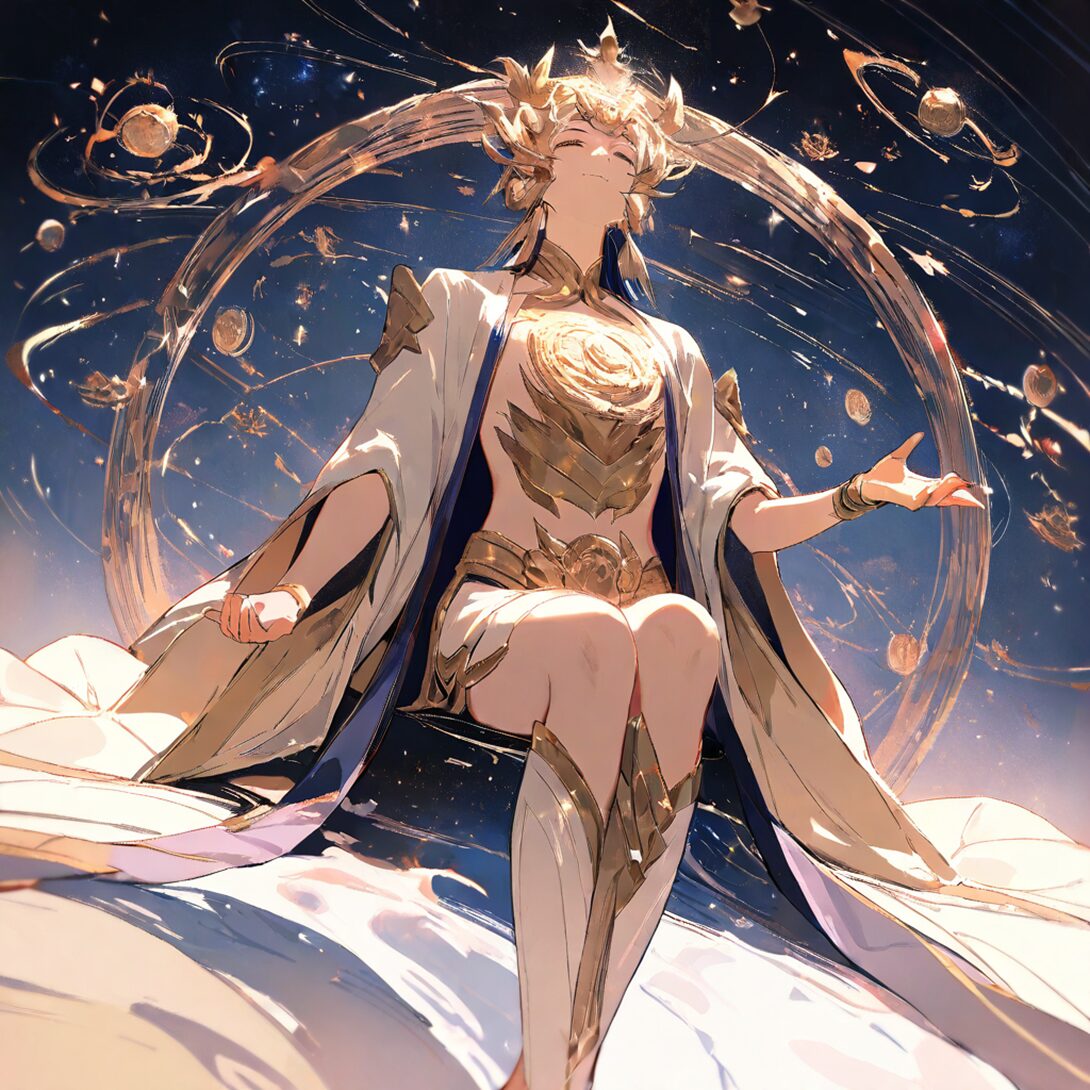
The Taoist religion built up its own system of gods (pantheon). Standing at its summit are the three supreme gods, the “Three Pure Ones.”
| Three Pure Ones | Position |
|---|---|
| The Celestial Worthy of the Primordial Beginning | The highest god, governing the beginning of the cosmos |
| The Celestial Worthy of the Numinous Treasure | The god governing the teaching and scriptures |
| The Celestial Worthy of the Tao and Virtue | The god deifying Laozi (the Supreme Venerable Lord) |
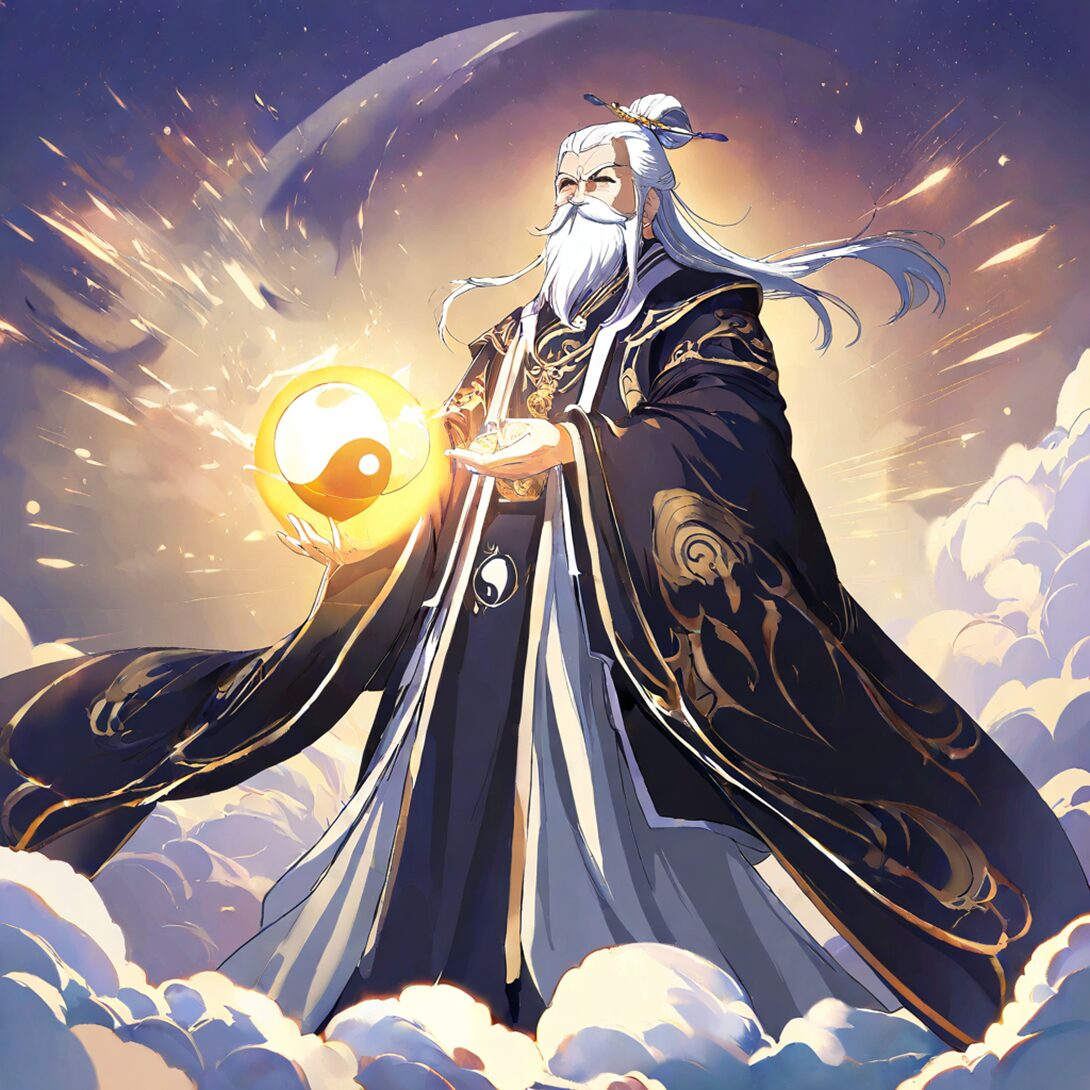
What should be noted is the third, the “Celestial Worthy of the Tao and Virtue.” This is the figure of Laozi, who was a philosopher, raised into a god himself, also called the “Supreme Venerable Lord.” The founder of the philosophy became, at some point, one of the supreme gods — here the way the Daoist school (philosophy) and the Taoist religion (religion) joined into one is well expressed.
Below the Three Pure Ones is the “Jade Emperor,” who governs the politics of the heavens. He had tremendous popularity among the common people as the Heavenly Emperor, and was held to rule a heavenly government organization just like human society. Further, countless gods close to daily life were worshipped — the god of the land, the god of the stove, the city god — and Taoism deeply joined with the folk faith of China.
The Daozang — a Grand Compendium of Taoist Scriptures
As Buddhism has its “Buddhist canon,” Taoism too has an enormous compendium of scriptures. That is the “Daozang.”
The Daozang is a giant collection that gathers every text relating to Taoism — from classics like the “Tao Te Ching” and “Zhuangzi,” to scriptures for the gods, manuals of immortal arts and alchemy, the making of talismans, the manners of ritual, and the knowledge of medicine and health practice. Compiled many times in its long history, the surviving Ming-era “Zhengtong Daozang” holds, in fact, nearly 1,500 texts. Its contents, where philosophy, religion, science, and magic are thoroughly fused, are a precious body of original texts that can be called an encyclopedia of Chinese culture.
Taoist Rituals and Sects
The Taoist religion developed distinctive religious practices. Representative are “talismans” and “jiao rituals.”
- Talismans: protective charms infused with the gods’ power. Used to ward off calamity, heal illness, and repel demonic spirits. The Taoist writes distinctive characters
- Jiao rituals: large-scale rites performed by inviting the gods. Remove calamity, save the dead, and pray for the peace of the state
And from the Song and Jin eras on, Taoism came to gather into two great sects.
| Sect | Feature |
|---|---|
| Quanzhen sect | Founded by Wang Chongyang in the 12th century. Renounce the world, keep the discipline, value the internal elixir (meditation). Also preaches the fusion of Confucianism, Buddhism, and Taoism |
| Zhengyi sect | Follows the stream of Zhang Daoling’s Way of the Celestial Masters. Does not renounce the world; centers on talismans and rites (magical practice) |
The Quanzhen sect, which renounces the world and refines body and mind, and the Zhengyi sect, which performs magic and ritual as laymen. These two became the two great currents of Taoism, continuing to the present.
Taoism’s Complete Scriptures, the “Daozang”
Taoism produced an enormous body of scriptures in its long history. What compiled them is the “Daozang.” It is Taoism’s complete scriptures (the full collection of scriptures), corresponding to Buddhism’s “Buddhist canon,” and the surviving Ming-era “Zhengtong Daozang” is a great collection exceeding 5,000 volumes.
Its classification method is also distinctive, organizing the contents into the frameworks of the “Three Caverns” and the “Four Supplements.” The “Tao Te Ching” and “Zhuangzi” of course, but also alchemical books like the “Cantong qi” and “Baopuzi,” the order of rituals, talismans, biographies of the gods, and the knowledge of medicine and health practice — every kind of knowledge relating to Taoism is held within. That Taoism is not a religion with a single scripture, but a giant system embracing whole the philosophy, religion, magic, medicine, and science, can be seen well from the thickness of this “Daozang.”
Note that standing at the summit of its gods are the three supreme gods deifying the cosmic root “Tao,” the “Three Pure Ones” — the Celestial Worthy of the Primordial Beginning, the Celestial Worthy of the Numinous Treasure, and the Celestial Worthy of the Tao and Virtue (= the deified Laozi). Below them is placed the Jade Emperor, who rules the heavens, and a grand hierarchy of gods spreads out, down to familiar gods like the Eight Immortals, Guandi, and Mazu.
Taoism’s History — the State and Taoism
The Taoist religion has, in its long history, repeatedly been deeply involved with the state and politics.
In the chaotic period at the end of the Later Han, the Way of the Five Pecks of Rice, under the founder’s grandson “Zhang Lu,” built a kind of religious community by Taoism (a regional regime of unified church and state) in Hanzhong (the present southern Shaanxi), and kept its independence for about 30 years. It is told to have carried out distinctive governance, such as having criminals repair roads in place of punishment, and placing inns that gave food free to travelers.
Taoism reached its peak in the Tang era. Because the Tang imperial house’s surname was “Li,” the same surname as Laozi (real name Li Er), the Tang emperors venerated Laozi as their own ancestor and deeply protected Taoism. The title “Supreme Mysterious Primordial Emperor” was granted to Laozi, and there were times when Taoist scriptures were set in the keju. In the following Song era too, Taoism flourished, and emperors who themselves called themselves a “Taoist lord” appeared. On the other hand, in the north, the Quanzhen sect expanded its power in the Jin and Yuan eras, and an anecdote remains that its leader was invited by the Mongol emperor Genghis Khan. Thus Taoism developed inseparably joined with China’s successive dynasties.
What Taoism Left in Daily Life
Taoism, beyond the frame of order and scripture, deeply melted into the very life of the people of China. Much of the culture we feel is “China-like” in fact has its source in Taoism.
- Divination and the calendar: ideas such as yin-yang and the five elements, feng shui, the zodiac, and the eight trigrams developed joined with Taoism
- Folk gods: “Guandi” of business prosperity (the god deifying Guan Yu of the “Three Kingdoms”), and “Mazu,” the goddess of seafaring and fishing, are still deeply worshipped
- Annual events: the influence of Taoism is strong in seasonal events, such as the “Ghost Festival,” venerating ancestors and the dead (one of the origins of Obon)
- Health practices: the culture of ordering body and mind — qigong, tai chi, Chinese medicine, health practice — is also continuous with Taoism’s internal elixir and immortal arts
Thus Taoism can be said to be a religion that has taken on, whole, the people of China’s wishes for “happiness in this world (longevity, freedom from illness, business prosperity).” Rather than salvation in the next world, how to live healthily and richly in this world now — this this-worldly gaze is a great individuality of Taoism, alongside Confucianism and Buddhism.
How Strong Are the Characters? — the Strongest Ranking
The gods and heroes who appeared in this article are also introduced in order of strength in the “Mythology, Religion, and Legend Strongest Ranking.” Please enjoy both their activity in the original texts and their “strength.”
To Learn More
Conclusion
In this article, I explained in detail the Taoist religion and the scripture collection the “Daozang.” How was it?
The philosophy of Laozi and Zhuangzi, joined with immortal faith and folk faith, became the organized religion “Taoist religion,” beginning with Zhang Daoling’s Way of the Celestial Masters, and developed into the gods of the Three Pure Ones and the Jade Emperor, the enormous “Daozang,” and the Quanzhen and Zhengyi sects. In the point that the philosopher Laozi is venerated as the supreme god “Supreme Venerable Lord,” the uniqueness of the religion of Taoism is condensed.
With this, all five articles of the Taoism original-texts series are complete. From the profound philosophy of Laozi and Zhuangzi, to the immortal sages of living forever, and the Taoist religion, I hope you have savored the rich world unique to China.
Besides Taoism, I also explain the original texts of Buddhism, Christianity, and the mythologies of India, Greece, and more. For the full list, please see the Summary of the World’s Mythology and Religion Original Texts.
I hope you’ll read the next article too.
Also popular with readers
📚 Series: The Original Texts of Taoism (5/5)