Mythology & Religion Power Ranking TOP100
This article introduces Rank 35: Behemoth from the “Mythology & Religion Power Ranking TOP100”, which ranks the gods, monsters, and heroes of world mythology, religion, and legend in order of strength.
If you want to see the full TOP100 list and the criteria behind the rankings, check out the overview article below.
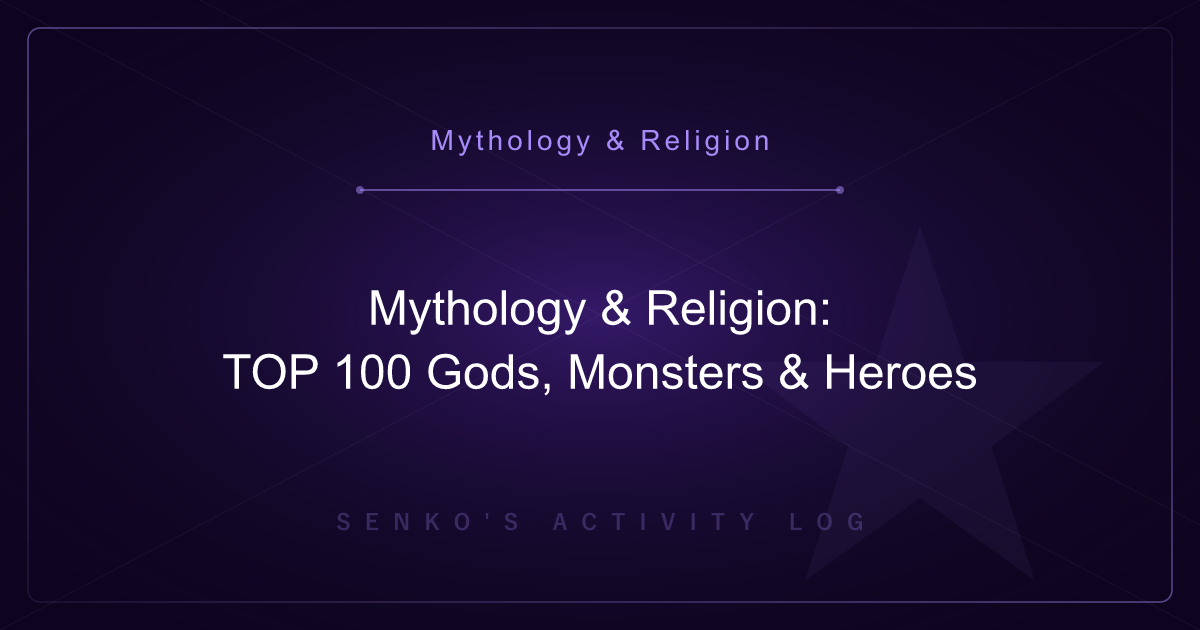
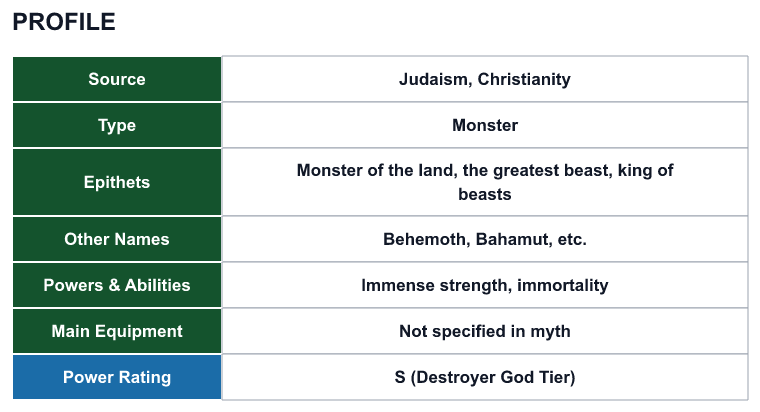
Rank 35: Behemoth (Judaism, Christianity)
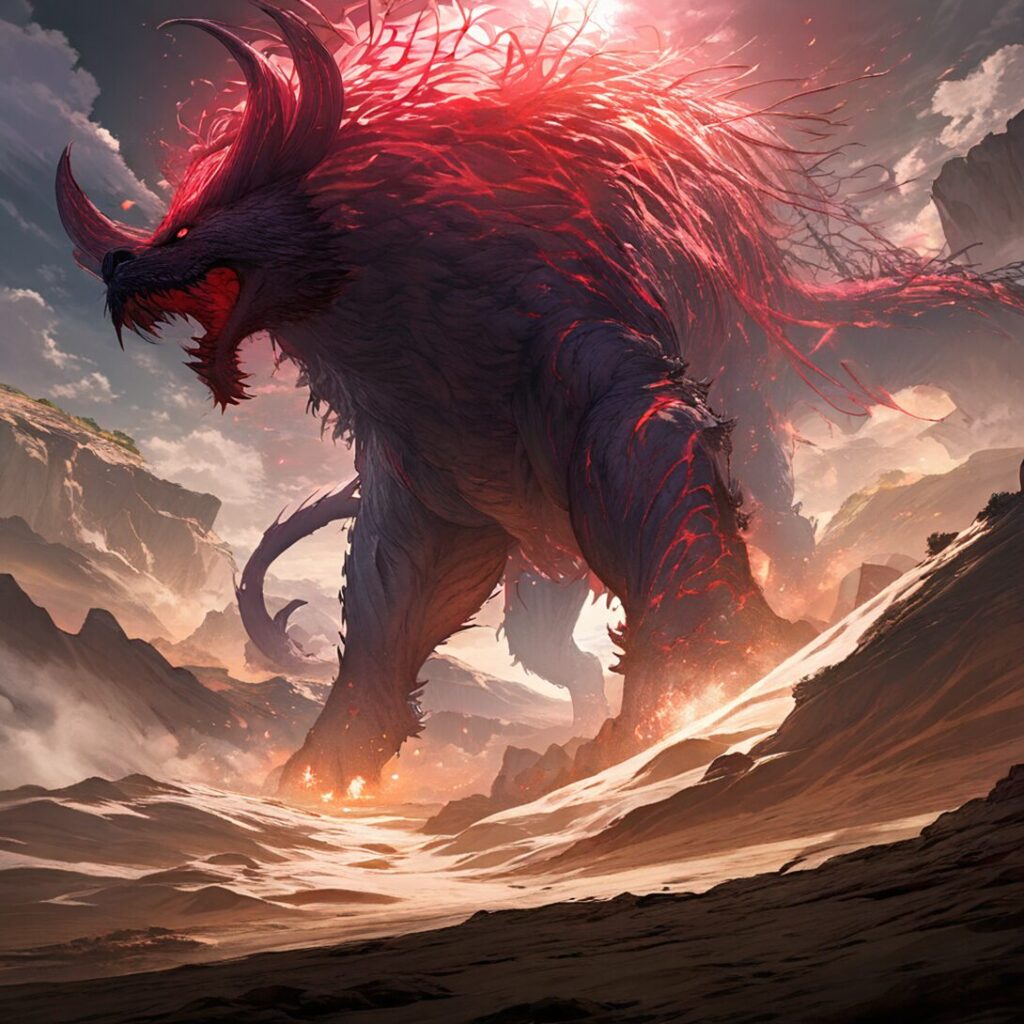
🦛 What happens if Behemoth fights the other gods?
I built a simulator that pits the 100 entries in this ranking against each other. It opens with Behemoth already picked, and an opponent of the same tier chosen for you.
⚔ Send Behemoth into battleOverview
Behemoth is a colossal land monster that appears in the Old Testament, often portrayed as the counterpart to Leviathan, the sea monster.
The biblical description reads: “His bones are tubes of bronze; his limbs are like bars of iron,” and “Can one take it with hooks, or pierce its nose with a snare?” — suggesting it is an animal characterized by great size and a formidable nose.
For this reason, it is often portrayed as a monster resembling an elephant (or hippopotamus).
Based on the biblical text alone, it honestly seems rather like an ordinary elephant — but perhaps due to later elaborations in subsequent literature, it came to be described as devouring all the grass on a thousand hills each day, drinking entire rivers in a single breath, having a roar that echoes across the whole world, and being far larger than any mountain. It became widely treated as “the strongest beast on earth.”
However, adhering to the biblical text, the passage reading: “Under the lotus plants he lies, in the shelter of the reeds and in the marsh. For his shade the lotus trees cover him; the willows of the brook surround him. Though the river is turbulent, he is not frightened; he is confident though the Jordan rushes against his mouth” — clearly indicates it is small enough to lie under trees or within a river, suggesting it is roughly the size of a large elephant (or perhaps somewhat bigger).
Well, size and strength are not always proportional, but I do come away with the honest impression that it isn’t all that strong.
It should also be noted that Behemoth is sometimes equated with Bahamut from Islamic mythology (distinct from Islam itself), but Bahamut in that mythology is a “massive fish that supports the universe” — making it more similar to Leviathan in character. In recent fantasy works, Bahamut is often depicted as a powerful dragon, which is largely attributed to the influence of the tabletop RPG “Dungeons & Dragons (D&D).”
Reason for This Ranking
Behemoth is explicitly described as “the first of the works of God” in the Bible — making it a truly special being.
The biblical description of Behemoth does make it seem like an ordinary elephant, but when you consider the context of its creation, it should be incomparably greater than any ordinary angel. Indeed, in later Jewish literature, Behemoth is frequently depicted as the supreme beast on earth with extraordinary power.
There are no depictions of it actually fighting in the Bible, but since it is said to be the counterpart to the sea monster Leviathan, it can reasonably be assumed to possess comparable power.
However, while Leviathan is explicitly emphasized as a being of great strength within the Bible, Behemoth is described as one that “all the wild animals play” beside — suggesting it is a creature beloved by all.
From this, it can be inferred that Behemoth is somewhat weaker than Leviathan, but based on how it is treated in later literature, it is considered something that only God can destroy, and is judged to possess the power to single-handedly bring about the world’s destruction.
Based on these considerations, I judged this position in the ranking to be appropriate.
About the Book
I wrote a book that compiles this entire ranking! The reasoning behind each placement is grounded in the actual lore and episodes from each mythology, so I think it makes for a fairly convincing read.
The book also contains many columns and extras not published on this blog, so if you are interested, please check it out below.

Also popular with readers
📚 Series: Mythology Power Ranking (Individual Characters) (66/100)