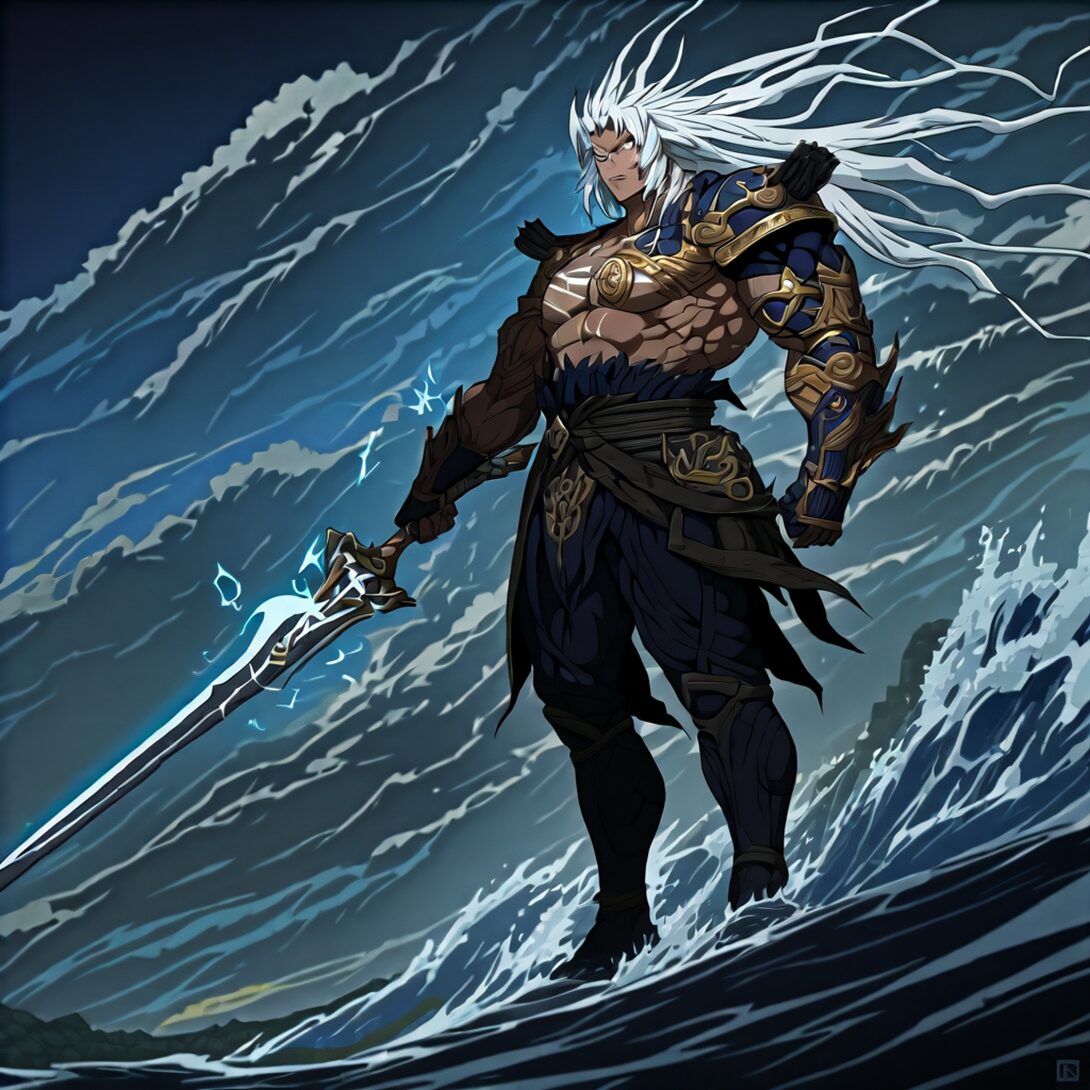
The Debate Over the Strongest in Japanese Mythology
The world is home to a vast array of mythologies, religions, and legends, and Japanese mythology is the one closest to home for me, yet the hardest of all to argue about in terms of raw strength.
I previously created an overall power ranking covering all mythologies, religions, and legends, and Japanese mythology managed to place only four names on it, with the highest sitting at #48.

Considering that Greek mythology put 21 entries on that list and Norse mythology 12, four is a strikingly small number.
So this time, building on that earlier ranking, I have put together a separate ranking focused exclusively on Japanese mythology. Along the way I also want to cover why household names like Yamato Takeru and Okuninushi never made it in.
As always, this ranking reflects my own subjective judgement and is not something I would call definitively correct. Nobody could produce a definitively correct ranking in the first place, so I take it for granted that opinions will differ.
If you end up putting together a ranking of your own, I would genuinely love to hear how it turned out.
What Japanese Mythology Actually Refers To
Japanese mythology generally means the stories of the gods recorded in the “Kojiki” (712 CE) and the “Nihon Shoki” (720 CE), both compiled in the early eighth century. The two are referred to together as the “Kiki”.
Independent traditions survive in the regional “Fudoki” gazetteers and in Heian-period works such as the “Sendai Kuji Hongi”, but what most people picture as Japanese mythology is essentially the content of the Kiki.
The narrative runs from the separation of heaven and earth, through Izanagi and Izanami giving birth to the land, Amaterasu and the heavenly rock cave, Susanoo’s exploits in Izumo, Okuninushi building the country and then ceding it, and on to the descent of the heavenly grandson and the eastern campaign of Emperor Jimmu.
What matters most when measuring strength here is that the Kiki are not only myth but also histories written to establish where the imperial house’s authority came from.
Because of that, Japanese mythology has almost no scenes in which the gods throw everything they have at each other, nothing equivalent to the Titanomachy of Greek myth or Ragnarok in the Norse. Even the ceding of the land, the biggest confrontation in the whole corpus, is settled by a single test of strength.
The Power Ranking (Japanese Mythology)
From here I will count up from the bottom. The ranking covers beings whose myths contain a clear demonstration of power.
That means famous gods and heroes whose strength cannot be gauged from what the sources actually describe have been left out of the ranking itself.
There are a lot of those, and in the case of Japanese mythology the excluded names are arguably the more famous ones, so I will cover them together after the ranking.
#4: Takemikazuchi (Overall Ranking #73)
Takemikazuchi is said to have been born from the blood on the blade when Izanagi struck down his own child Kagutsuchi with the Totsuka no Tsurugi, which makes him a war god who is the deification of the sword itself.
During the pacification of the Central Land of Reed Plains — the ceding of the land — he descended on Izumo by planting his sword upside down in the crest of a wave and sitting cross-legged on its point. Takeminakata was the only one to resist, and in their contest of strength Takemikazuchi turned the arm that had been seized into an icicle and then a blade to make him flinch, before crushing his opponent’s hand and hurling him away. During Emperor Jimmu’s eastern campaign he did not descend himself, and simply sent down the sword Futsunomitama to subdue the enemy on his behalf.
For the details, see the article below.
#3: Yamata no Orochi (Overall Ranking #64)
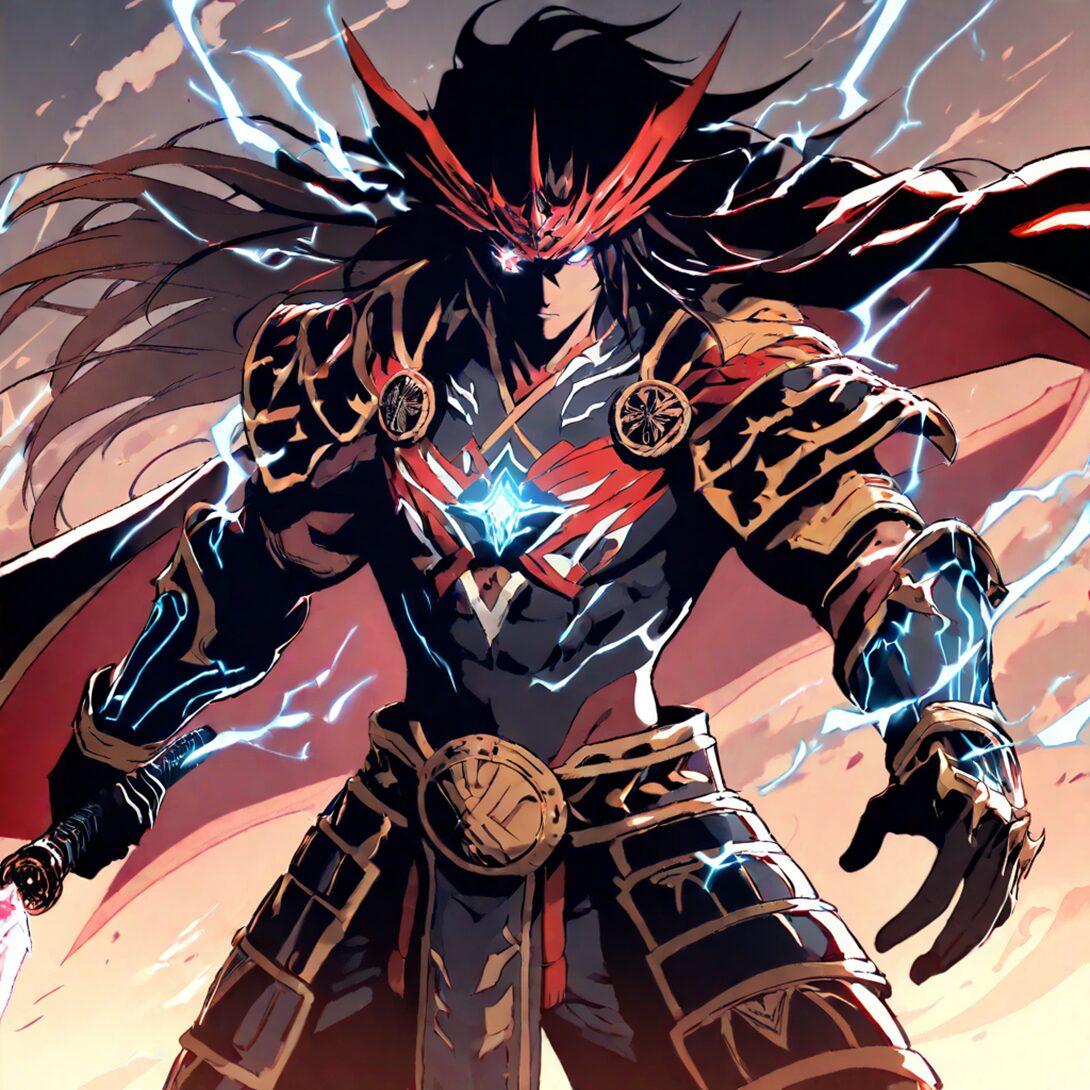
Yamata no Orochi is a serpent monster with eight heads and eight tails, a body so vast that it spanned eight valleys and eight peaks. The Kojiki describes its eyes as red as winter cherries, with moss, cedars and cypresses growing on its back.
The battle itself has Susanoo cut it down after it falls asleep drunk on the yashiori no sake he prepared, so it is not a description of a head-on clash. Even so, the fact that Kusanagi no Tsurugi — one of the three imperial regalia — emerged from its tail says a great deal: this was a creature carrying a divine treasure inside its own body. Combined with its sheer size, that earns it this position.
For the details, see the article below.
#2: Amaterasu (Overall Ranking #61)
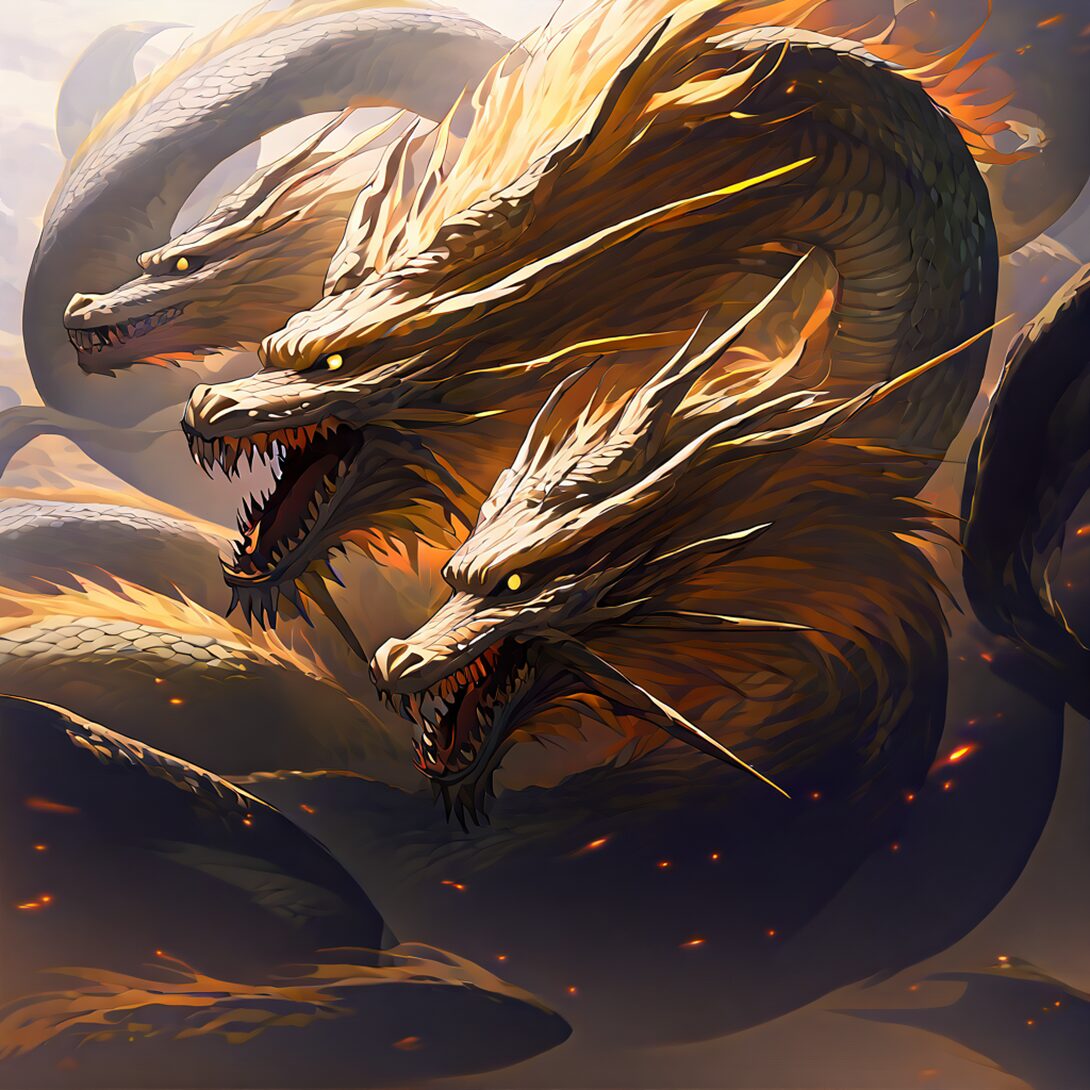
Amaterasu is the presiding deity of Takamagahara, the goddess who governs the sun, and the ancestral deity of the imperial house. In terms of standing within Japanese mythology, she is the undisputed summit.
Her most famous episode is the heavenly rock cave: enraged by her brother Susanoo’s violence, she shut herself inside, and the world lost its light and filled with calamity. The influence of a being who plunges the world into darkness simply by hiding is in a class of its own, but the Kiki contain almost no description of her fighting and defeating anyone herself. Being the highest deity with no combat record is exactly why she sits at #61 overall.
For the details, see the article below.
#1: Susanoo (Overall Ranking #48)
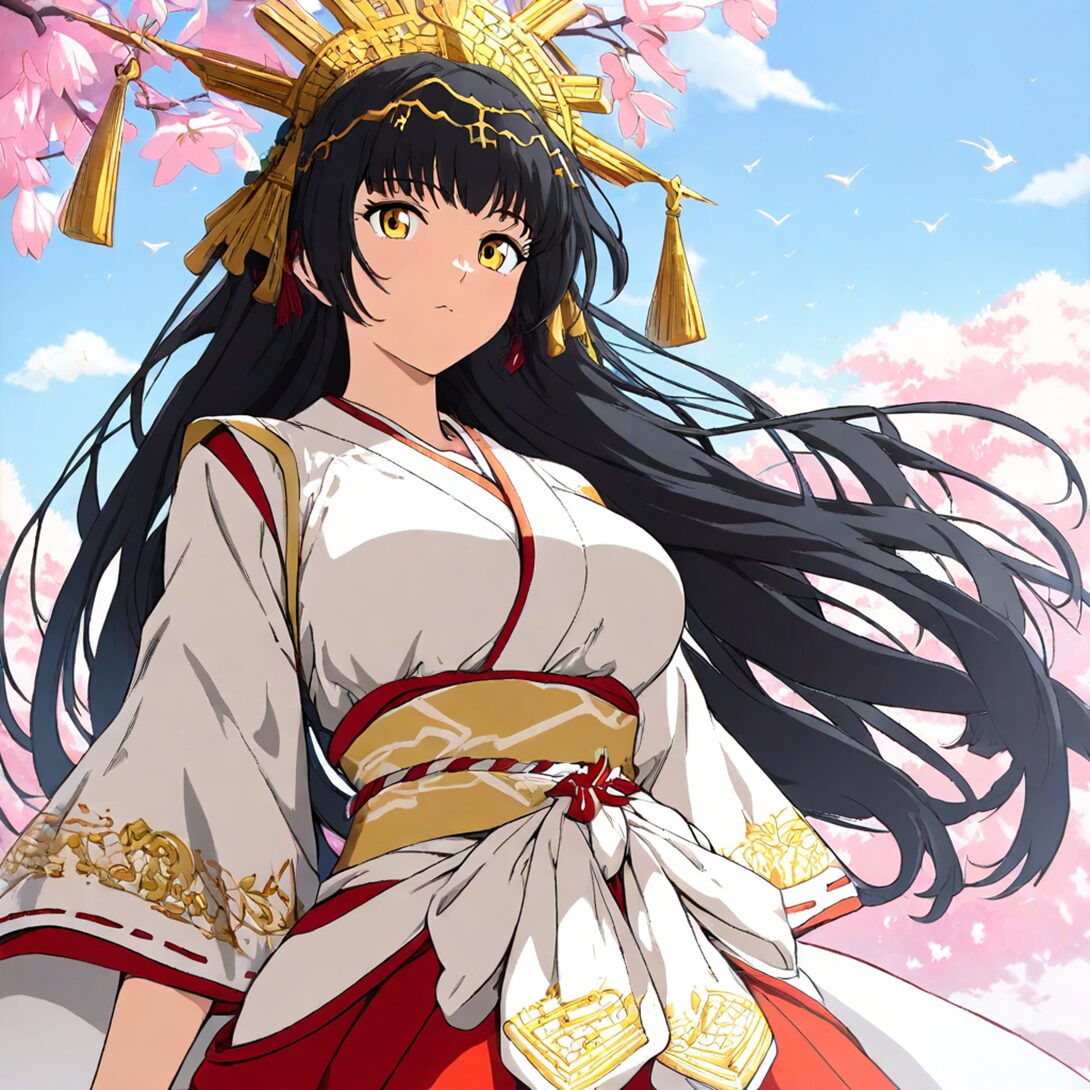
Susanoo is one of the three noble children born when Izanagi washed his nose, and he is known as a violent, storm-driven god. In Takamagahara he broke down the ridges between the rice paddies, scattered excrement through the palace, and flayed a piebald heavenly horse backwards before hurling it into the weaving hall, which got him banished.
Then, in exile in Izumo, he slew Yamata no Orochi, and afterwards became lord of Ne no Katasu Kuni, where he was the one setting trials for Okuninushi. I put Susanoo at the top because he is essentially the only god in Japanese mythology the sources explicitly describe as having defeated a genuinely formidable enemy.
For the details, see the article below.
Famous Gods and Heroes Who Did Not Make the Ranking
Japanese mythology has a huge cast of gods and heroes who sound powerful, but read the Kiki closely and you find that in a great many cases no scene of them exercising that power is written down at all, or the opponent they fought was human.
The overall ranking uses one-on-one strength at peak condition as its yardstick, so those figures could not be placed in the TOP 100. They were not cut for being obscure, though, so let me go through them with the reasoning attached.
Yamato Takeru
Ask for Japan’s greatest hero and the first name out of anyone’s mouth is Yamato Takeru (Ousu no Mikoto). He dressed as a woman to slip into a banquet and kill Kumaso Takeru, feigned friendship with Izumo Takeru while swapping his sword for a wooden one before cutting him down, and during his eastern campaign used Kusanagi no Tsurugi to mow down the grass and escape a wildfire.
The reason he still did not make the overall ranking is that every opponent this hero defeated was a human being. Kumaso Takeru and Izumo Takeru were both chieftains of human clans, and he never single-handedly overwhelmed an army or struck down anything beyond human. The one time he did challenge something with divinity — the god of Mount Ibuki — he underestimated it, was drenched in freezing rain by a mountain god in the form of a white boar, weakened, and died at Nobono.
As a tragic hero his standing is as high as anything in Japanese mythology, but by the yardstick of strength he simply could not reach.
Okuninushi and Takeminakata
Okuninushi is also among the most recognised names in Japanese mythology, but this god’s episodes are almost all about wit, the goodwill of others, and being pulled through by the people around him.
He was killed twice by the eighty gods, and resurrected each time through the power of his mother and other deities. The trials Susanoo set him in Ne no Katasu Kuni — the chamber of snakes, the wildfire — he survived with the help of Suseribime and a mouse. And when the time came to cede the land, he never fought at all: he left the decision to his sons and withdrew.
The only one of those sons who resisted was Takeminakata, and he had his arm crushed and was thrown by Takemikazuchi, fleeing as far as Suwa before surrendering. He is enormously well known as the enshrined deity of Suwa Taisha, yet the only combat description that survives in the myths is a record of a one-sided defeat, which makes him very hard to place.
Izanagi and Izanami
These two are the literal root of everything, the pair who gave birth to the land of Japan and its myriad gods. On standing alone, nobody would object to placing them at the very top of Japanese mythology.
There are descriptions that come close to combat: Izanagi struck down his own child Kagutsuchi with the Totsuka no Tsurugi, and while fleeing Yomi he was pursued by the Yomotsu-shikome, the thunder gods, and fifteen hundred warriors of Yomi, driving them back by hurling three peaches.
That said, the Kagutsuchi episode was entirely one-sided against a newborn, and the Yomi scene is not a victory in a fight but an escape, sealed off with the Chibiki no Iwa. Their standing as creator deities is unmatched, but there is very little material for judging how strong they would actually be one-on-one.
Tsukuyomi
Tsukuyomi is one of the three noble children alongside Amaterasu and Susanoo, which puts him firmly in the top class by position.
The problem is that the Kojiki says essentially nothing about him beyond the scene where he is ordered to rule the realm of night. One variant in the Nihon Shoki has him kill Ukemochi no Kami in anger after she produced food from her mouth to host him, and that incident is said to be why he and Amaterasu fell out and day and night became separate.
With only that much on record, there is simply no way to evaluate his strength.
Ame-no-Minakanushi and Ame-no-Tajikarao
Ame-no-Minakanushi is the first of the three creator deities to appear at the separation of heaven and earth, which makes him the highest divine rank in Japanese mythology. And yet the Kiki say only that “he became a solitary god and hid his body”, after which he never appears again.
Ame-no-Tajikarao is the god of immense strength who wrenched open the heavenly rock cave and pulled Amaterasu out, with traditions claiming the door he threw became Mount Togakushi in Shinano. But while the feats of strength are described, there is no opponent he ever fought, so there is nothing to compare him against.
Beyond those two, the same reasoning excludes Futsunushi (the lead figure in the Nihon Shoki’s version of the ceding of the land, cut because his episodes duplicate Takemikazuchi’s), Sukunabikona (who built the country but has no combat descriptions), and Emperor Jimmu (whose opponents in the eastern campaign were all human, and who was aided by Futsunomitama and the Yatagarasu).
Summary
This ranking takes the overall list covering every mythology, religion and legend, and narrows the focus to Japanese mythology alone.
Japanese mythology has a distinctive shape: there are enormous numbers of impressive gods, and vanishingly few who are recorded as having fought and won. In the end only four could be ranked — Susanoo, Amaterasu, Yamata no Orochi and Takemikazuchi.
I think the reason is that the Kiki function heavily as histories explaining the origin of royal authority, and depicting battles between gods was never their purpose. A total war like Ragnarok or the Titanomachy leaves behind a mountain of records about which god beat which, and Japanese mythology just does not have that.
The top of the overall ranking is also dominated by gods who manipulate concepts like time and space themselves, and the figure who ought to occupy that slot in Japanese mythology, Ame-no-Minakanushi, hides himself away without doing anything. That is another reason nothing here breaks into the upper reaches.
None of which is to say Japanese mythology is lesser. It is not a mythology about conflict; it is a mythology about how the land came to be and who ended up governing it. As the phrase “eight million gods” suggests, it is also structured so that power never concentrates in a single absolute being.
There are still plenty of gods I could not fit in this time, so if I find the time I plan to expand the ranking by adding to it.
I am also thinking of building separate within-mythology rankings for the other traditions, so please take a look if that sounds interesting.
Other Rankings
Purchase the Book Here

Also popular with readers
📚 Series: Power Rankings by Mythology (3/7)