Thank you for visiting. This article is the third installment in a series explaining the original texts of Hindu mythology.
This time, based on the original texts “the Puranas,” which richly convey the stories of the gods, I explain the major gods and creation myths of Hinduism.
For an overview map of Hindu mythology’s original texts as a whole, please see this summary article.
What Are the Puranas?
“Purana” means “old story,” and the Puranas are a body of story-centered scriptures compiled to spread teaching to the people through the stories of the gods, as opposed to the difficult scriptures like the Vedas. Many of the stories we picture as “Hindu mythology” derive from these Puranas.
Whereas the Vedas and Upanishads (Articles 1, 2) were difficult scriptures taken to be “Shruti (revelation)” granted from the divine, the Puranas are classified as “Smriti (tradition)” handed down by sages. As stories anyone could enjoy regardless of class or sex, they played a great role in spreading the faith of devotion (bhakti) to the gods among the people.
The 18 Great Puranas
There are said to be “18 great Puranas (Mahapuranas),” each telling, centered on a particular god, from the creation of the world to genealogies and the deeds of the gods. They divide broadly into three lineages, by which god is taken as the supreme.
| Lineage | Central god | Representative Purana |
|---|---|---|
| Vaishnavism | The preserver Vishnu | Vishnu Purana, Bhagavata Purana |
| Shaivism | The destroyer Shiva | Shiva Purana, Linga Purana |
| Brahmanism | The creator Brahma | Brahma Purana, etc. |
Among them, the “Bhagavata Purana,” richly conveying the story of Vishnu’s avatar Krishna, was especially beloved and had an immense influence on Hindu faith. That, for the same event, “who is greatest, Vishnu or Shiva,” changes depending on which Purana — that the ranking of the gods differs by the storyteller’s standpoint — is also an interesting thing about the Puranas.
The Trimurti
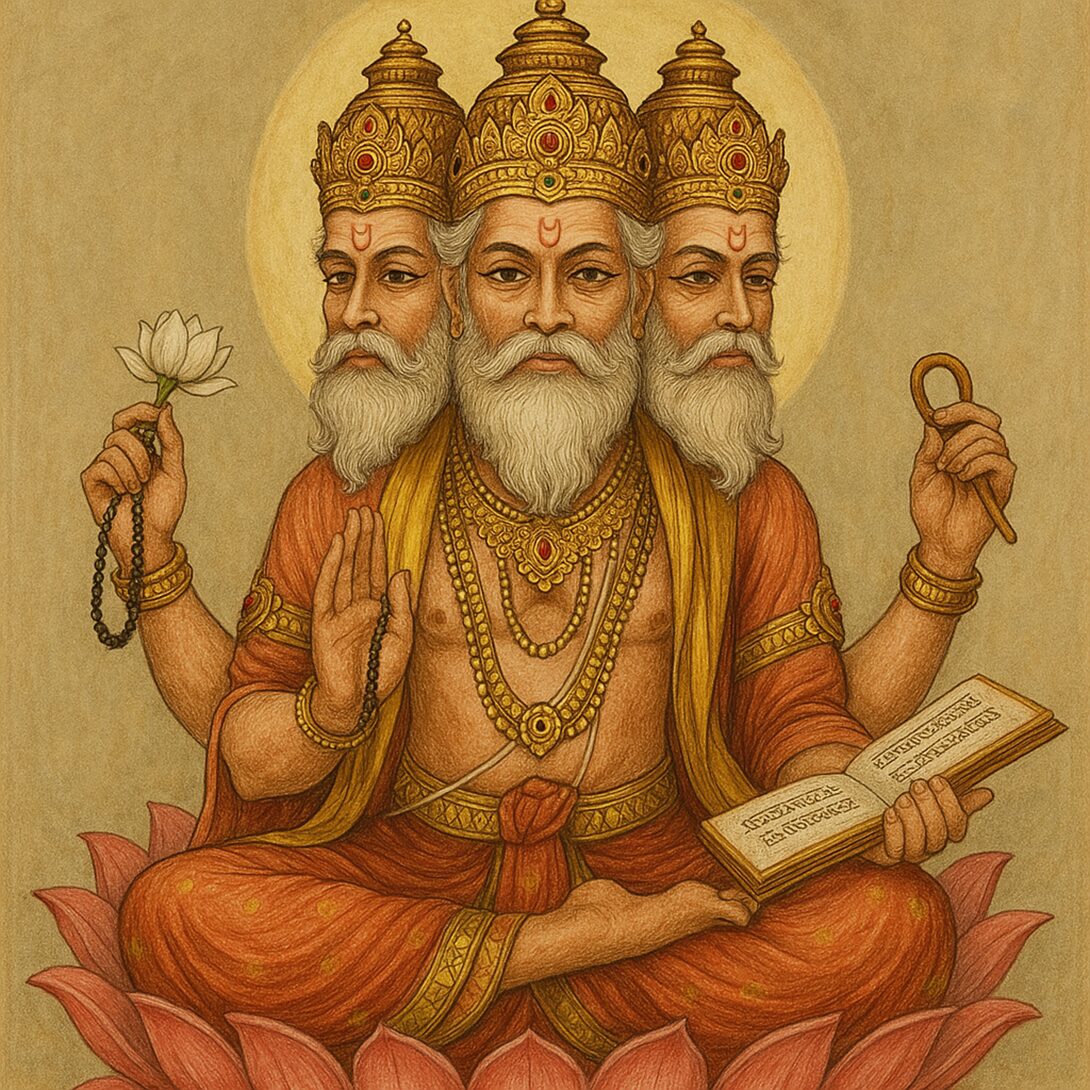
The center of the Purana world is the “Trimurti (the three forms),” governing the three workings of the cosmos.
- Brahma (the creator): The god who creates the world. He has four faces and is said to have been born on a lotus flower growing from Vishnu’s navel. But perhaps because his role of creation is finished, he is now out of the center of faith, with very few dedicated temples.
- Vishnu (the preserver): The god who guards the order of the world. He reclines on the great serpent “Shesha” floating on the cosmic ocean; his consort is the goddess of wealth and fortune, “Lakshmi.” He appears in various forms (avatars) whenever the world falls into crisis (the avatars are explained in detail in Article 4).
- Shiva (the destroyer): The god who destroys the world and leads to the next creation. He has a “third eye” on his forehead, which when opened burns everything up. Depicted as an ascetic sunk in deep meditation, he is worshipped as the cosmic dance “Nataraja” and as the “linga,” shaped as a phallus.
“Destruction” may sound terrible, but in Hinduism destruction is the premise of a new creation, and Shiva is one of the most devoutly worshipped gods.
The Churning of the Ocean of Milk
Even among the myths the Puranas convey, especially grand is the “Churning of the Ocean of Milk (Samudra Manthana).”
The gods (devas) and the demons (asuras), to obtain the elixir of immortality “amrita,” decided to cooperate to churn the “ocean of milk.” Using the giant “Mount Mandara” as the churning rod and the great serpent “Vasuki” as the rope wound around the mountain, the gods and demons pulled from each end and churned the sea. At this time, Vishnu took the form of a turtle (Kurma) and supported the sinking mountain from below.
After a long churning, treasures appeared from the sea one after another.
- First, the world-destroying deadly poison “Halahala” gushed out. Shiva drank it up to save the world, but his throat was dyed blue and he came to be called the “blue-throated god (Nilakantha).”
- The goddess Lakshmi, the wish-fulfilling cow, the heavenly horse and elephant, and many other treasures were born.
- Finally, the physician-god Dhanvantari appeared holding the jar of the long-awaited elixir, “amrita.”
The gods and demons contend over the amrita, but Vishnu disguised himself as the peerless beauty “Mohini” to beguile the demons and let only the gods drink the elixir. At this time, the demon “Rahu” disguised himself as a god to try to steal a drink, and his head was cut off. The deathless head-only Rahu swallows the sun and moon out of resentment — this is taken as the origin of solar and lunar eclipses.
The Power of the Goddess — Durga and Kali
Alongside the three gods (Brahma, Vishnu, Shiva), another great faith the Puranas convey is goddess (Devi) worship. This is a current that grasps the root power that moves the cosmos, “Shakti,” as a feminine principle and reveres the goddess herself as the supreme deity, and it still boasts deep popularity in India.
Its symbol is the story of the war goddess “Durga.” Once, a mighty demon in the form of a buffalo, “Mahisha,” gained the boon of “being unkillable by any male god,” defeated the gods, and threatened the world. Learning that no male god could defeat him, the gods gathered their powers (weapons) into one point and produced from it Durga, a beautiful yet valiant goddess holding every weapon in her ten arms and riding a lion. After a tremendous battle, Durga finally struck down Mahisha. India’s largest festival, “Durga Puja,” celebrates this victory.
Further, when Durga’s rage reaches its peak, the one said to appear from her forehead is the black goddess “Kali.” With her tongue lolling out, a necklace of severed heads, dancing wildly on the battlefield, her figure is fearsome, but she is deeply revered as a being who destroys evil and protects her devotees like a mother. In the figures of these goddesses, who combine destruction and compassion, the Hindu worldview that embraces opposites whole appears well.
The Time of the Cosmos — the Four Yugas and the Cycle of the World
Characteristic of the Puranas’ worldview is a grand scale of time that is dizzying. In Hinduism, the world is thought to be not a one-time thing but to repeat creation and destruction eternally.
One cycle of the world divides into “four yugas (ages),” and as the ages advance, people’s virtue declines.
| Yuga | Character |
|---|---|
| Satya Yuga | The golden age. People are highly virtuous and live by truth |
| Treta Yuga | Virtue reduced to three-quarters. The age of Rama |
| Dvapara Yuga | Virtue down to half. The age of Krishna |
| Kali Yuga | The dark age of strife and corruption, with virtue down to a quarter (= the present) |
A long cycle combining these four yugas is repeated many times, and a vast collection of them is a “kalpa,” equivalent to a single “day” of the creator god Brahma. When Brahma’s day ends, the world is once dissolved by a “pralaya (great destruction),” and when his night ends, creation begins again. The idea that “the present is the most corrupt Kali Yuga, at the end of which Vishnu’s avatar Kalki appears to renew the world” connects to Vishnu’s avatars (Article 4) too.
Shiva and His Family
The stories around Shiva are also a great appeal of the Puranas. Shiva is a being combining extremes — at once an ascetic sunk in deep meditation and a dynamic god who creates and destroys the cosmos by dance.
His representative form is “Nataraja (the king of dance).” Treading a demon underfoot, dancing with a ring-like flame on his back, his “tandava (fierce dance)” is taken to embody all of the cosmos’s creation, preservation, destruction, and salvation in a single dance, and it is an image representative of Hindu art.
The origin of Shiva being worshipped as the “linga (a pillar shaped as a phallus)” is also told. When Brahma and Vishnu contended over “which is greater,” a limitless pillar of flame suddenly appeared. When the two gods searched for its top and bottom, they found no end however far they went, and that pillar was the manifestation of Shiva. By this, it is said, Shiva was shown to be a being surpassing the two gods.
Further, the anecdote of Shiva instantly burning up with the flame from his third eye the love god “Kama,” who shot an arrow of love at Shiva immersed in asceticism, is also famous. Shiva’s consort is the goddess “Parvati,” who combines gentleness and fierceness.
Famous as their child is the elephant-headed god “Ganesha.” His form has this anecdote. Ganesha, created by Parvati as a guard to protect herself, stood at the entrance protecting his bathing mother as commanded and would not let even the returning Shiva pass. Not knowing it was his own child, Shiva angrily cut off his head. For his grieving wife, Shiva attached the head of the first creature he met (an elephant) to Ganesha and revived him. Ganesha, as the “god who removes obstacles,” is still the most widely prayed-to popular god at the start of any undertaking.
Ganesha has another famous anecdote. When he competed with his younger brother, the war god “Karttikeya (Skanda),” over who would “go around the world and gain a reward,” while the swift-footed brother raced around the world, the clever Ganesha said “My parents are my whole world” and circled around his father Shiva and mother Parvati, winning splendidly. The brother Karttikeya is a six-faced war god riding a peacock, a mighty war god born to slay the demon king Taraka, who tormented the gods.
Also famous is the myth that when the sacred river “Ganges (Ganga)” descended from heaven to earth, Shiva caught it with his own hair and softened the force so its torrent would not shatter the earth.
The Goddesses (Devi) — the Sacred Power That Supports the Gods
In Hinduism, faith in the goddess (Devi / Shakti = sacred power) is also very deep, and she often shows power surpassing even the gods. The Trimurti gods each have a goddess consort.
| Goddess | Consort | Domain |
|---|---|---|
| Saraswati | Brahma | Learning, art, music, wisdom |
| Lakshmi | Vishnu | Wealth, fortune, prosperity |
| Parvati | Shiva | Daughter of the mountain. Love, motherhood, and power |
Shiva’s first consort was “Sati.” In protest at her father insulting Shiva, Sati threw herself into the sacred fire and ended her life. The grieving Shiva, holding her corpse, wandered the world dancing wildly, so the world nearly perished. Vishnu cut Sati’s body into pieces and dropped them across the land, and the places where the fragments fell became sacred sites worshipping the goddess, the “Shakti Pithas.” Sati was later reborn as Parvati and, by severe asceticism (tapas), won the heart of the meditating Shiva and was united with him again.
The War Goddesses — Durga and Kali
Representative is the war goddess “Durga.” Against the buffalo demon king “Mahishasura,” whom none of the gods could defeat, the gods gathered their powers and produced Durga. Holding the gods’ weapons in her ten arms, riding a lion (or tiger), she struck down Mahishasura after a fierce battle.
The most ferocious form that Durga takes when her rage reaches its peak is “Kali.” With black skin, a red tongue lolling out, and a necklace of severed heads, in her fearsome form she destroys evil. There is also the anecdote that when Kali, losing herself in battle, rampaged and was about to trample and break the world, her husband Shiva laid himself down at her feet to calm her.
How Strong Are the Characters Here? — The Power Ranking
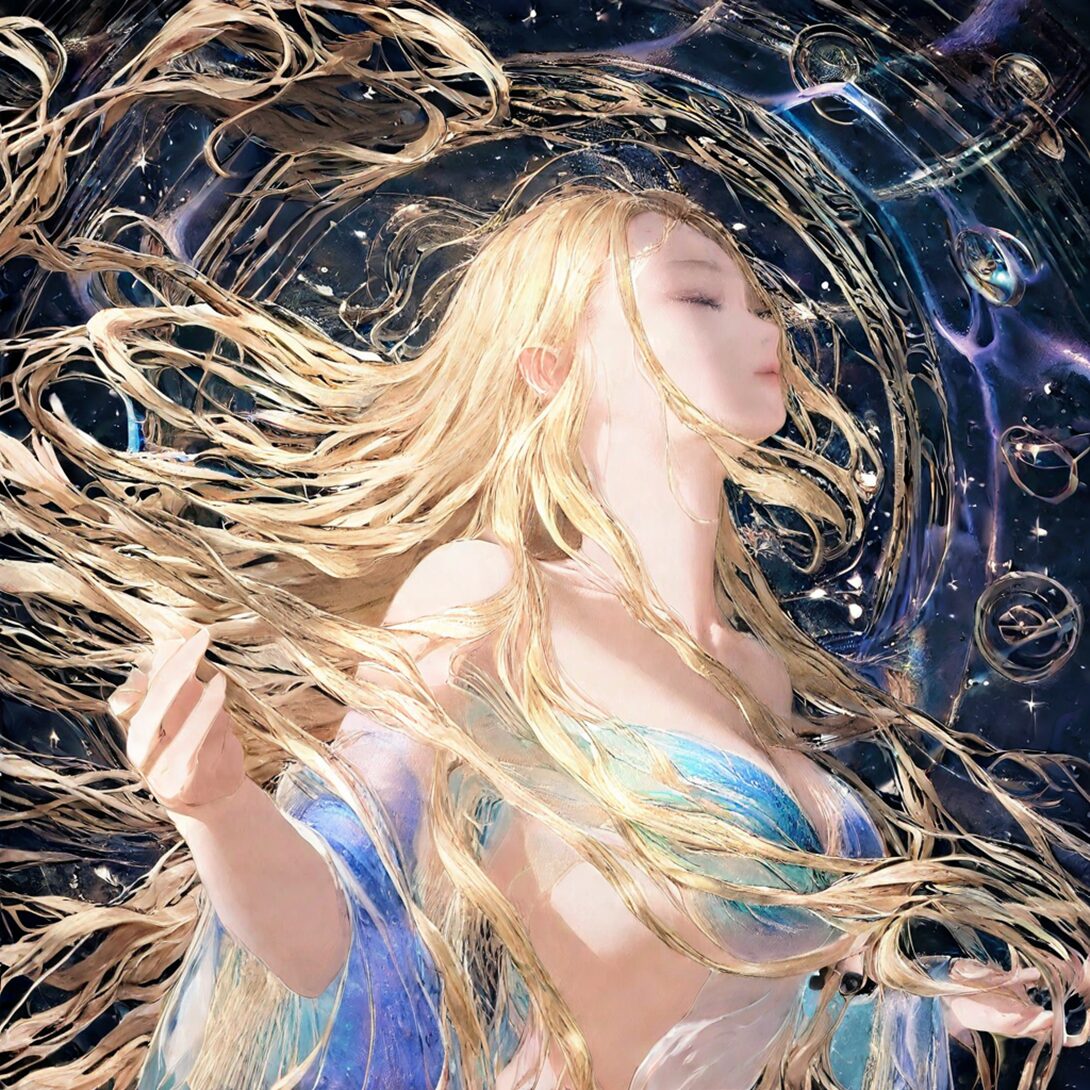
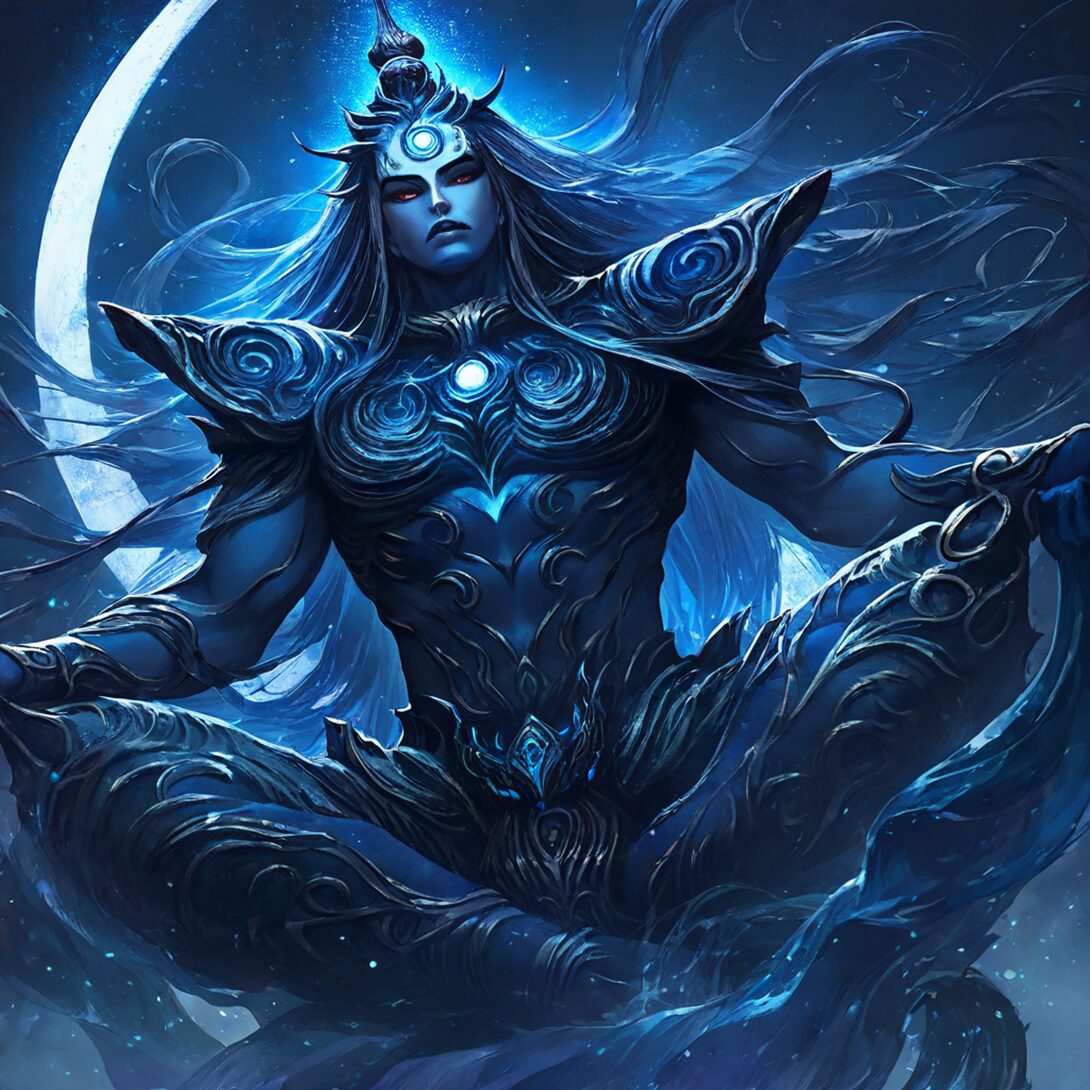
The gods and heroes appearing in this article are also introduced in strength order in the “Mythology, Religion & Legend Power Ranking.” Enjoy their exploits in the original text alongside their “strength.”
To Learn More
Conclusion
In this article, based on the original texts “the Puranas,” I explained the major gods and creation myths of Hinduism. How was it?
The “Trimurti” governing creation, preservation, and destruction; the “churning of the ocean of milk” over the elixir of immortality; and Shiva’s family and the valiant goddesses — I hope you can see that the Puranas form the rich mythic world of Hinduism.
In the next article (Article 4), I will explain, one by one, the “ten avatars of Vishnu,” who appear in various forms at times of world crisis.
I hope you’ll read the next article too.
Also popular with readers
📚 Series: The Original Texts of Hindu Mythology (4/8)