Thank you for visiting. This article is the second installment in a series explaining the original texts of Japanese mythology.
Continuing in the order of the original text, the Kojiki, this time we look in detail at the second half of the upper volume (the age of gods) — the stories of Amaterasu, Susanoo, and Okuninushi, where the most famous episodes of Japanese mythology are gathered.
For an overview map of Japanese mythology’s original texts as a whole, please see this summary article.
Let me show the flow of the story traced in this second installment in a diagram. There is a broad flow in which the stage moves from the heavens (Takamagahara) to the earth (Izumo), and finally heaven and earth are connected again.
Susanoo’s Exile, and the Oath (Ukei)
Last time (Article 1), the storm god “Susanoo” was commanded by his father Izanagi to rule the sea-plain. But he did not take up his task and only wept and wailed, “I want to go to the land where my dead mother Izanami is.” Because his weeping was so excessive that the mountains and seas withered, the angry Izanagi banished Susanoo.
Before going to his mother’s land, Susanoo ascends to the heavenly Takamagahara to bid farewell to his elder sister, the sun goddess “Amaterasu.”
But Amaterasu, wary that her brother had come to attack, meets him armed. To prove his innocence, Susanoo proposes a divination called the “oath (ukei).” This was to produce gods from each other’s possessions and divine right and wrong from the result.
In this oath, from the breath Amaterasu blew out after chewing Susanoo’s sword were born the three goddesses of Munakata (Takiribime, Ichikishimahime, Takitsuhime), and from the breath Susanoo blew out after chewing Amaterasu’s magatama (curved jewels) were born five male gods. Because the gods born are taken to be “the children of the owner of the possession,” the three goddesses born from Susanoo’s sword were deemed Susanoo’s children, and the five male gods born from Amaterasu’s jewels Amaterasu’s children. Susanoo declared victory, saying, “That pure goddesses were born from my possessions is proof that my heart is innocent.”
The gods born here are deeply involved in later stories. The three goddesses are enshrined as guardians of maritime travel at the present-day Munakata Taisha (Fukuoka). And the foremost of the five male gods, “Ame-no-Oshihomimi,” is the god who later becomes the father of the heavenly grandchild Ninigi. In other words, this oath scene is also a genealogically crucial passage, in which the ancestor of the imperial house that comes to rule the earth was born.
Ama-no-Iwato — the World Where the Sun Hid
Thinking his innocence proven, Susanoo, triumphant, runs riot to the utmost in Takamagahara. Breaking the ridges of the rice paddies, scattering excrement in the sacred hall, he finally caused a great incident, throwing a flayed horse into the sacred weaving hut, startling and killing a weaving maiden.
Amaterasu, deeply pained by her brother’s repeated outrages, finally shut herself in a rock cave, the “Ama-no-Iwato (heavenly rock cave),” and firmly closed its entrance.
With the sun goddess hidden, both Takamagahara and the earth fell into total darkness, and every kind of disaster gushed out at once.
The eight million gods, at a loss, gathered on the bank of the heavenly river to devise a plan. And they carried out the following elaborate scheme.
- Gather the long-crowing birds (roosters) of the eternal world and have them crow all at once
- Have the smith god and the jewel-making god make eight-span magatama and the “Yata-no-Kagami (eight-span mirror),” later one of the Three Sacred Treasures, and hang them on a sakaki tree as decoration
- Have the divination god “Futodama” hold up the sakaki, and the prayer god “Ame-no-Koyane” chant a solemn norito (prayer)
- Hide the strong god “Tajikarao” beside the rock door
- Have the goddess “Ame-no-Uzume” stamp on an overturned tub, bare her breasts, fall into a trance, and dance comically
The mirror, magatama, prayer, and sakaki the gods used here are all taken as prototypes of present-day Shinto ritual, showing that the original text tells the very origin of the festival. At Ame-no-Uzume’s dance, the gods erupt into great laughter. Wondering, “The world should be dark because I am hidden, so why does everyone seem so merry?” Amaterasu opened the rock door slightly and peered out — at that very moment.
The gods at once held out the mirror, saying, “A god more noble than you has appeared.” Leaning forward, thinking her own reflection in the mirror was that noble god, Amaterasu’s hand was firmly grasped by the hidden Tajikarao, who pulled her out all at once. Futodama promptly stretched a shimenawa (sacred rope; the shiri-kume-nawa) across the cave’s entrance and announced, “You can no longer return inside.” The shimenawa stretched at shrines is said to derive from this scene.
And so light returned to the world. Susanoo, the cause of the incident, had his beard and nails cut and was made to atone with many goods as a fine, and was then banished from Takamagahara. There is also a tradition born in later ages that, named for the strength of Tajikarao, who hurled the rock door away here, the place where that rock fell became Togakushi in Shinano.
The Slaying of Yamata-no-Orochi
Driven from Takamagahara, Susanoo descends to the bank of the “Hi River” in the land of Izumo. Seeing chopsticks float down from upstream, he learns there are people upstream, and there he meets an old couple weeping — “Ashinazuchi” (who strokes the feet) and “Tenazuchi” (who strokes the hands) — and their daughter.
Asking the reason, he learns that a giant serpent, “Yamata-no-Orochi,” with eight heads and eight tails, eyes red like winter cherries, and trees growing thick on its body, comes each year to eat one daughter, and that the last remaining daughter, “Kushinadahime,” is now about to be eaten.
Susanoo undertakes to defeat it on condition of taking Kushinadahime as his wife. And first, he transforms Kushinadahime by his divine power into a comb called a “yutsutsumagushi” and sticks it in his own hair, facing the battle while protecting her. That the name “Kushinada” connects to “comb (kushi)” also derives from this scene. The plan he laid was rich in cunning.
(1) Make eight gates, placing at each a sake-vat filled with the strong sake “yashiori-no-sake” → (2) the Orochi appears, thrusts its eight heads into each vat to drink the sake, gets drunk, and falls asleep → (3) in that gap, Susanoo cuts it to pieces with his sword.
The plan succeeded, and Susanoo defeated the Orochi. And when he cut its tail, a fine sword came out from within. This is the “Kusanagi sword,” later one of the Three Sacred Treasures. Susanoo presented this sword to his sister Amaterasu as an apology.
United with Kushinadahime, Susanoo came to a place called Suga in Izumo, and because he felt refreshed (suga-sugashi) there, he built a palace and lived there. The poem he composed at this time, seeing the rising clouds, was “Yakumo tatsu / Izumo yaegaki / tsumagomi ni / yaegaki tsukuru / sono yaegaki o” (Clouds rise in layers over Izumo — to dwell with my wife, I build a many-layered fence; ah, that many-layered fence). This is held to be the oldest waka (a 31-syllable tanka) in Japan, and it is handed down that the tradition of waka began with this poem of Susanoo. That the once-violent storm god becomes, on earth, a hero who protects his wife and even produces poetry — that vivid contrast is also a highlight of this story.
The White Hare of Inaba and Okuninushi
A descendant of Susanoo (said to be his sixth-generation grandchild) is “Okuninushi.” He overcomes many trials and becomes the lord of a country centered on Izumo. In the original text, this god is called by many names depending on the scene — Ōnamuchi, Ashiharashikoo, Yachihoko, Utsushikunitama, and so on. This is thought to reflect the history of gods separately worshipped in various regions being integrated under the great Izumo god Okuninushi.
Famous is the story of the “White Hare of Inaba.” Okuninushi had many spiteful elder brothers (the eighty gods). On the way to court a beautiful princess, the brothers meet a hare weeping, its skin flayed off. The brothers teach it a false cure, “Bathe in seawater and stand in the wind,” and the hare suffers all the more.
Okuninushi, kind-hearted, passing by last, taught the correct cure, “Wash your body in fresh water and rest on the pollen of the cattail,” and helped the hare. The hare then prophesied, “The one who will marry the princess is you.”
The Trials of the Land of Roots
When, as prophesied, Okuninushi won the princess’s heart, his jealous brothers killed Okuninushi twice — by making him embrace a heated boulder, and by catching him in a tree. But each time, he was brought back to life by the help of the mother goddess.
To escape his brothers, Okuninushi heads to the underground “land of roots (Ne-no-kuni),” where his ancestor Susanoo is. There he falls in love with Susanoo’s daughter “Suseribime,” but Susanoo will not acknowledge the son-in-law and sets harsh trials one after another.
- Makes him spend a night in a room writhing with snakes
- Makes him spend a night in a room writhing with centipedes and wasps
- Makes him search for an arrow shot into a field, then sets the field on fire
Okuninushi gets through all these trials by means of charms Suseribime gave him and the help of a mouse. Finally, taking advantage of the sleeping Susanoo, he flees back to the earth taking the treasures — the “living sword, living bow and arrows, and koto” — and Suseribime.
Susanoo, while pursuing, in the end acknowledges Okuninushi and encourages him, “With those treasures, defeat your brothers and build a fine country.” Returning to earth, Okuninushi defeats his brothers and sets about building the country in earnest.
At this time, from across the sea comes a very tiny god, “Sukunabikona,” riding a small boat made of a split gagaimo fruit and wearing the skin of a moth as clothing. Joining forces with this tiny god, said to be the child of Kamimusubi, Okuninushi spread to the people the methods of agriculture, medicine to cure illness, and techniques to drive off pests and beasts, and richly built up Ashihara-no-Nakatsukuni (the central land of reed plains = the earthly land). This is called the “land-making.”
Eventually, when Sukunabikona departs to the Tokoyo-no-kuni (eternal land) across the sea, Okuninushi is at a loss, “With whom shall I build the country from now on?” Then a god who came illuminating the sea announced, “If you enshrine me on Mount Miwa in Yamato, I will help build the country.” This is Ōmononushi, who dwells on Mount Miwa, also taken to be Okuninushi’s “saki-mitama and kushi-mitama” = his own alter ego. Thus the land-making of Izumo connects with the worship of Yamato too.
The Transfer of the Land — Earth to the Heavenly Gods
Watching from the heavenly Takamagahara as the earthly land flourished richly, Amaterasu thought, “That land should be ruled by my descendants.” And she sent messengers to negotiate for Okuninushi to hand over the land.
But the negotiation was difficult.
| Messenger | Result |
|---|---|
| Ame-no-Hohi | Submits to Okuninushi and does not report even after 3 years |
| Ame-no-Wakahiko | Marries Okuninushi’s daughter and does not return for 8 years; finally loses his life by the “returned arrow of heaven” |
| Takemikazuchi | A god of great valor. Sets his sword upside down on the waves and sits cross-legged on its tip to negotiate |
The end of the second messenger, “Ame-no-Wakahiko,” is striking. Suspicious that he had settled on earth and would not return, Takamagahara sent the pheasant “Nakime” to check. But Ame-no-Wakahiko shot this pheasant dead with the bow and arrow he had been granted. That arrow pierced the pheasant’s body and flew up to Takamagahara, and when a god threw it back, saying “If you have evil intent, let this arrow strike you,” the arrow pierced the chest of the sleeping Ame-no-Wakahiko and killed him. The saying “beware the returned arrow” was born from this.
And the last messenger sent, the war god “Takemikazuchi,” presses Okuninushi for the transfer of the land. Okuninushi answers that he will hear the opinions of his sons.
The eldest son, Kotoshironushi, readily agrees to the transfer. But the second son, “Takeminakata,” resists and challenges Takemikazuchi to a contest of strength. But when he grasps Takemikazuchi’s hand, that hand turns into an icicle and a sword, and conversely Takeminakata’s hand is crushed. The defeated Takeminakata flees to Suwa and vows to remain there.
Because his sons submitted, Okuninushi too finally consents to the transfer of the land. But as its condition, he asked, “Build me a palace so grand it reaches to heaven.” This is said to be the origin of the present-day “Izumo Taisha.”
And so the earthly land was handed over from the gods of Izumo (the earthly gods, kunitsukami) to the heavenly gods (amatsukami).
How Strong Are the Characters Here? — The Power Ranking
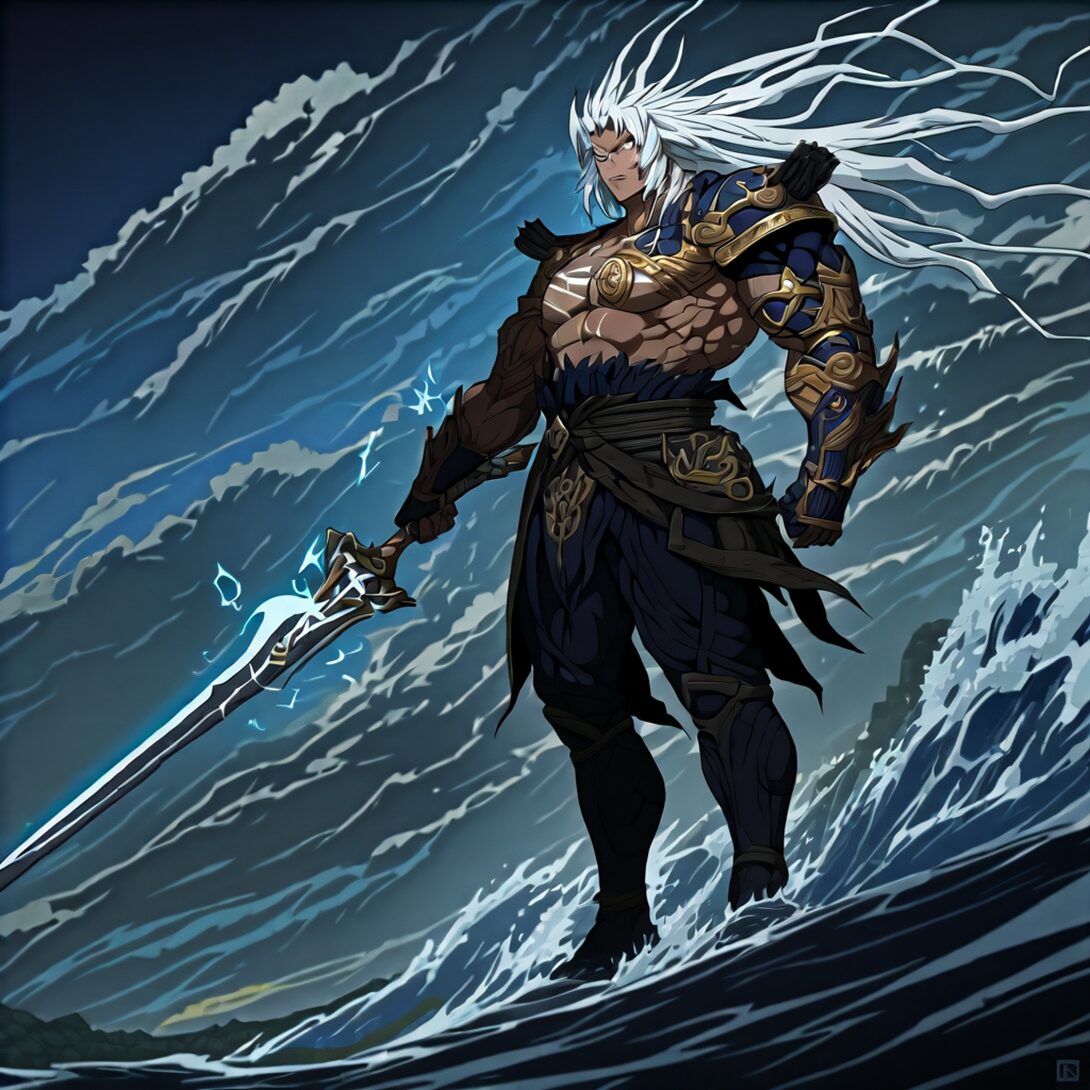
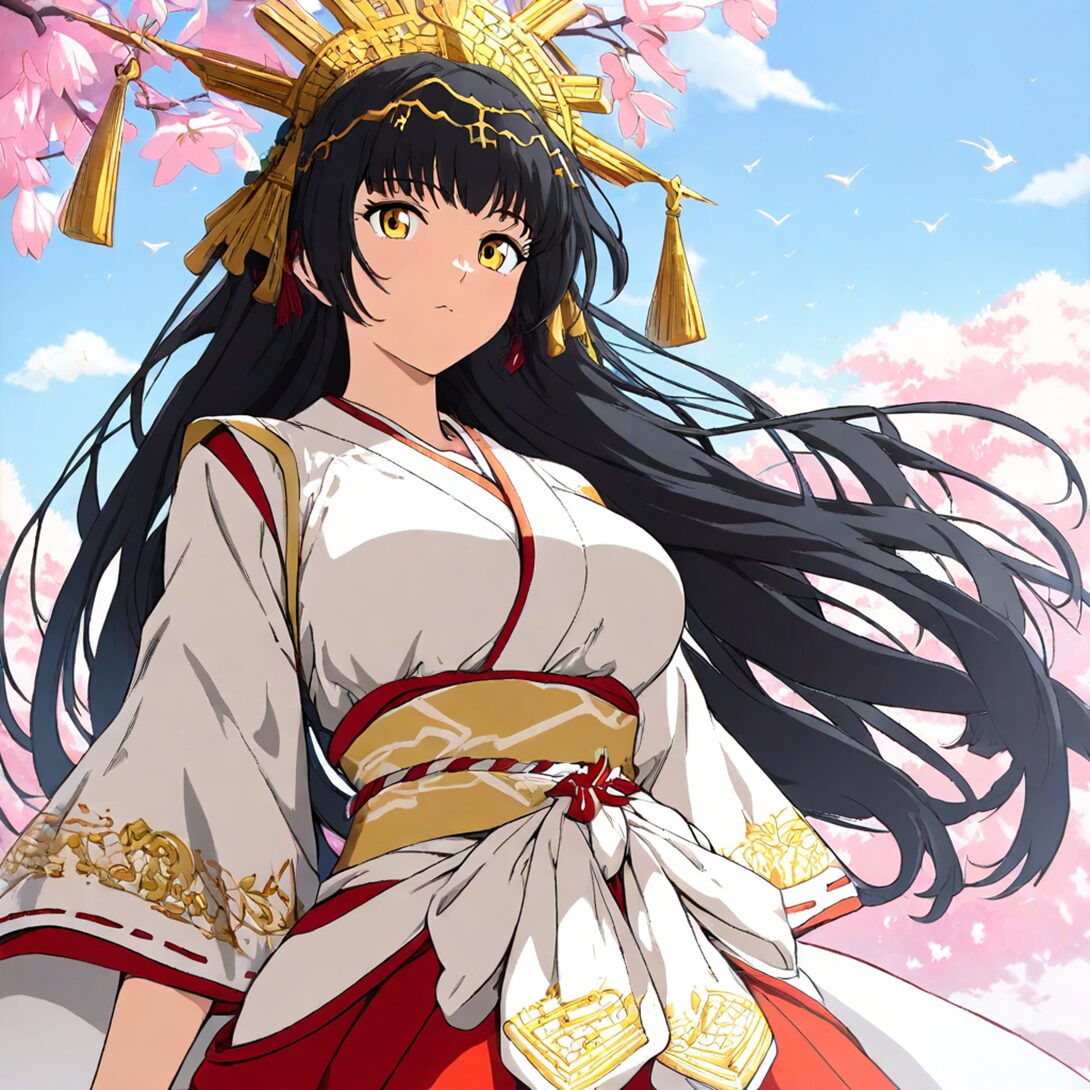
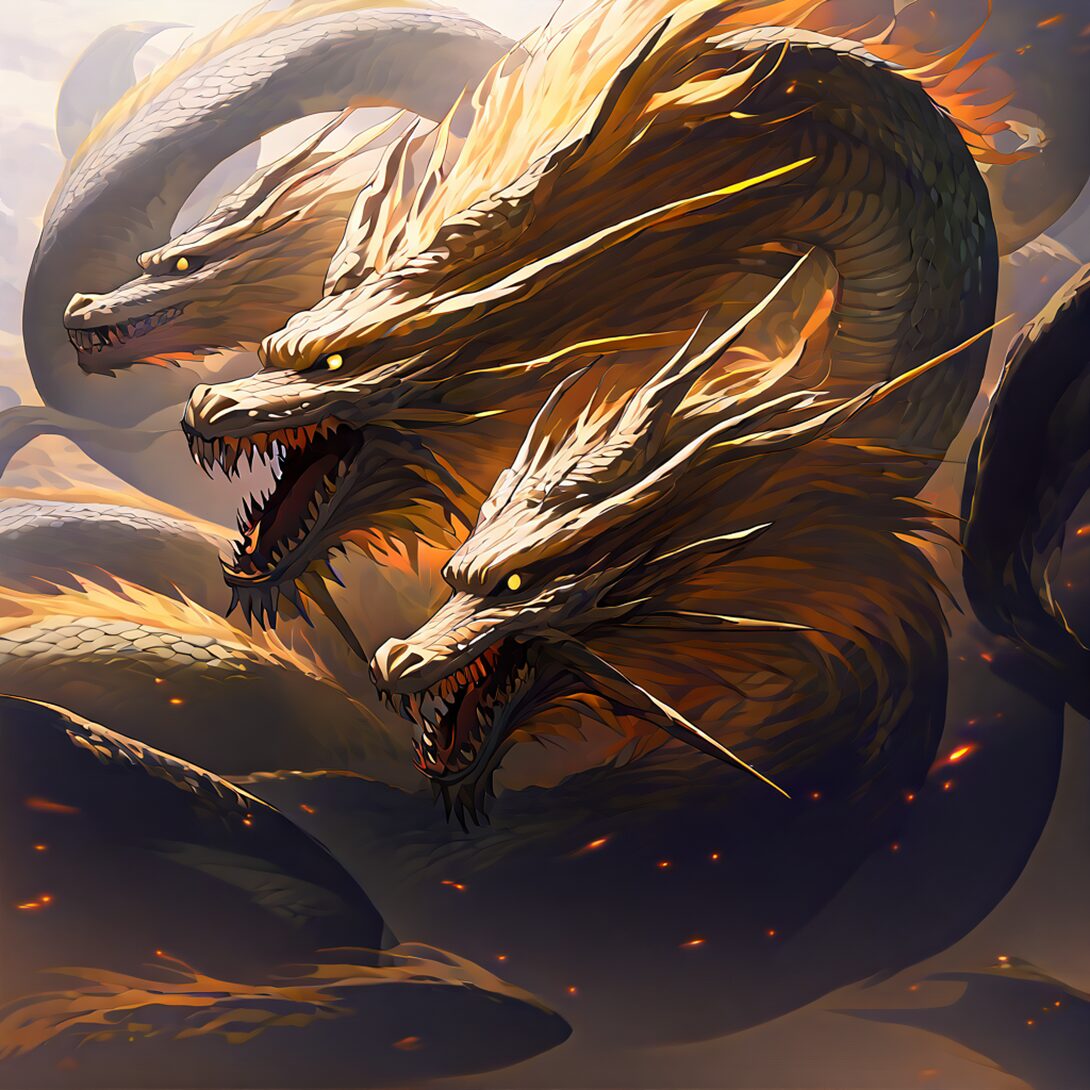
The gods and heroes appearing in this article are also introduced in strength order in the “Mythology, Religion & Legend Power Ranking.” Enjoy their exploits in the original text alongside their “strength.”
To Learn More
Conclusion
In this article, I explained in detail the myths set in Takamagahara and Izumo, from the Kojiki upper volume. How was it?
The “Ama-no-Iwato,” where the sun goddess hides; Susanoo’s “slaying of Yamata-no-Orochi”; Okuninushi’s “land-making,” overcoming many trials; and the “transfer of the land” — it was a part packed with the highlights of Japanese mythology.
Having gained the earth through the transfer of the land, the heavenly gods at last send their own descendants down to earth. In the next article (Article 3), I will explain from the “heavenly descent (Tenson kōrin)” to the founding by the first Emperor Jimmu.
I hope you’ll read the next article too.
Also popular with readers
📚 Series: The Original Texts of Japanese Mythology (3/6)