Thank you for visiting. This article is the third installment in a series explaining the original texts of Aztec mythology.
This time, I look at the diverse gods that color Aztec mythology, and the founding myth of the capital Tenochtitlan, which its guardian god Huitzilopochtli led. Another protagonist appears, alongside last time’s Quetzalcoatl.
The figures and birth myths of the gods are most detailed in the Sahagun-compiled “Florentine Codex,” and the founding myth is conveyed in the “Codex Mendoza” and the records of the Dominican friar Durán. In this article too, I explain while showing at key points which original text it relies on.
For an overview map of the original texts of Aztec mythology as a whole, please see this summary article.
The Major Aztec Gods
In Aztec mythology, many gods appear, governing the forces of nature and human activity. First, let us grasp the especially important gods.
Huitzilopochtli — the Aztec Guardian God
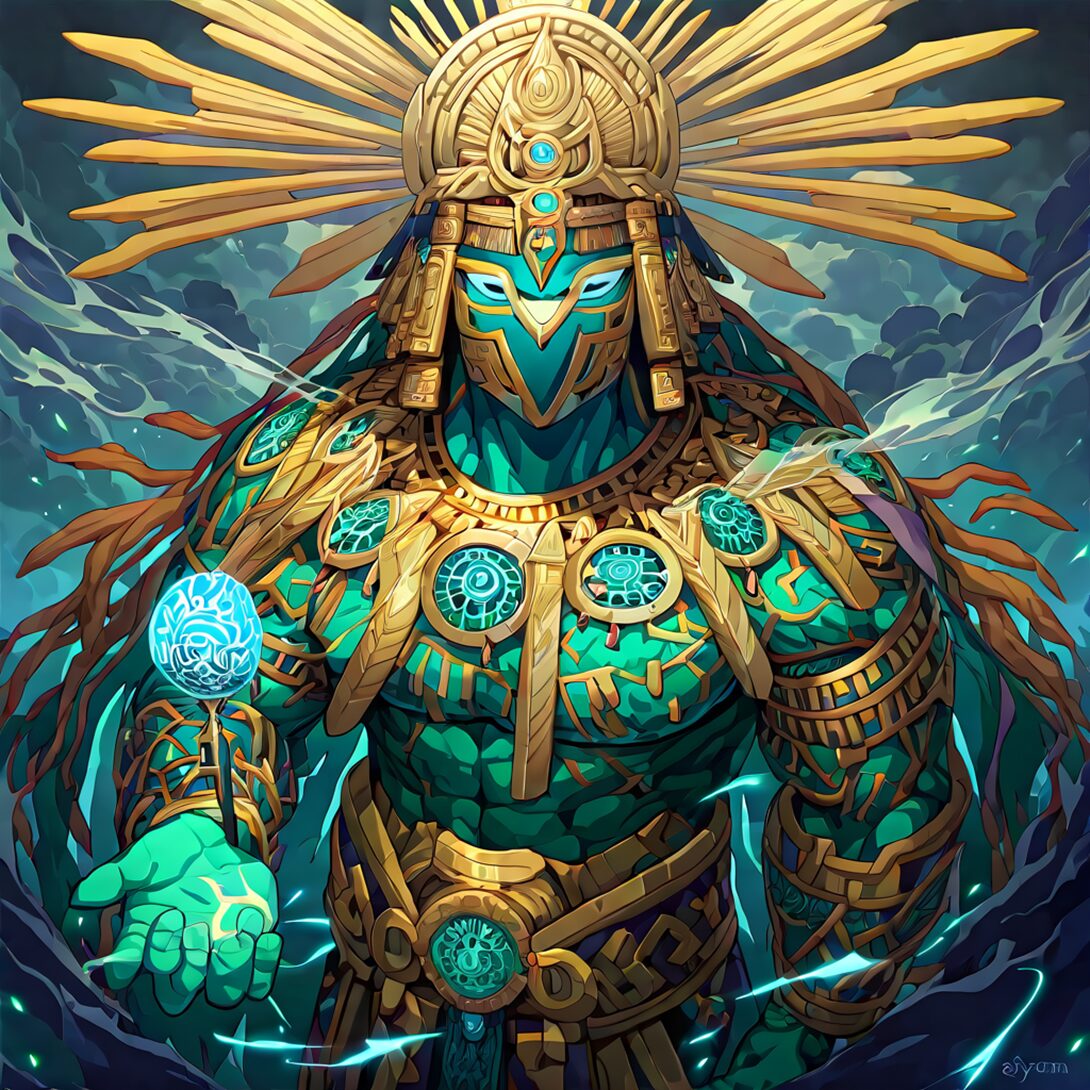
“Huitzilopochtli” is the god of sun and war, and the guardian god of the Aztec (Mexica) people. Whereas last time’s Quetzalcoatl is a god revered from old across all of Mesoamerica, Huitzilopochtli is a young and fierce guardian god unique to the Aztec people. His name means “the hummingbird of the south,” and it was believed that the souls of fallen warriors became hummingbirds and followed him.
The Birth Myth — the Battle of Coatepec
Huitzilopochtli’s birth myth is especially dramatic even within Aztec mythology, and is told in the Sahagun-compiled “Florentine Codex,” Book 3.
The mother earth goddess Coatlicue (“she who wears a skirt of serpents”), one day, tucked into her bosom a ball of feathers that fell from the sky, and by it became pregnant. But the sudden pregnancy of a mother who already had many children drew the children’s anger.
Her daughter, the moon goddess Coyolxauhqui, led the 400 brothers (the southern stars, the Centzon Huitznahua) and, saying “our mother has shamed us,” attacked up the sacred mountain Coatepec (the mountain of serpents) to kill the mother Coatlicue.
At the very moment the mother was about to be killed — Huitzilopochtli, who was in the womb, was born fully armed. With a weapon called the “Xiuhcoatl (fire serpent)” in hand, he struck down his attacking sister Coyolxauhqui. And he cut off his sister’s head and limbs and threw her body from the top of the mountain down. The dismembered body of his sister rolled down to the foot. Next, Huitzilopochtli defeated the 400 brothers one after another and scattered them in all directions.
This myth is held to depict, as a myth, that the sun (Huitzilopochtli) rises with the dawn, defeating the moon (Coyolxauhqui) and the countless stars (the 400 brothers). From the base of the Aztec great temple Templo Mayor, a giant disk stone depicting the dismembered Coyolxauhqui was unearthed, telling that this myth was at the center of ritual.
Tezcatlipoca — the Smoking Mirror
“Tezcatlipoca” is the god governing night, fate, magic, and strife, whose name means “smoking mirror.” Holding a magic mirror made of obsidian, with it he is held to see through everything in the world, and even into the depths of people’s hearts. He is also depicted with one foot lost, eaten by the earth monster.
Tezcatlipoca is a god who is all-powerful yet capricious and difficult. He may give humans wealth and glory, or capriciously take it away and bring ruin. As seen last time (Article 2), it was also he who ensnared the Toltec holy king Quetzalcoatl by scheme. In the creation myth of Article 1 too, while cooperating with Quetzalcoatl to create the earth, he is depicted as an eternal rival, destroying the world with him again and again over the throne of the sun. He can be said to be a god like fate itself, who cannot be neatly divided into good and evil.
Tlaloc — the God of Rain and Water
“Tlaloc” is the god governing rain, water, and the blessing of agriculture. He is depicted in a distinctive figure with goggling eyes (a goggle-like rim) and fangs.
For people living by agriculture, Tlaloc, who brings rain, was an important god deciding life and death. His faith is far older than the Aztecs and has long been revered across all of Mesoamerica. The paradise he rules, Tlalocan, is held to be a green and rich land of bliss where those who died in connection with water go (described later in Article 4). The great temple “Templo Mayor,” towering at the center of the Aztec capital Tenochtitlan, was a double temple dedicated to two gods, the war god Huitzilopochtli and the rain god Tlaloc. War (the sun) and agriculture (the rain) — these two were the very two wheels supporting the Aztec state.
Other Gods
In Aztec mythology, there are also other gods governing every aspect of life.
| God | What they govern |
|---|---|
| Xipe Totec | Spring, agriculture, rebirth. Represented with flayed skin, symbolizing the rebirth of a seed breaking its husk |
| Mictlantecuhtli | King of the land of the dead Mictlan. Rules the underworld with his wife Mictecacihuatl |
| Xochiquetzal | Goddess of flowers, love, beauty, and arts |
| Centeotl | God of maize. Embodies the people’s staple food |
| Tlazolteotl | Goddess of purification and fertility. Held to eat people’s sins and filth and cleanse them |
| Huehueteotl | The oldest fire god, called “the old god” |
These gods, dividing among themselves the forces of nature and human fate, formed the world of the Aztec people. That many gods hold together the opposing sides of mercy and terror, creation and destruction, is also a feature of Aztec mythology, which values dualism.
Especially distinctive is “Xolotl,” held to be the twin brother of Quetzalcoatl. He is depicted in a figure with a dog’s head, governing Venus sinking to the west in the evening (the evening star). He is also held to be a guide accompanying the dead on the perilous journey down to the underworld Mictlan, and that dogs were buried with the dead in the Aztec world is tied to faith in this god. Also, in the aforementioned Teotihuacan myth, it is told that, to make the Fifth Sun move, Xolotl refused sacrifice to the last and fled, changing into a fish (axolotl — the etymology of the word for the “axolotl” salamander). In the point that many faces — Venus, dog, guide of the dead, transformation — overlap in a single god, the layered nature of Aztec mythology is well expressed.
The Founding Myth of Tenochtitlan — the Eagle and the Cactus
Finally, let us look at the founding myth that tells of the very journey of the Aztec people. The guardian god Huitzilopochtli is deeply involved. This story is conveyed in the opening pictures of the “Codex Mendoza” and in Durán’s “History of the Indies of New Spain” and the like.
The Aztec (Mexica) people were originally a poor tribe wandering various lands, having set out from the legendary northern homeland “Aztlan.” What guided their long journey was the oracle of the guardian god Huitzilopochtli. The god had said thus:
“An eagle perches atop a cactus, holding a serpent in its beak. Find that place, and build your capital there.”
After many generations of wandering, they at last reached Lake Texcoco in the Basin of Mexico. And on a small island floating in the lake, they saw the very eagle perched atop a cactus, holding a serpent. On that land just as the oracle said, the Aztec people built the capital Tenochtitlan (present-day Mexico City) in 1325.
This scene of the “eagle, cactus, and serpent” is still depicted at the center of the Mexican flag. A wandering people led by a god’s oracle build the capital of a great empire upon a lake — this founding myth was the very pride of the Aztec people.
How Strong Are the Characters? — the Strongest Ranking
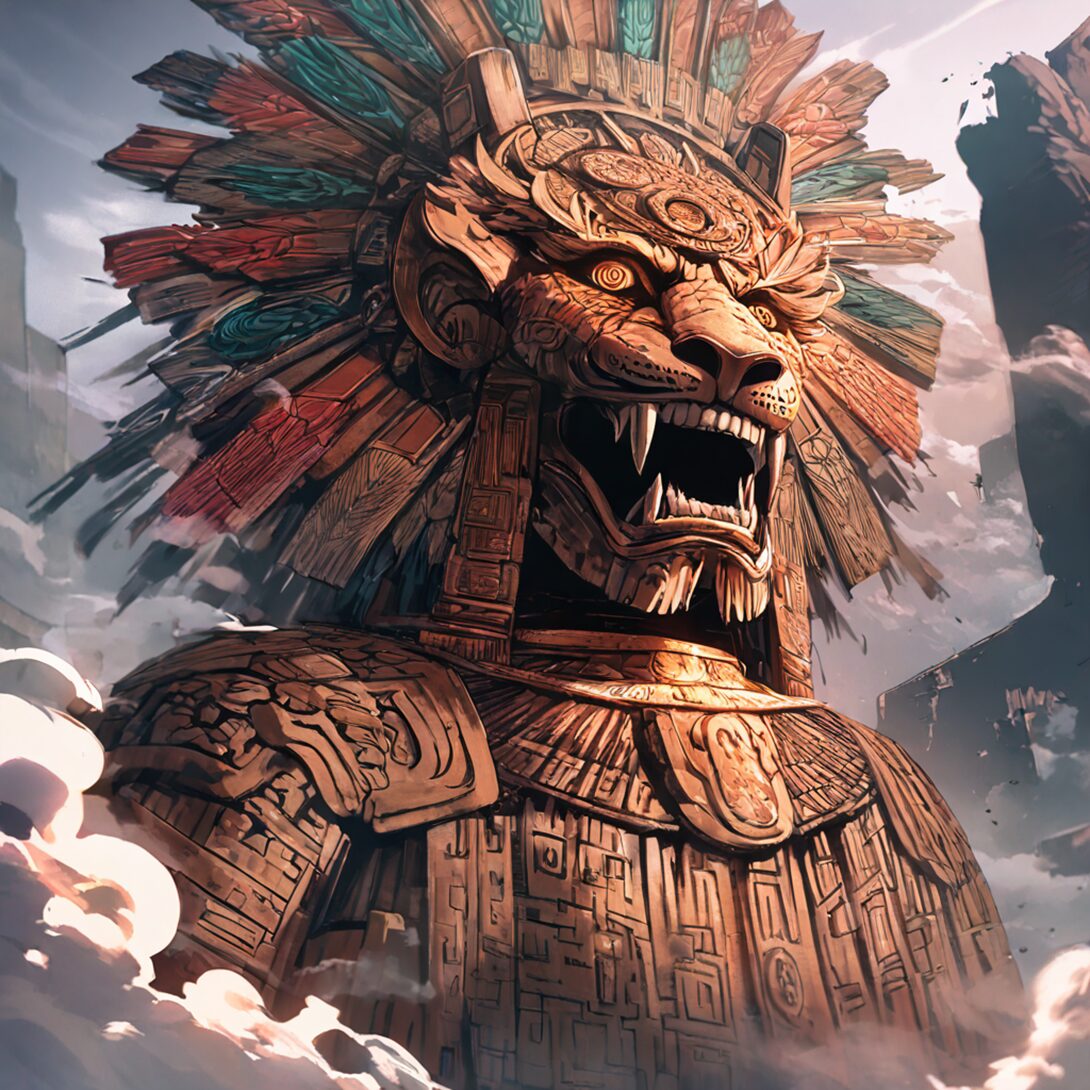
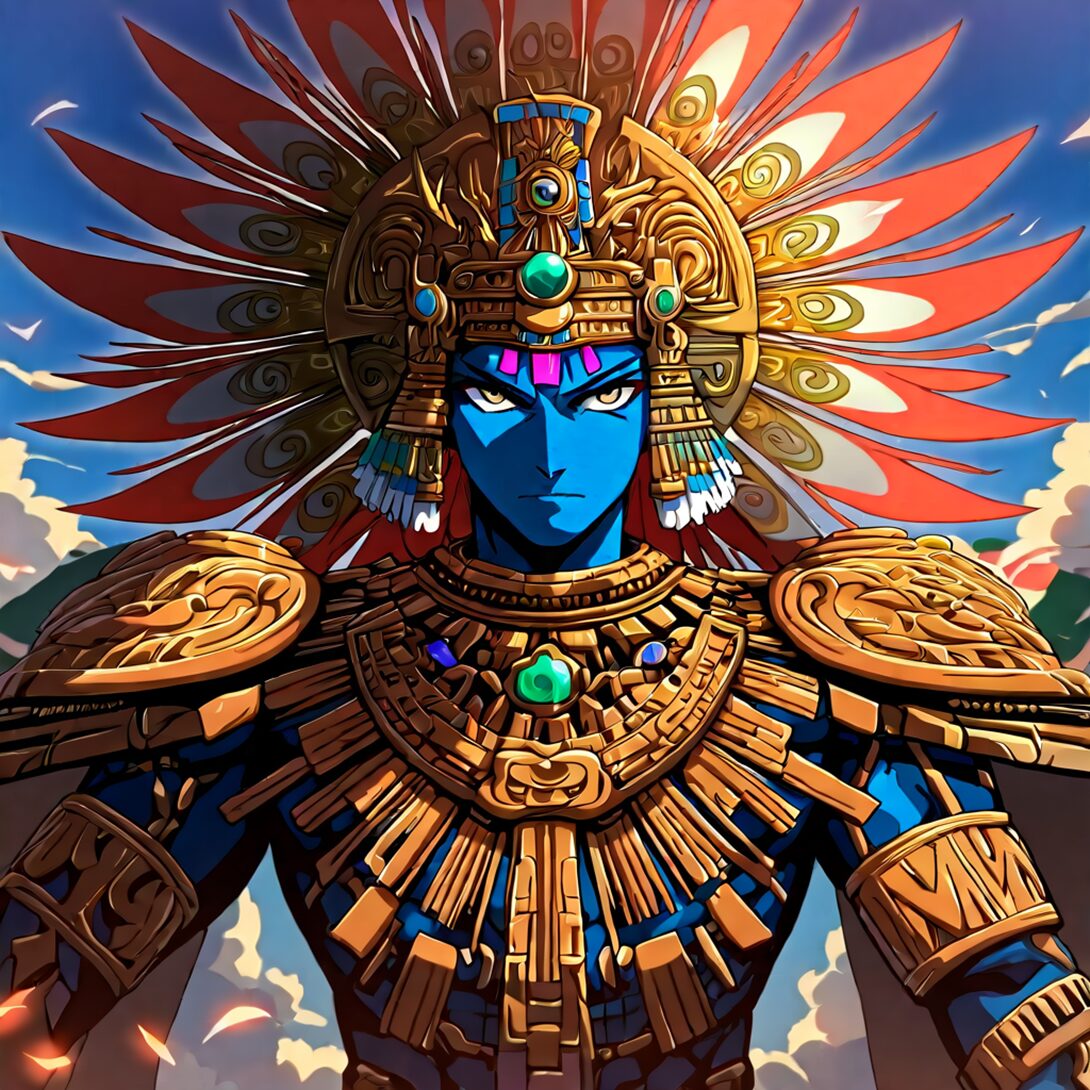
The gods and heroes who appeared in this article are also introduced in order of strength in the “Mythology, Religion, and Legend Strongest Ranking.” Please enjoy both their activity in the original texts and their “strength.”
To Learn More
Conclusion
In this article, I explained in detail the Aztec gods and the founding myth, following the original texts. How was it?
The Aztec guardian god Huitzilopochtli was a god embodying the sun itself, born by defeating his sister and brothers in the battle of Coatepec. Tezcatlipoca, who manipulates fate; Tlaloc of the blessing rain; and the rebirth god Xipe Totec and the death god Mictlantecuhtli — diverse gods supported the Aztec world.
And the people, led by Huitzilopochtli’s oracle, built the capital Tenochtitlan on the land of the eagle and the cactus.
In the next Article 4 (the final installment), I will explain the core of the Aztec worldview — the human sacrifice performed to support these gods (especially the sun), and the calendar, cosmology, and afterworld.
I hope you’ll read the next article too.
Also popular with readers
📚 Series: The Original Texts of Aztec Mythology (4/5)